The tile repair vs. replacement decision is the most common roofing decision PBC homeowners face — and the most frequently made incorrectly, in both directions. Some homeowners replace tile roofs that only needed underlayment work and salvaged tile reinstallation, spending $30,000 when $12,000 was the correct scope. Others repair aging tile systems year after year, accumulating repair costs and Citizens Insurance risk, when a one-time replacement would have been the better investment three service calls ago. Three specific criteria determine which decision is correct — and none of them requires a homeowner to trust their contractor's judgment alone.
Decision variable 1 — Underlayment condition
The most important variable in the tile repair vs. replacement decision is underlayment condition — not tile condition. Tile is visible and assessable from the exterior. Underlayment condition requires an invasive inspection: lifting representative tiles at multiple locations across the roof surface to examine the felt or synthetic membrane beneath.
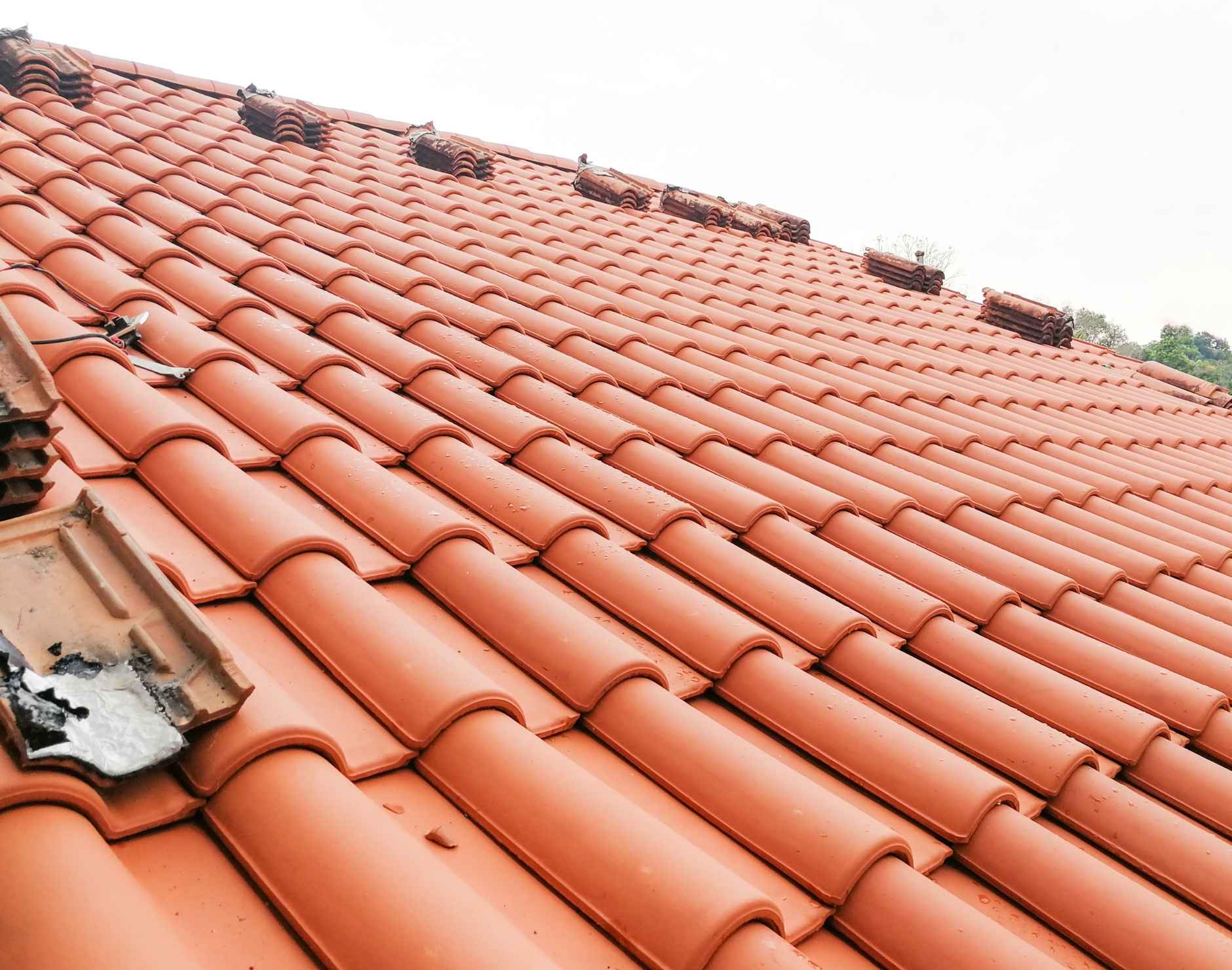
The assessment looks for: delamination (layers of felt separating from each other), brittleness and cracking along the felt surface, active moisture saturation or staining, and loss of adhesion between the underlayment and the secondary water barrier below it. An underlayment that shows any of these conditions at multiple inspection points has reached functional end of life and requires replacement — regardless of whether any individual tile is cracked or missing.
The timing benchmark for underlayment assessment on PBC tile roofs: standard felt underlayment warrants professional assessment at 18 years and typically requires replacement by 22–25 years. Premium synthetic underlayment warrants assessment at 28 years and typically requires replacement by 32–35 years. These timelines are accelerated by inadequate attic ventilation, prior water intrusion events, and heavy foot traffic from non-roofing trades accessing the roof surface. Complete aging benchmarks are in the tile roof lifespan guide for South Florida.
If the underlayment is sound at inspection — no delamination, no brittleness, no moisture saturation, with 5 or more estimated years of remaining service life — individual tile repair is appropriate for the damaged tiles. If the underlayment is at or past its service life, tile repair addresses only the visible symptom while the underlying failure continues.
Decision variable 2 — Tile damage coverage and the FBC 25% threshold
Florida Building Code Section 706's cumulative 25% threshold applies to tile roofs exactly as it applies to shingle and other systems. A tile repair event that covers more than 25% of the total roof surface area — or a series of repair events that cumulatively exceed 25% — triggers a mandatory full replacement to current FBC specifications. For a complete explanation of how the FBC 25% cumulative rule is calculated and what it requires, see our dedicated guide.
For practical decision-making on tile roofs, the threshold considerations divide into three scenarios:
If the current damage event covers less than 10% of total roof area and cumulative prior repairs are well below 25%: tile repair is appropriate provided the underlayment assessment supports it.
If the current damage event covers 10–20% of total roof area, or if cumulative prior repairs are approaching the 25% threshold: the decision depends on underlayment condition and the tile's age. A tile system at year 15 with sound underlayment is a repair candidate. The same system at year 22 with deteriorating underlayment is a replacement candidate regardless of the repair coverage calculation.
If the current damage event covers more than 25% of roof area, or if cumulative repairs have crossed the threshold: replacement is mandatory under FBC Section 706. The correct scope is a full system replacement — with the option to salvage sound existing tile if condition and availability support it.
Decision variable 3 — Citizens Insurance status and remaining life
A tile roof's Citizens Insurance remaining life estimate directly affects the repair vs. replacement decision. A tile system with seven or more years of documented remaining life on a recent condition assessment supports continued repair for damage events below the FBC threshold. A tile system that has received a Citizens inspection notice, that has been issued a replacement condition, or whose last professional assessment indicated less than five years of remaining life is not a repair candidate — it is a replacement candidate on a timeline. The whole-roof decision framework is in signs your roof needs replacement instead of repair.
For tile roofing services in Palm Beach County covering both tile repair and complete system replacement, a licensed CCC contractor's written assessment covering all three decision variables is the correct starting point before any scope is authorized. Verified roofers serving Ocean Ridge and across PBC provide this three-variable assessment in writing.
When tile salvage with underlayment replacement is the right scope
Tile salvage with full underlayment replacement is a distinct option that sits between individual tile repair and full system replacement in both cost and scope. It is the appropriate scope when:
The underlayment has reached or is approaching end of service life, but the tile itself is in good condition with less than 10–15% cracked or broken tiles. The tile profile is currently available in matching material. The existing tile was installed at the same time (no profile mismatches from prior repairs). The tile passes a structural integrity assessment — no hairline cracks from thermal cycling, no soft tile sections that indicate hidden breakage.
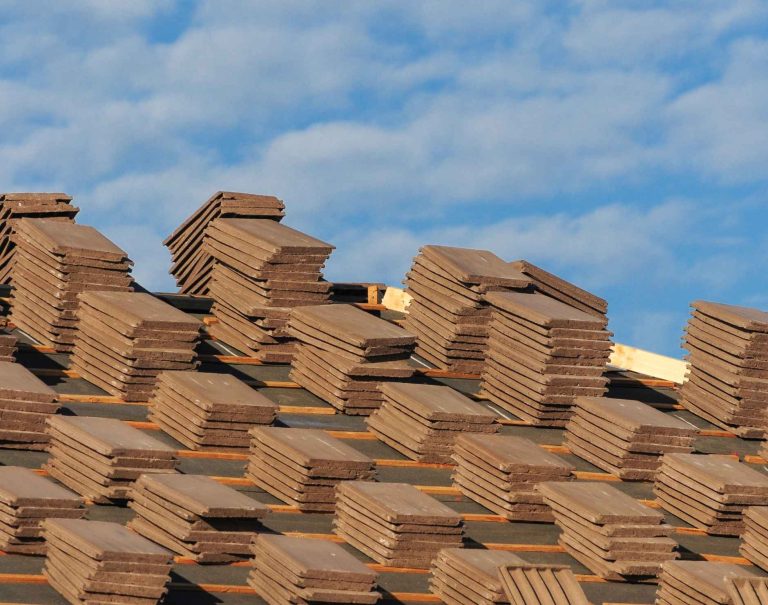
Tile salvage with underlayment replacement costs approximately 60–75% of a full system replacement. The tile is carefully removed, inventoried, and stacked during tear-off. New underlayment and secondary water barrier are installed to current FBC specifications. Sound tile is cleaned and reinstalled. Cracked or broken tile is replaced with matching new material. The result is a code-compliant installation with new underlayment life, Citizens Insurance wind mitigation eligibility, and existing tile preserved.
This option is most cost-effective on PBC tile systems at years 20–28 where the tile has substantial remaining life but the felt underlayment beneath it is at or past its service life. It is frequently overlooked because contractors who specialize in replacement have less incentive to propose it. The full salvage decision framework is in reusing tile during roof replacement in PBC.
The role of tile availability in the decision
Tile availability is a constraint that affects every tile repair and replacement decision on PBC homes with roofs installed between 1985 and 2010. The tile profiles common in PBC residential construction during that period include many that are now discontinued or available only through specialty distributors with extended lead times.
For repair events, the availability question is whether replacement tile matching the existing profile can be sourced. A repair that requires discontinued tile either produces a visible mismatch or requires a custom order that adds cost and lead time. For homeowners with discontinued tile profiles, a mismatch-repair cycle that repeats over several years is often a more expensive long-term outcome than a single replacement with a currently available profile.
For replacement decisions, the availability question is whether the homeowner wants to maintain the existing profile or transition to a currently available alternative. Profile transitions require HOA approval in many PBC communities and ARCOM review on barrier island properties — confirm approvals before specifying.
The repair-vs-replacement decision matrix
The three decision variables combine to produce a clear recommendation in most scenarios:
Underlayment sound + damage under 25% + Citizens status favorable: tile repair is appropriate. Address the damaged tiles and the cause of damage (flashing, pipe boot, or mechanical impact).
Underlayment at or past service life + any damage event: underlayment replacement with tile salvage is the appropriate scope, regardless of the damage coverage percentage.
Cumulative damage at or above 25%: full replacement is mandatory under FBC Section 706. Tile salvage may be appropriate depending on tile condition and availability.
Citizens replacement condition issued: replacement is required on Citizens' timeline. Tile salvage is an option if tile condition and availability support it — it does not reduce the scope of the required work, but may reduce its cost.
- Ask your contractor to assess underlayment condition before scoping any repair.** Lift representative tiles at multiple locations. If underlayment shows delamination, brittleness, or moisture saturation, repair is addressing the symptom — not the cause.
- Ask for the FBC Section 706 cumulative repair coverage calculation.** Current damage plus prior repairs as a percentage of total roof surface area. If at or above 25%, replacement is mandatory — not a contractor recommendation.
- Know your Citizens Insurance remaining life status.** A system with less than five years of documented remaining life is a replacement candidate regardless of the repair coverage calculation.
- Confirm tile profile availability before authorizing any repair that requires matching tile.** Discontinued profiles require custom orders with 3–8 week lead times and cost premiums. Repeated mismatch repairs over time may be more expensive than a single profile-change replacement.
- Ask whether tile salvage with underlayment replacement is an appropriate scope.** If the tile is sound and the underlayment is at end of life, this option costs 60–75% of full replacement and produces a FBC-compliant installation with new underlayment life.
- For any repair scope above $1,200 on a tile system over 15 years old, run the repair-vs-replacement cost calculation.** Repair cost divided by estimated years of remaining service life, compared to replacement cost divided by new system useful life — including Citizens Insurance wind mitigation credit value on the replacement side.