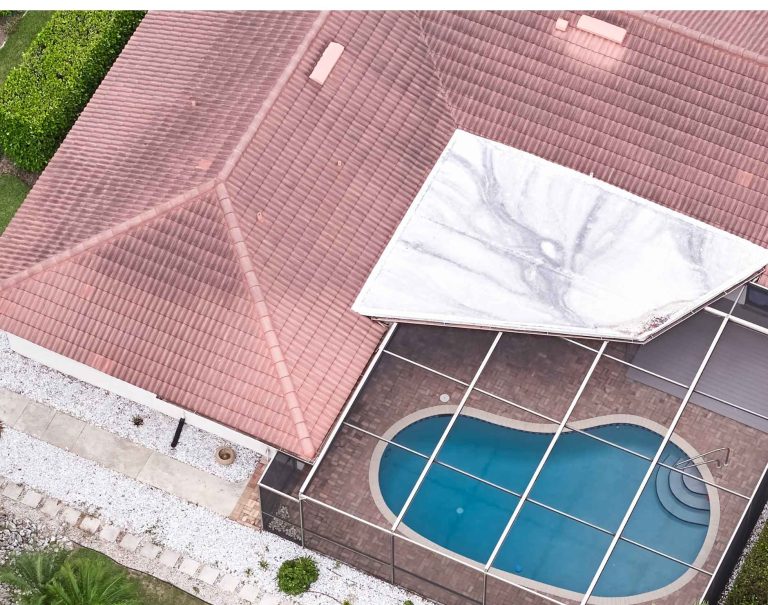
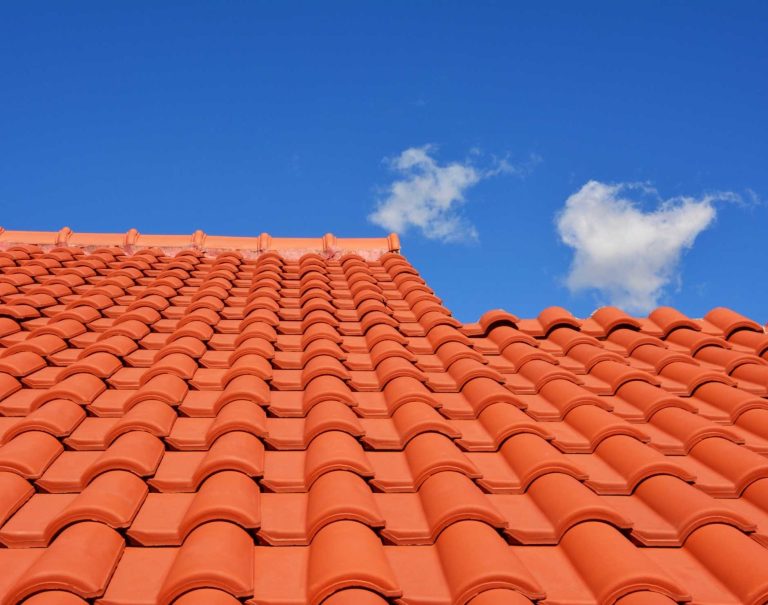
Tile roofing is marketed with warranties of 50 years for concrete and lifetime guarantees for clay. Those numbers are not wrong — but they describe the tile itself, not the complete roof system. A tile roof in Palm Beach County is a layered assembly: the tile, the underlayment beneath it, and the secondary water barrier beneath that. The tile may last 50 years. The felt underlayment beneath it will reach end of functional life at 20–25 years in South Florida's conditions. Understanding which component ages first — and what its failure means for the whole system — is the correct framework for answering the question of how long a tile roof actually lasts in PBC.
Concrete tile lifespan - the tile vs. the system
A properly installed concrete tile roof on a Palm Beach County home realistically delivers 40–50 years of total system service life. This breaks down as follows: the concrete tile itself carries a 50-year manufacturer warranty and will perform at or near that specification under normal South Florida conditions. The underlayment beneath the tile — the material that actually keeps the building dry when rain bypasses the tile surface — ages significantly faster.
Standard felt underlayment (30-pound felt or similar) degrades in South Florida's heat and UV environment within 18–25 years. Once the underlayment fails, the secondary water barrier beneath it becomes the last line of protection against water entry. When both the underlayment and secondary water barrier are compromised, the system requires a full re-underlayment — typically with tile salvage and reinstallation rather than full tile replacement.
Premium synthetic underlayment systems — PolyFoam, GAF Tiger Paw, or similar products rated for South Florida conditions — extend the underlayment service life to 30–35 years. A concrete tile installation with premium synthetic underlayment and a proper secondary water barrier can realistically perform for 45–55 years before a full system intervention is required.
The practical implication: a concrete tile roof at year 22–25 is at the underlayment decision point — not at end of tile life. The correct response at that age is a professional assessment of underlayment condition and a decision about re-underlayment with tile salvage vs. full replacement. Many PBC concrete tile roofs are replaced prematurely at this stage when the underlayment could have been replaced at significantly lower cost with the existing tile. The salvage criteria are in reusing tile during roof replacement in Florida.
Clay tile lifespan — the generational material
Clay tile's fired ceramic composition produces a material that genuinely exceeds the 75-year service life claim in favorable conditions. In Palm Beach County's environment, UV exposure affects concrete tile surface color and density over decades — the same UV has virtually no effect on fired clay. Historic clay tile roofs in South Florida and the broader Southeast United States regularly demonstrate 80–100 year tile lifespans with periodic underlayment replacements.
The same underlayment limitation that applies to concrete tile applies to clay: the underlayment ages at the same rate regardless of the tile above it. A clay tile roof requires an underlayment replacement at approximately year 22–25 (or year 30–35 with premium synthetic underlayment). After that replacement, the clay tile continues for another 50+ years — far exceeding the performance envelope of any other residential roofing material available in PBC.
The financial case for clay tile's premium cost is most clearly made over the full system lifespan. A concrete tile system at $55,000 installed requires one underlayment replacement event at approximately year 25 (estimated $15,000–$22,000 with tile salvage) and a full system replacement at year 45–50. A clay tile system at $75,000 installed requires the same underlayment replacement event at year 25 and then continues for another 50 years with only routine maintenance. Over a 75-year horizon, the clay system's total cost of ownership is frequently lower.
What shortens tile roof lifespan in South Florida
Several conditions accelerate tile roof aging in PBC and should be addressed proactively to preserve the system's full service life:
Inadequate attic ventilation. South Florida heat builds up in roof assemblies with inadequate ventilation, dramatically accelerating underlayment degradation from the underside. A properly ventilated attic significantly extends underlayment service life.
Standing water or poor drainage. Tile profiles that allow water to pond rather than drain — typically flat-profile tile installations with insufficient slope — retain moisture against the underlayment and accelerate its degradation. Slope adequacy should be verified at installation.
Deferred flashing maintenance. Flashing failures that allow water to bypass the primary tile surface and sit against the underlayment accelerate underlayment deterioration at those specific locations. Regular flashing maintenance prevents localized premature underlayment failure.
Walking on tile without proper technique. Tile surfaces in South Florida are brittle under point loads. Foot traffic — from maintenance personnel, HVAC technicians, or homeowners — that does not follow proper tile-walking technique (stepping on the tile's structural ridge, not its center) cracks tile and creates water entry points. Any rooftop work on a tile roof should be performed only by personnel trained in tile access.
For tile roofing services in Palm Beach County — including professional condition assessments that determine whether a tile system is at its underlayment decision point or approaching full system replacement — a licensed CCC contractor provides a written assessment with realistic remaining life estimates based on actual system condition. Verified roofers serving Atlantis and across PBC provide these assessments before any replacement decision.
The underlayment replacement decision — tile salvage vs. full replacement
When a tile roof reaches its underlayment service life, the homeowner faces a decision: re-underlayment with tile salvage and reinstallation, or full system replacement including new tile. This decision is primarily driven by tile condition and availability.
If the tile is structurally sound, the profile is currently available, and less than 10–15% of tiles are cracked or broken from prior events, tile salvage with new underlayment is typically the more cost-effective path. The tile is carefully removed, stacked, and cleaned during tear-off. New underlayment and secondary water barrier are installed. Sound tile is reinstalled. Cracked or broken tiles are replaced with matching material.
Tile salvage with underlayment replacement typically costs 60–75% of a full system replacement — a meaningful savings on a tile system that has 25+ years of remaining tile life after the underlayment event. The decision to salvage vs. replace should be made by a licensed CCC contractor after a professional tile condition assessment that evaluates the percentage of damaged tile, profile availability, and structural tile integrity.
If the tile profile has been discontinued, if more than 15–20% of tiles are cracked or damaged, or if the tile shows structural fatigue that would produce progressive failure after reinstallation, a full system replacement is the correct scope.
Citizens Insurance lifespan expectations by tile type
Citizens Insurance uses the Four-Point Inspection remaining life estimate as its primary eligibility variable — not absolute roof age. A concrete tile roof at 28 years old with replaced synthetic underlayment and sound tile may receive a favorable remaining life estimate and continue coverage without conditions. The same roof with original deteriorated felt underlayment may receive an unfavorable estimate that triggers a replacement condition.
The practical implication: tile roof age alone does not determine Citizens eligibility. System condition determines it. A proactive underlayment replacement at year 22–25 on a concrete tile system resets the Citizens remaining life clock by significantly improving the system condition that the inspector will document. For a complete breakdown of what tile roof replacement costs in Palm Beach County — both full replacement and underlayment replacement with tile salvage — see our dedicated 2026 cost guide.
- Know what underlayment system was installed beneath your tile.** Standard felt: expect underlayment assessment at 18–22 years. Premium synthetic: expect assessment at 28–32 years. If unknown, a licensed CCC contractor can assess underlayment condition through limited investigation.
- At years 20–25 on a concrete tile system, schedule a professional underlayment condition assessment.** The decision point is underlayment condition — not tile condition. Many concrete tile roofs are replaced unnecessarily when only the underlayment needs replacement.
- For clay tile systems, the underlayment decision point is the same — but the tile continues indefinitely after that event.** The 75+ year clay tile lifespan assumes periodic underlayment replacement. Plan for that event, not for tile replacement.
- Before ordering a Citizens Four-Point on a tile roof over 20 years old, have a licensed CCC contractor assess underlayment condition.** A proactive underlayment replacement can significantly improve the remaining life estimate and protect Citizens eligibility.
- Address attic ventilation inadequacies proactively.** Inadequate ventilation is the most common cause of accelerated underlayment degradation in South Florida tile applications. Verify that ridge vents and soffit vents are unobstructed.
- Enforce proper tile-access technique for any rooftop work.** HVAC, solar, and other trades that access the roof for non-roofing work should step on tile ridges, not tile centers. Cracked tile from improper access is the most preventable form of tile damage.