
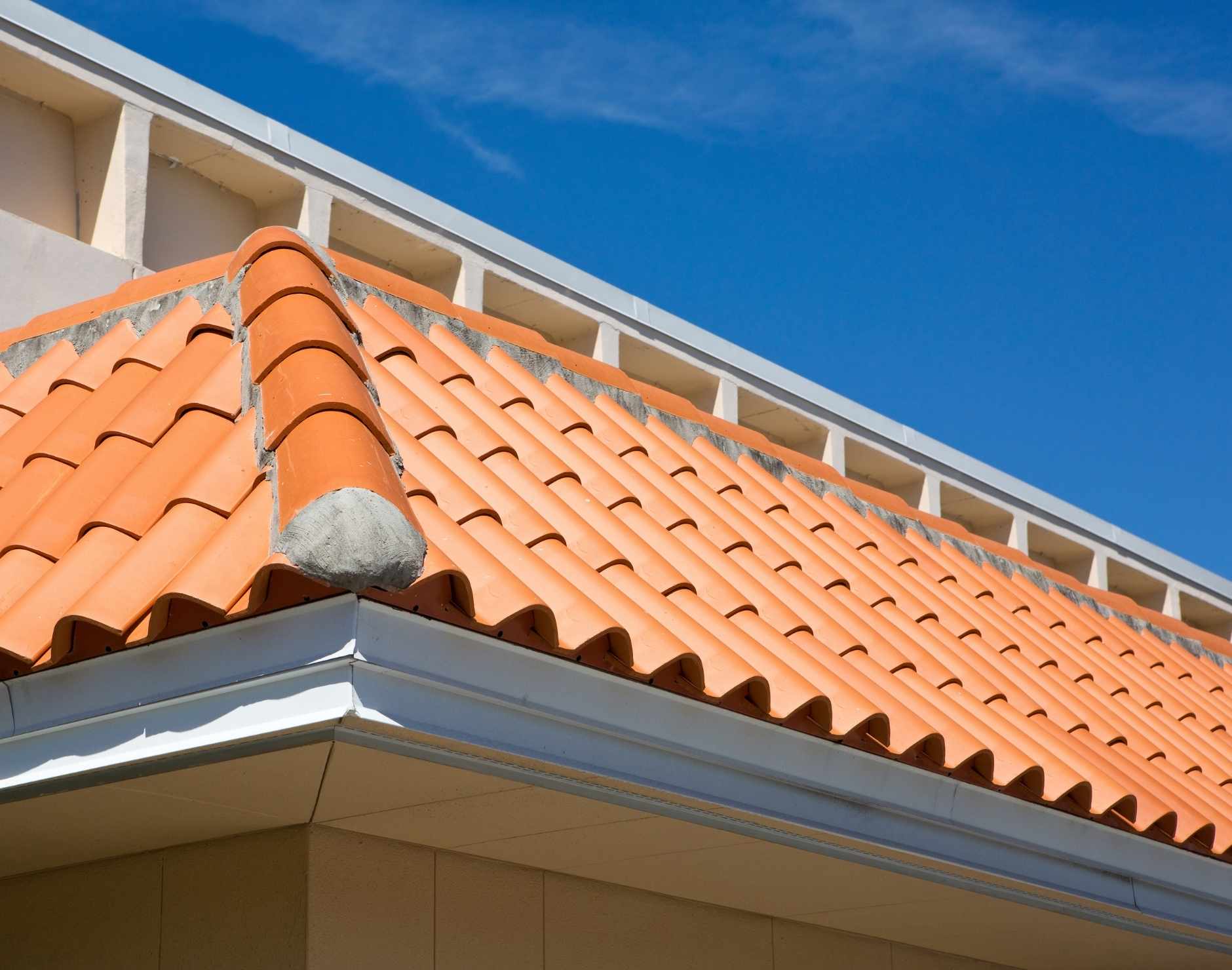
Tile roofing dominates Palm Beach County's residential landscape for reasons that go beyond aesthetics — tile is the material best suited to the combination of South Florida's UV intensity, rainfall volume, and high-wind zone requirements. But within tile roofing, concrete and clay are distinct materials with different cost profiles, different lifespans, different structural implications, and different positions in the PBC market. A homeowner choosing between the two is making a decision with 40–75 year consequences. This guide provides the complete, objective comparison across every variable that matters in the Palm Beach County context.
Material composition and manufacturing — what the difference actually is
Concrete tile is manufactured from Portland cement, sand, and water, cast under pressure into profiles that range from low-profile flat to high-profile barrel. Pigment is added during manufacturing for color, though surface color fades over time as the pigment is exposed to South Florida's UV environment. Concrete tile is heavy — typically 9–12 pounds per square foot installed — and the weight is a structural consideration for older PBC homes that were not designed to carry tile loads.
Clay tile is fired ceramic — natural clay formed and kiln-fired at high temperatures. The firing process produces a material that is denser, harder, and more UV-stable than concrete. Clay tile color is inherent in the material rather than applied as a surface pigment — it does not fade over decades of UV exposure the way concrete tile color does. Clay tile is slightly lighter than concrete in most profiles (8–10 pounds per square foot) but carries a significantly higher material cost.
Both materials are manufactured in the full range of profiles used in PBC residential construction: low-profile (S-shaped interlocking), high-profile (barrel and mission), and flat (modern and contemporary applications). Profile selection is independent of material type in most cases.
Cost comparison — installed price in PBC 2026
Concrete tile replacement in Palm Beach County runs $18–$28 per square foot installed on a standard residential property. This range includes tear-off, new underlayment to current FBC specifications, secondary water barrier, concrete tile at standard profiles, installation to FBC Chapter 15 attachment requirements, and permit.
Clay tile replacement runs $25–$45 per square foot installed for standard profiles. Specialty clay tile profiles — particularly the Spanish mission and Ludowici clay tile profiles common in PBC barrier island and estate construction — run $40–$65 per square foot and above. The material cost differential between concrete and clay is 20–40% for standard profiles and wider for specialty applications.
For a 2,400 square foot roof surface, the installed cost difference between a standard concrete tile replacement ($43,200–$67,200) and a standard clay tile replacement ($60,000–$108,000) ranges from roughly $17,000 to $40,000 depending on profile selection and market conditions at the time of installation. Complete scope-level pricing is in the tile roof cost guide for Palm Beach County.
Lifespan comparison — what each realistically lasts in PBC
A properly installed concrete tile roof in Palm Beach County realistically lasts 40–50 years. The tile itself has a 50-year manufacturer warranty in most cases. The practical lifespan limitation is the underlayment beneath the tile — standard felt underlayment ages at 20–25 years in South Florida conditions, at which point the underlayment must be replaced regardless of tile condition. Full aging benchmarks are in the tile roof lifespan guide. Premium synthetic underlayment systems extend the underlayment service life to 30–35 years.
A properly installed clay tile roof realistically lasts 75 years or more — often exceeding the lifespan of the home's original construction in many cases. Clay tile's fired ceramic composition resists UV, thermal cycling, and moisture absorption at a level that concrete cannot match. The same underlayment limitation applies — the tile outlasts the underlayment in virtually every case — but the tile itself is a generational material.
The lifespan differential has direct financial implications when viewed over a 75-year ownership horizon. A concrete tile system requires one full underlayment replacement at approximately year 22–25 (with tile salvage and reinstallation), while a clay tile system requires the same underlayment replacement but the tile continues for another 50 years after that event.
Wind performance and FBC Chapter 15 compliance
Both concrete and clay tile must meet Florida Building Code Chapter 15 requirements for installation in PBC's 160–175 mph design wind speed zone. The attachment method — mechanically fastened, foam-set, or combination — is specified based on tile weight, profile, and design wind pressure calculations for the specific property location. Neither material has an inherent wind performance advantage over the other at equivalent attachment specifications. Attachment methods and zone requirements are detailed in the tile wind rating guide for PBC.
FBC Chapter 15 requires that all tile installations in PBC carry a current Florida Product Approval number confirming that the specific tile model, profile, and attachment system has been tested and approved for the applicable wind speed zone. Verify that any contractor's proposed tile carries a current Product Approval before signing a replacement contract.
For tile roofing services in Palm Beach County — concrete or clay — FBC Chapter 15 compliance and current Florida Product Approval are baseline requirements on every licensed CCC contractor's proposal.
Citizens Insurance wind mitigation value
Citizens Insurance wind mitigation credits for tile roofing are based on the construction features documented on OIR-B1-1802 — roof shape, secondary water barrier presence, roof-to-wall connections, deck attachment, and opening protection. The tile material type itself (concrete vs. clay) does not produce a different credit calculation. Both materials generate the same wind mitigation value when installed with the same FBC-compliant construction features.
The secondary water barrier is the most consequential single feature for wind mitigation credit eligibility in tile applications — its presence or absence on the OIR-B1-1802 form affects the credit calculation regardless of tile material. For a complete explanation of what the secondary water barrier is and why Citizens Insurance requires it under tile installations, see our dedicated guide.
Weight and structural implications
Concrete tile at 9–12 pounds per square foot and clay tile at 8–10 pounds per square foot both require structural framing designed to carry tile loads. PBC homes built after approximately 1985 were typically designed for tile loads if they were originally tile-roofed. Homes converting from shingle to tile — or older PBC homes with deteriorated framing — may require a structural assessment before tile installation.
A licensed CCC contractor proposing a tile replacement on a property with unknown or potentially inadequate framing should include structural verification in the project scope. Tile installed on framing that cannot support the load creates deflection and long-term performance issues that are far more expensive to correct after installation than to verify before it.
Market positioning in Palm Beach County
Concrete tile is the dominant replacement material for mid-range PBC residential properties — Wellington, Boynton Beach, Lake Worth Beach, Royal Palm Beach, and similar inland and western communities where the combination of HOA aesthetic requirements, Citizens Insurance eligibility, and budget constraints favors concrete over clay.
Clay tile dominates in the luxury and estate markets — Palm Beach Island, Manalapan, Gulf Stream, Delray Beach oceanfront, and Jupiter Inlet Colony — where ARCOM architectural review standards, HOA covenants, and property value expectations specify clay tile by material or by profile. A concrete tile installation on a barrier island property governed by ARCOM review may not be approved if clay is the specified material in the applicable design standard.
Understanding the market positioning matters when evaluating contractor quotes. A contractor proposing concrete tile on a barrier island property where clay is specified is either proposing non-compliant work or not familiar with the applicable architectural standards.
The decision framework for PBC homeowners
The correct material choice for any PBC replacement project is determined by four variables in order of priority: applicable HOA or ARCOM design standards (which may specify material type), structural framing capacity (which may limit weight), budget (which significantly favors concrete), and personal preference for lifespan and aesthetics.
For most inland and western PBC communities where design standards do not specify clay: concrete tile is the appropriate default choice. It meets all FBC requirements, generates full Citizens Insurance wind mitigation credits, lasts 40–50 years with one underlayment replacement, and costs 20–40% less than clay.
For barrier island, oceanfront, and luxury estate communities where clay is specified or preferred: the premium is justified by a material that lasts 75+ years, does not fade, and meets ARCOM and HOA design standards that protect property value.
- Check HOA covenants and ARCOM requirements before specifying material type.** Some PBC communities specify tile material by type. A concrete tile proposal on a clay-specified property will not receive architectural approval.
- Confirm structural framing capacity for tile loads on older or previously shingle-roofed homes.** Both concrete and clay require framing designed for tile weight. Verify before signing.
- Ask your contractor to confirm Florida Product Approval for the specified tile.** Both concrete and clay must carry current Product Approval for PBC's 160–175 mph wind speed zone under FBC Chapter 15.
- Confirm tile profile and color availability before signing.** Discontinued profiles — particularly in clay — require custom orders with 8–16 week lead times. Confirm availability before tear-off begins.
- Confirm the quote includes secondary water barrier.** Required on all PBC tile replacements under current FBC. Its presence is a Citizens Insurance wind mitigation credit prerequisite.
- For clay tile on barrier island properties, confirm the profile matches ARCOM-approved design standards.** Profile substitutions may not receive approval — confirm before specifying.
- Run the 75-year cost comparison before defaulting to concrete.** Clay's higher upfront cost divided over 75 years of realistic service life may produce a lower annual cost than concrete's lower upfront cost divided over 40–50 years — particularly when accounting for Citizens Insurance premium credits that both systems generate equally.


