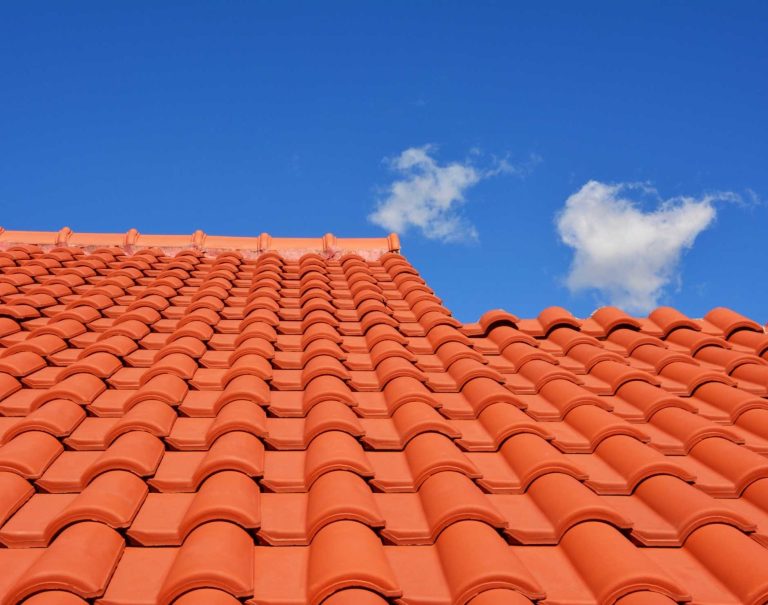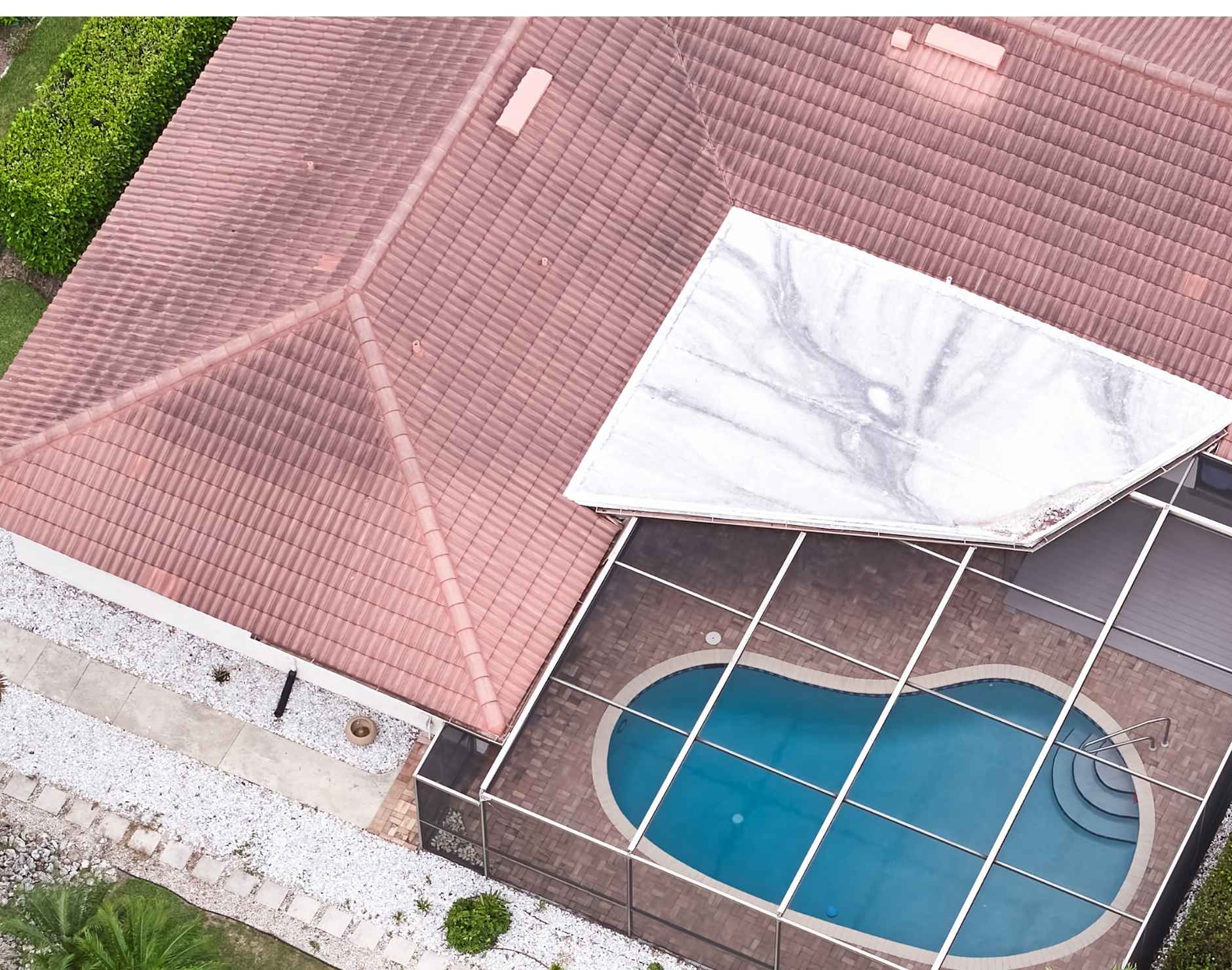
A tile roof in Palm Beach County is only as wind-resistant as its attachment system. The tile itself — concrete or clay — does not fly off a roof during a hurricane because of its material properties. It flies off because the fasteners, the mortar, or the foam that holds it in place were inadequate for the design wind speed at that specific property location. Florida Building Code Chapter 15 specifies exactly what attachment system is required based on tile weight, tile profile, and the design wind pressure calculated for the property's location within Palm Beach County's 160–175 mph wind speed zone. A tile installation that does not meet these specifications is non-compliant — regardless of how well it has performed in past storm seasons.
Palm Beach County's wind speed zone — what 160–175 mph means
Florida Building Code assigns design wind speeds to geographic areas based on historical hurricane data, proximity to coastline, and exposure category. Palm Beach County falls entirely within Florida's High Velocity Hurricane Zone (HVHZ) for code purposes, and design wind speeds across PBC range from 160 mph in the westernmost inland areas to 175 mph on barrier islands and coastal properties.
The design wind speed is not the wind speed at which a compliant roof will fail — it is the wind speed at which a code-compliant roof system is designed to survive without catastrophic structural failure. A tile roof installed to FBC Chapter 15 specifications for a 160 mph design wind speed zone is engineered to resist the uplift and lateral forces generated by a 160 mph wind event at that property location.
The design wind speed for any specific PBC property is determined by the property's location on Florida's wind speed map and its exposure category — based on proximity to open water and surrounding terrain. A waterfront roof in Boca Raton faces a higher design wind speed than an identical home two miles inland in the same municipality.
The three tile attachment methods — and when each applies
FBC Chapter 15 specifies three attachment methods for tile roofing in the HVHZ, each appropriate for different combinations of tile weight, profile, and design wind pressure:
Mechanically fastened. Each tile is secured to the roof deck or battens using corrosion-resistant fasteners — screws or nails — driven through pre-formed holes in the tile. The number of fasteners per tile, the fastener specification, and the fastener pattern are all specified in the tile's Florida Product Approval document. Mechanical fastening is required for all tile installations in the highest-exposure coastal zones of PBC and is the attachment method with the strongest documented wind resistance.
A mechanically fastened tile roof must use fasteners that meet the corrosion resistance requirements of FBC Chapter 15 — in coastal salt-air environments within one mile of the waterline, stainless steel or equivalent corrosion-resistant fasteners are required. Standard galvanized fasteners corrode in coastal conditions and lose holding strength over time.
Foam-set. Tile is adhered to the roof substrate using two-part urethane foam adhesive applied in a consistent bead pattern. Foam adhesive creates a chemical bond between the tile and the substrate that distributes uplift forces across the entire tile surface rather than concentrating them at discrete fastener points. Foam-set applications require a specific foam product with a current Florida Product Approval and must be applied by trained installers following the foam manufacturer's specified application protocol.
Foam-set installations are permitted in PBC for tile profiles and design wind pressures within the foam product's approved performance envelope. They are not permitted as the sole attachment method in the highest design wind pressure zones when the tile weight or profile exceeds the foam product's Product Approval specifications.
Combination (mechanical + foam). The combination method uses both mechanical fasteners at the tile's head and foam adhesive along the tile body. It is specified when the design wind pressure calculation for the property exceeds what either mechanical fastening or foam adhesive alone can resist at the specified tile profile. Combination attachment is the most robust method and is required in the highest-exposure coastal zones for specific tile profiles.
Florida Product Approval — what it means for tile installation
Every tile installed in Florida must carry a current Florida Product Approval number issued by the Florida Building Commission. The Product Approval document for each tile specifies the approved attachment methods, the required fastener specifications and patterns, the applicable wind speed zones, and the minimum roof slope for that tile profile.
A tile installation that does not use the attachment method specified in the tile's Product Approval document is non-compliant under FBC Chapter 15 — regardless of whether the attachment method used might seem equivalent. The Product Approval is the binding specification. A licensed CCC contractor performing a tile installation must be able to provide the Product Approval document for the specified tile and demonstrate that the proposed installation matches the approved method.
For tile roofing services in Palm Beach County with FBC Chapter 15 compliance and current Product Approval documentation as standard components of every scope, a licensed CCC contractor provides the Product Approval number and attachment specification in the written contract before work begins.
How to verify a tile installation's wind compliance
For homeowners assessing whether an existing tile installation meets current FBC Chapter 15 requirements — either for Citizens Insurance purposes or following a storm event — the assessment requires a licensed CCC contractor who can:
Identify the tile profile and manufacturer and pull the current Product Approval document. Assess the installed attachment method by lifting representative tiles to examine fastener type, count, and pattern or foam adhesive bead quality and coverage. Compare the installed method against the Product Approval specification for the design wind pressure at the property location. Document the findings in a written assessment that can support a Citizens Insurance wind mitigation inspection or a storm damage claim.
An informal visual inspection from the attic or a drone flyover does not constitute a wind compliance assessment. Verified roofers serving Manalapan and PBC's coastal communities perform on-roof attachment assessments. The compliance determination requires physical examination of the attachment at the tile interface — which requires accessing the roof surface.
Design wind pressure calculation — why location within PBC matters
The design wind speed map assigns a base wind speed to each geographic area. But the design wind pressure that a specific roof system must resist is calculated from that base wind speed using factors that include the building's height, roof slope, roof zone (field vs. edge vs. corner), and the property's exposure category.
Corner and edge zones of a roof experience significantly higher design wind pressures than field (center) zones at the same design wind speed. A tile attachment that meets the field zone specification may not meet the corner and edge zone specifications for the same roof. FBC Chapter 15 requires different fastener patterns or attachment methods in corner and edge zones for this reason — and a non-compliant installation frequently shows edge and corner tile loss in wind events while field tiles remain in place.
This is why post-storm tile loss at roof edges and corners — without corresponding field loss — is a diagnostic indicator of pre-existing attachment non-compliance rather than extraordinary wind force.
The relationship between tile wind compliance and Citizens Insurance
Citizens Insurance wind mitigation credits are based on the construction features documented on OIR-B1-1802. The roof covering credit category specifically evaluates whether the installed tile carries a current Florida Product Approval and was installed to the approved attachment method. A tile installation that cannot be verified as Product Approval-compliant does not receive the full roof covering credit.
More significantly, the wind mitigation inspector's assessment of roof covering compliance directly affects the overall credit calculation. A non-compliant tile attachment reduces the wind mitigation value of an otherwise favorable inspection. For licensed storm damage roof assessment and repair in Palm Beach County following any wind event that produces tile loss, a CCC contractor's assessment of attachment compliance is the starting point — not just the count of missing tiles.
- Know your property's design wind speed.** Coastal and barrier island PBC properties fall in the 170–175 mph zone. Inland western PBC properties fall in the 160 mph zone. The design wind speed determines the attachment specification required under FBC Chapter 15.
- Ask your contractor for the Florida Product Approval number for the specified tile before signing any replacement contract.** The Product Approval document specifies the required attachment method, fastener specifications, and applicable wind zones. Confirm the proposed installation matches the approved method.
- For mechanically fastened installations in coastal zones, confirm corrosion-resistant fastener specification.** Within one mile of the waterline, standard galvanized fasteners corrode and lose holding strength. Stainless steel or equivalent corrosion-resistant fasteners are required.
- For foam-set installations, ask for the foam product's Florida Product Approval.** The foam product itself must carry Product Approval for the applicable design wind pressure at the property location. Not all foam products are approved for all wind zones.
- For pre-2002 tile installations, schedule a licensed CCC contractor attachment assessment before the next hurricane season.** Pre-2002 PBC tile installations frequently used attachment methods that do not meet current HVHZ requirements. Non-compliance is not visible from the exterior until a wind event reveals it.
- After any storm event that produces tile loss at edges or corners without corresponding field loss, request a full attachment compliance assessment.** Edge and corner loss without field loss is the diagnostic pattern of pre-existing attachment non-compliance — not extraordinary wind force.