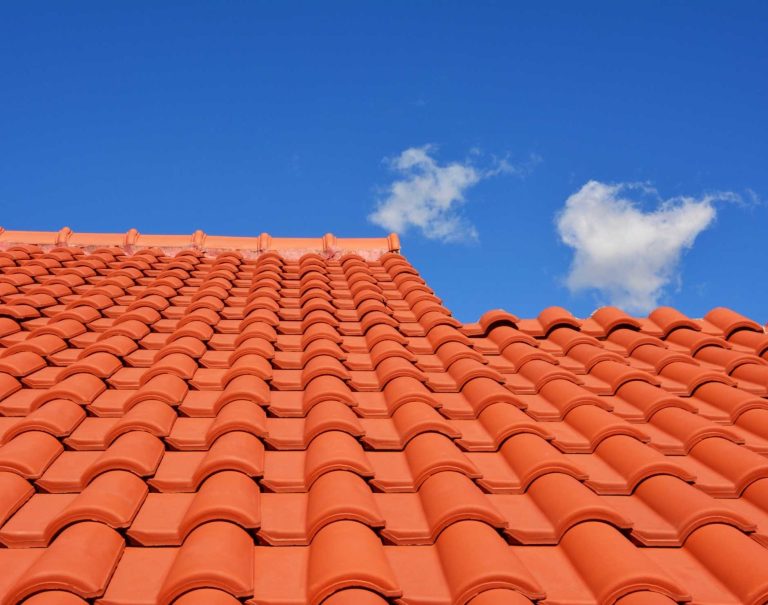
Concrete and clay tile are the dominant roofing materials in Palm Beach County — and within each category, multiple profile types exist that differ in weight, wind performance, installation method, maintenance requirements, and aesthetic compatibility with PBC's architectural styles. Choosing the right tile profile for a Palm Beach County home involves understanding how each profile performs in South Florida's specific climate conditions, what Florida Building Code requires for each system, and which profiles are compatible with your home's architectural design and structural capacity.
Concrete vs Clay - The Fundamental Difference
Concrete tile and clay tile are both ceramic-adjacent products that provide excellent durability and thermal performance in South Florida's climate — but they are fundamentally different products with different physical properties. The full cost and lifespan comparison is in concrete vs. clay tile for South Florida.
Concrete tile is manufactured from Portland cement, sand, and water, colored with integral pigments or surface coatings. It is heavier than clay tile (typically 9-12 lbs per square foot installed) and more susceptible to surface coating weathering — PBC's intense UV exposure degrades surface-applied pigments over 10-20 years, producing the chalky, faded appearance common on 20+ year concrete tile roofs. Concrete tile is less expensive than clay tile, more widely available in South Florida, and offers a broader range of profile options and colors.
Clay tile is manufactured from fired natural clay — a kiln process that produces a vitrified product with superior UV resistance, colorfastness, and freeze-thaw resistance (less relevant in PBC but significant for imported products). Clay tile color is integral to the material, not a surface coating — it does not fade. Clay tile is lighter than concrete tile in some profiles (though high-profile clay can be comparable in weight), more expensive, and available in a narrower range of profiles for the PBC market.
Profile Types and Their PBC Applications
Flat concrete tile (low-profile). The most widely installed tile profile in Palm Beach County's inland and western communities - Wellington, Royal Palm Beach, Greenacres, Boynton Beach, Delray Beach. Flat tile is installed over a single-layer or double-layer underlayment system with mortar set at hips and ridges. Wind performance with proper mechanical fastening meets current FBC requirements for PBC's design wind speed.
S-tile (two-piece barrel / mission tile). The classic Mediterranean profile dominant in Boca Raton estate neighborhoods, Palm Beach island properties, and high-value communities throughout eastern PBC. True two-piece barrel tile (separate pan and cover tiles) is the premium specification for estate homes — it provides superior ventilation under the tile, longer service life, and the most authentic Mediterranean appearance. One-piece S-tile (a single-piece approximation of the two-piece look) is less expensive and more common in mid-market PBC neighborhoods.
High-profile clay tile (Spanish S / Tapered Barrel). The highest-weight tile profile, used primarily on high-value estate properties in coastal PBC communities. High-profile clay tile requires structural engineering confirmation that the roof framing can support the additional dead load — a requirement that contractors and homeowners frequently overlook when upgrading from a lighter flat tile system.
Wind Performance and FBC Compliance by Profile
Florida Building Code Section 1507.3 establishes the installation requirements for tile roofing in Florida, including fastening methods, underlayment requirements, and mortar specifications. All tile systems installed in PBC must meet the wind uplift requirements of ASCE 7 for the site's design wind speed — which requires that tiles be mechanically fastened (not mortar-set only) in Palm Beach County's wind speed zones. Attachment methods by zone are detailed in the tile wind rating guide.
Flat tile and low-profile tile typically perform better than high-profile tile in wind uplift testing per FBC methodology — the lower profile presents less wind surface area and the mechanical fastening geometry is more favorable. High-profile tile, particularly two-piece barrel configurations, can develop uplift on the cover tile if mortar is the primary attachment mechanism. Current FBC requires mechanical fastening of cover tiles in high-wind zones — mortar-only installation is non-compliant in PBC regardless of historical practice.
The Tile Reuse Question
Many PBC homeowners ask whether existing tiles can be reused when replacing the underlayment system. The answer depends on tile condition, age, and profile. Concrete tiles older than 20 years typically show sufficient surface deterioration (crazing, granule loss, coating failure) that reuse is not recommended even if they appear intact. Clay tiles in good condition can often be reused — the material's longevity means 30-40 year old clay tiles can have significant remaining life if they have not experienced impact damage or excessive weathering. See our dedicated guide on whether existing tiles can be reused when replacing a tile roof in Florida.
- Confirm your neighborhood's dominant tile profile before selecting — aesthetic compatibility affects resale value
- If upgrading from flat to high-profile clay tile, require structural engineering assessment for load capacity
- Confirm mechanical fastening is included — mortar-only installation is non-compliant for PBC wind zones
- For S-tile or barrel tile, confirm whether one-piece or two-piece (superior ventilation and longevity)
- Specify secondary water barrier under all tile systems per FBC 1507.3 and Citizens Insurance requirements
- If reusing existing clay tiles, have contractor assess each tile for crazing, cracks, and granule condition
- Confirm tile profile is in current production and available locally — discontinued profiles have 8-16 week lead times
- Get Florida Product Approval number for the specific tile product — confirm it covers the installation method