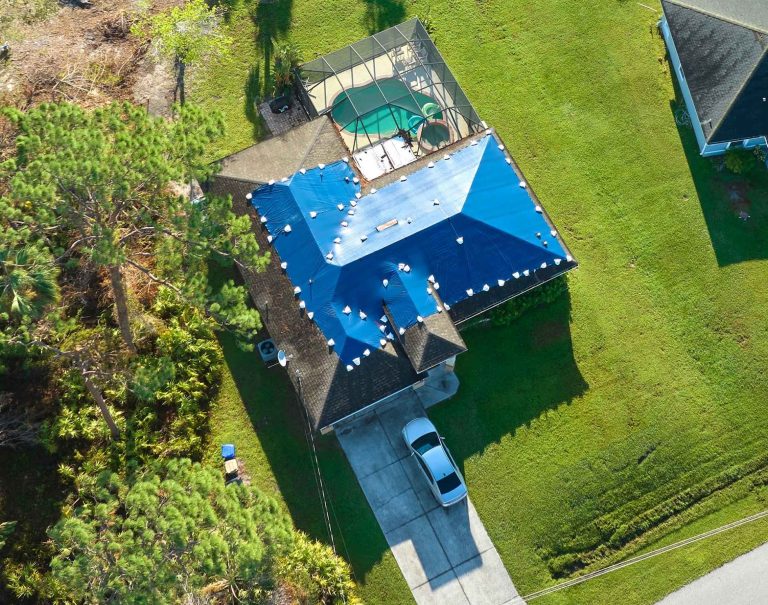
The repair-versus-replacement decision is the most consequential roofing choice a Palm Beach County homeowner makes — and the most frequently made incorrectly. Contractors who specialize in repairs have financial incentives to recommend repairs. Contractors who specialize in replacements have financial incentives to recommend replacements. The homeowner needs objective criteria that cut through both. These five signs are not opinions or guidelines — they are hard thresholds defined by Florida Building Code, Citizens Insurance underwriting standards, and structural engineering. When any one of them is present, repair is not the appropriate scope.
Sign 1 — Cumulative repairs have crossed Florida Building Code's 25% threshold
Florida Building Code Section 706 requires a full replacement when the total area of roofing additions, repairs, or replacements on a single roof system exceeds 25% of the total roof surface area — measured cumulatively, not per event. A homeowner who has had 15% of their shingle roof repaired after one storm and sustains another 12% of damage has crossed the 27% cumulative threshold. The second repair event does not trigger a 12% repair — it triggers a full replacement.
This is the most commonly missed replacement trigger in Palm Beach County. Homeowners and even some contractors focus on the current damage scope without calculating prior repair coverage. A licensed CCC contractor assessing a roof for repair should calculate total cumulative repair area before scoping any additional work. If the calculation puts the homeowner at or above 25%, the correct scope is replacement.
The replacement triggered by FBC Section 706 must meet the full requirements of the current code edition — secondary water barrier, current Product Approval materials, FBC-compliant fastener schedules, and permitted installation. For a complete explanation of how the FBC 25% rule is calculated and what it requires, see our dedicated guide.
Sign 2 — The Four-Point Inspection reports five years or less of remaining life
A Four-Point Inspection that reports five years or less of remaining life is not technically a replacement trigger — the Citizens Insurance threshold is three years. But a homeowner with five years of remaining life on a PBC roof is making a financially irrational decision if they choose to repair rather than replace.
Here is why: a repair on a roof with five years of remaining life extends the repair budget's useful life by five years at most — after which a full replacement is mandatory. A replacement now, proactively, generates Citizens Insurance wind mitigation credits immediately, resets the remaining life clock to 30–50 years depending on material, eliminates the Citizens inspection risk for decades, and costs the same whether done now or done in five years under emergency conditions after a storm.
The decision inflection point is not three years of remaining life — it is the point at which the cost of the repair, amortized over the remaining useful life, exceeds the annual cost difference between repair-now and replace-now. Current repair pricing tiers are in the roof repair cost guide. For most PBC homeowners with tile or shingle roofs in the 15–20 year range, that calculation favors replacement. A licensed CCC contractor can run this analysis as part of a condition assessment.
Sign 3 — Storm damage has reached structural decking
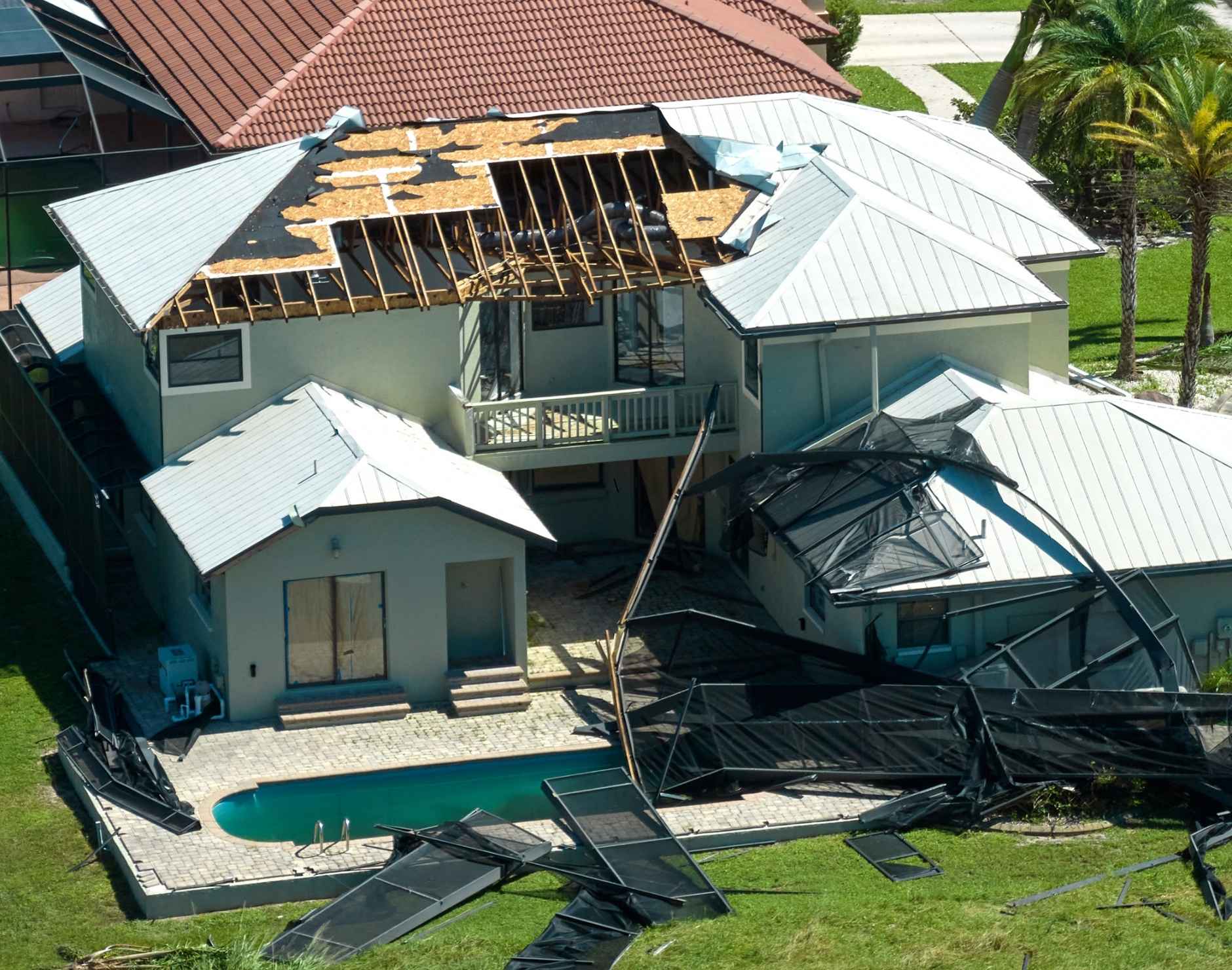
When a storm event damages the structural roof decking — the plywood or OSB sheathing beneath the underlayment and primary covering — repair is not an option regardless of the coverage percentage. Damaged decking must be replaced, and decking replacement of any meaningful area triggers re-underlayment, re-secondary water barrier, and re-covering of the affected section. In most cases, this repair scope exceeds the FBC 25% threshold by itself.
More importantly, decking damage that goes un-repaired — or is repaired incorrectly without addressing moisture intrusion — leads to structural failure. A PBC home that sustained decking damage in a storm and received only surface repairs is at elevated risk for progressive structural deterioration that is far more expensive to remediate than a timely full replacement.
For licensed roof replacement services in Palm Beach County, a written scope that identifies decking damage is the starting point — not a surprise after tear-off begins.
Sign 4 — The existing roof has no secondary water barrier
A roof without a secondary water barrier is a roof that does not meet current Florida Building Code. In PBC, any re-roofing event that triggers replacement — for any reason — must include secondary water barrier installation as a baseline FBC requirement. A homeowner who is told they can repair a non-secondary-water-barrier roof without addressing the missing barrier is being given incorrect information.
More practically: a roof without a secondary water barrier is a significant Citizens Insurance wind mitigation liability. The secondary water barrier credit category on OIR-B1-1802 is worth a meaningful annual premium reduction. A homeowner who is already considering replacement for other reasons should factor this credit value into the replacement timing decision.
Pre-2002 PBC homes — which represent a large portion of the housing stock — were built before the secondary water barrier mandate. Any repair event that reaches the replacement threshold on these homes also triggers the secondary water barrier installation requirement.
Sign 5 — The roof is over 20 years old and Citizens Insurance has ordered an inspection
A Citizens Insurance roof inspection notice on a roof over 20 years old is, in most cases, a de facto replacement notice. A roof over 20 years old that passes the three-year remaining life threshold on the OIR-B1-1802 is an exception — not the norm. Most PBC shingle roofs over 20 years old and most concrete tile roofs over 25 years old will report remaining life in the three-to-five year range or below.
The decision for a homeowner in this position is not "repair or replace" — it is "replace proactively before the inspection or replace reactively after the inspection delivers unfavorable results." Proactive replacement preserves the homeowner's timeline control, contractor selection, and material choice. Verified roofers in Royal Palm Beach and across PBC are the pool to select from on your own schedule. Reactive replacement is performed under deadline pressure with reduced contractor leverage and, if the policy is cancelled during the replacement window, with an insurance gap.
How to confirm which sign applies to your roof
Each of the five signs requires a specific type of documentation to confirm:
Sign 1 (FBC 25% cumulative threshold): Ask your licensed CCC contractor to calculate total prior repair area as a percentage of total roof surface area. This requires reviewing prior permit records at your building department and the contractor's visual assessment of repaired sections.
Sign 2 (Five years or less remaining life): Order a standard CCC contractor condition assessment ($150–$400). The written report provides a professional remaining life estimate. If the estimate is five years or less, replacement is the appropriate scope.
Sign 3 (Structural decking damage): Visible sagging, soft spots underfoot in the attic, or active moisture in the attic space following a storm are all indicators of potential decking damage. A licensed CCC contractor can confirm through attic inspection and limited probing before a full tear-off.
Sign 4 (No secondary water barrier): A licensed CCC contractor can verify secondary water barrier presence during a condition assessment by examining the visible underlayment at any exposed edge, penetration, or existing repair area.
Sign 5 (Citizens inspection notice, roof over 20 years): The trigger is the notice itself. If you receive a Citizens roof inspection notice and your roof is over 20 years old, engage a licensed CCC contractor for a condition assessment before the formal Four-Point is ordered.
When any of the five signs is confirmed, the decision is not whether to replace — it is which material, which contractor, and which timeline serves the homeowner's situation most effectively. For a complete 2026 cost breakdown by material to inform that decision, see our roof replacement cost guide for Palm Beach County.
- Ask your contractor to calculate cumulative prior repair coverage before scoping any new repair.** If total cumulative repairs are at or above 25% of the roof surface, FBC Section 706 requires full replacement — not additional repair.
- Order a condition assessment if your roof is over 15 years old before authorizing any repair work.** A remaining life estimate of five years or less makes replacement the more financially rational choice in most PBC scenarios.
- If a storm has caused soft spots, sagging, or active attic moisture — request a decking inspection before any surface repair.** Structural decking damage changes the scope from repair to replacement in most cases.
- Ask your contractor to confirm secondary water barrier presence.** Its absence on a roof over 20 years old — combined with any repair event that reaches the FBC replacement threshold — triggers a mandatory compliant replacement.
- If Citizens Insurance has ordered an inspection on a roof over 20 years old — engage a CCC contractor for a condition assessment immediately.** The inspection notice is the signal to evaluate proactive replacement timing, not to defer the decision.
- Get a second opinion before authorizing repair on any roof that may meet a replacement threshold.** A repair that should have been a replacement is a code violation that creates liability for both the homeowner and the contractor.