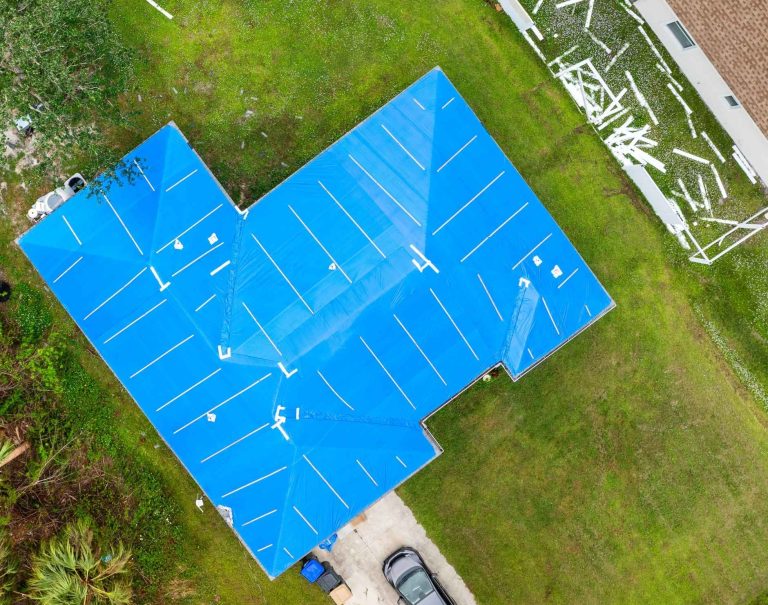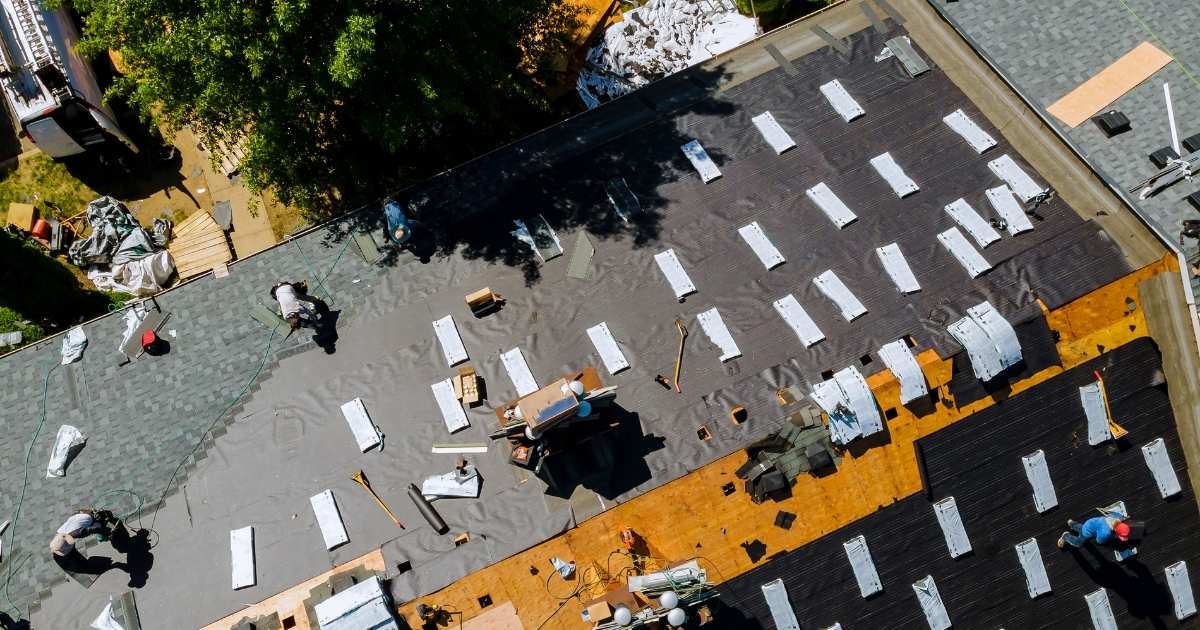
Florida Building Code Section 706 contains the single rule that most directly determines whether a damaged Palm Beach County roof gets repaired or replaced — and most homeowners discover it exists only after the decision has already been made for them. The 25% re-roofing threshold is not a guideline. It is a code mandate. Understanding how it is calculated, when it applies, and what a full replacement involves under current FBC requirements is the difference between a claim that pays for a repair and one that triggers a full, properly permitted, Citizens Insurance-eligible roof replacement.
Florida Building Code Section 706.1 states that when the addition, repair, or replacement of roofing materials exceeds 25% of the roof area — calculated over the roof's total surface area, not just the damaged section — the entire roof must be brought into compliance with the current edition of the Florida Building Code. In Palm Beach County, that is the 8th Edition, effective 2023. This provision applies to every roof type: shingle, tile, metal, and flat membrane systems.
The rule exists because partial repairs on older roofs can leave the majority of the system non-compliant — underlayment that does not meet current specifications, fastener patterns that do not meet current wind ratings, or missing secondary water barrier requirements that only became mandatory under later FBC editions. The 25% threshold is the point at which Florida determined that bringing the entire system into compliance is more structurally sound than permitting continued patchwork on a non-compliant base.
How the 25% calculation works in practice
A licensed CCC contractor calculates the 25% threshold by measuring total damaged square footage against total roof square footage. For a standard 2,000 square foot Palm Beach County home with a 2,400 square foot roof surface — a common ratio for moderately pitched hipped roofs — the replacement threshold is 600 square feet of damaged area. That is roughly a 6-square section (a square equals 100 square feet of roofing material).
The measurement is the contractor's professional determination, documented in the written scope of work. Citizens Insurance and private carriers rely on the contractor's calculation — and the permit record — to determine whether a claim should be processed as a repair or a replacement. A calculation that incorrectly falls below the threshold converts a full-replacement claim to a partial-repair claim. For licensed storm damage roof repair in Palm Beach County, accurate threshold documentation is part of the contractor's scope — not an afterthought.
The cumulative rule — what most homeowners miss
FBC Section 706 applies cumulatively. Multiple partial repairs on the same roof count toward the replacement threshold — even if they occur in different storm events or different calendar years, provided the roof has not been fully replaced and brought to current code in between. A homeowner who had 15% of their shingle roof repaired after Hurricane Ian and sustains another 12% of damage in the next storm season has crossed the 27% cumulative threshold. The second repair event triggers full replacement.
This has significant practical consequences. A roof that has been repaired multiple times without a full code-compliant replacement may be approaching or already exceeding the cumulative threshold — meaning the next permit pull for any repair will require the contractor to document total prior repair area and assess whether replacement is mandated. Licensed CCC contractors performing repairs on roofs over 15 years old should calculate cumulative repaired area before scoping any additional work. Verified roofers in Boca Raton and across PBC track cumulative coverage as standard scope documentation.
What FBC requires when the threshold is triggered
When a full replacement is triggered under FBC Section 706, the replacement must meet the complete requirements of the current FBC edition for the roof type being installed. In Palm Beach County, this includes:
For shingle roofs: architectural shingles with current Florida Product Approval, six-nail fastener pattern per FBC high-velocity wind zone requirements, FBC-compliant underlayment, and a secondary water barrier — typically a self-adhering modified bitumen membrane — on all re-roofing projects.
For tile roofs: FBC Chapter 15 attachment method compliance for PBC's 160–175 mph design wind speed zone (mechanically fastened, foam-set, or combination per tile weight and profile), FBC-compliant underlayment system, and secondary water barrier installation.
For metal roofs: Florida Product Approval-rated panels for the applicable wind speed zone, FBC-compliant underlayment, and secondary water barrier.
For pre-2002 construction specifically — which represents a significant portion of Palm Beach County housing stock — a full replacement triggered by Section 706 typically requires bringing the entire assembly up to current code, including secondary water barriers that were not required at the original construction date. This is not optional and is verified at final inspection.
The Section 706 trigger and your insurance claim
The relationship between FBC Section 706 and a Citizens Insurance or private carrier claim is direct. When a storm damage contractor identifies that the 25% threshold has been crossed — or will be crossed by the required repair scope — that calculation must be documented in the written estimate submitted to the insurance carrier. A claim submitted as a partial repair when the FBC threshold has been crossed will be processed at a lower value. Supplementing the claim after the fact to account for a full replacement requires documentation that the threshold was crossed — documentation that is most credible when produced before permanent work begins.
This is why the sequence of storm response matters: photograph damage, open the claim, have a licensed CCC contractor produce a written scope that includes a 25% threshold calculation, present that scope to the adjuster, and receive written authorization before any work begins. A contractor who produces this documentation accurately and early protects both the claim value and their own liability exposure. For a full breakdown of what a full roof replacement involves when FBC's 25% rule applies to storm damage, see our dedicated service page.
Section 706 and Citizens Insurance wind mitigation
A full replacement triggered by FBC Section 706 has a meaningful benefit that partial repairs do not: it resets the roof's age and eligibility for Citizens Insurance wind mitigation credits. A replacement performed under current FBC requirements — with secondary water barrier, current Product Approval materials, and permitted final inspection — qualifies the homeowner for a new wind mitigation inspection and the associated premium reductions. In Palm Beach County coastal zip codes, this can represent 20–40% reduction in Citizens Insurance premiums.
A partial repair, regardless of quality, does not reset the roof's age or wind mitigation eligibility. Homeowners with roofs approaching the end of their Citizens-recognized service life — typically 20 years for shingle, 25 years for tile — who sustain damage near the 25% threshold are often better positioned by a full replacement than a repair, both for compliance and for long-term insurance cost. The broader decision framework is in signs your roof needs replacement instead of repair.
Section 706 and pre-2002 homes
Palm Beach County contains a large inventory of homes built before 2002 — the year Florida adopted the High Velocity Hurricane Zone provisions that fundamentally changed roofing code requirements. When Section 706 triggers a full replacement on a pre-2002 home, the replacement must meet current code in full, including:
- Secondary water barrier (not required on original construction)
- Updated fastener schedules and spacing
- Current underlayment specifications
- Hip and ridge treatment per current FBC
This brings the entire roof system to current standards. Insurance carriers recognize this distinction. Citizens Insurance wind mitigation credits are calibrated against current FBC compliance — not original construction standards.
- ✓ Ask your contractor to calculate the 25% threshold before scoping any repair. The measurement is total damaged square footage divided by total roof square footage. If the result is at or above 0.25, Section 706 triggers a mandatory full replacement.
- ✓ Ask about cumulative prior repairs. If your roof has been partially repaired before, your contractor should calculate total historical repair area against the threshold — not just the current damage event.
- ✓ Confirm your contractor holds a current Florida CCC license. Verify at floridacontractorcheck.com. The Section 706 calculation is a licensed contractor's professional determination — it carries legal and insurance weight.
- ✓ Do not authorize permanent repairs before the adjuster inspects. If the Section 706 threshold has been crossed, that documentation must be presented to the adjuster before work begins to protect full replacement claim value.
- ✓ Confirm a permit will be pulled for any FBC-triggered replacement. The municipality's building department must issue the permit and schedule a final inspection. No permit means no final inspection, no wind mitigation eligibility, and potential liability at resale.
- ✓ For pre-2002 homes, confirm the scope includes secondary water barrier. A replacement triggered by Section 706 must bring the full assembly to current FBC standards — including secondary water barrier that was not required at original construction.
- ✓ After replacement, schedule a new wind mitigation inspection. A compliant replacement resets your Citizens Insurance wind mitigation eligibility. In PBC coastal zip codes, this typically reduces premiums by 20–40%.