The decision to repair or replace a flat roof in Palm Beach County is one of the most consequential maintenance decisions a homeowner or property owner makes — and one of the most frequently made incorrectly. Florida Building Code Section 1511 establishes specific thresholds that define when a repair becomes a replacement for code purposes, Citizens Insurance has its own criteria for when a flat roof triggers non-renewal action, and the economics of repeated repair versus a single replacement have a clear crossover point that most property owners reach sooner than they expect.
What Florida Building Code Says About Repair vs Replacement
Florida Building Code Section 1511 governs the distinction between roof repair and roof replacement for regulatory purposes. The code establishes that when more than 25% of a roof area is repaired, recovered, or replaced within a 12-month period, the entire roof assembly must be brought into compliance with current FBC requirements. This is known as the FBC 25% Rule — and it has significant practical implications for flat roof decisions in Palm Beach County.
A property owner who repairs 20% of a deteriorated flat roof in March and then repairs another 15% in September has triggered the 25% threshold — the entire roof must now be replaced to current code. Contractors who perform these incremental repairs without advising the owner of this threshold are creating future compliance problems. The FBC 25% Rule is not triggered by individual repair events alone — it is triggered by cumulative area within a 12-month period. Tracking repair scope across the year is essential for flat roof properties approaching end of life.
The Economics of Repair vs Replacement
The financial crossover point between repair and replacement on a PBC flat roof depends on three variables: the cost of the repair, the expected remaining life added by the repair, and the total replacement cost. A general rule used by experienced flat roofing contractors in Palm Beach County: if a repair costs more than 30% of the replacement cost, and the repaired system has less than 5 years of expected remaining life after repair, replacement is the more economical decision.
Applied to a typical PBC scenario: a 2,000 sq ft TPO flat roof with a replacement cost of $14,000 has a 30% threshold of $4,200. If a repair quote is $4,500 and the system is 18 years old with 3-5 years of remaining life, the economics favor replacement. If the system is 10 years old with 12-15 years remaining and the repair quote is $1,800, repair is clearly correct. The calculation is straightforward — the challenge is getting an honest assessment of remaining life from a contractor who also stands to benefit from the replacement sale. System-by-system service life benchmarks are in the flat roof comparison for South Florida.
Flat Roof Failure Modes That Require Replacement, Not Repair
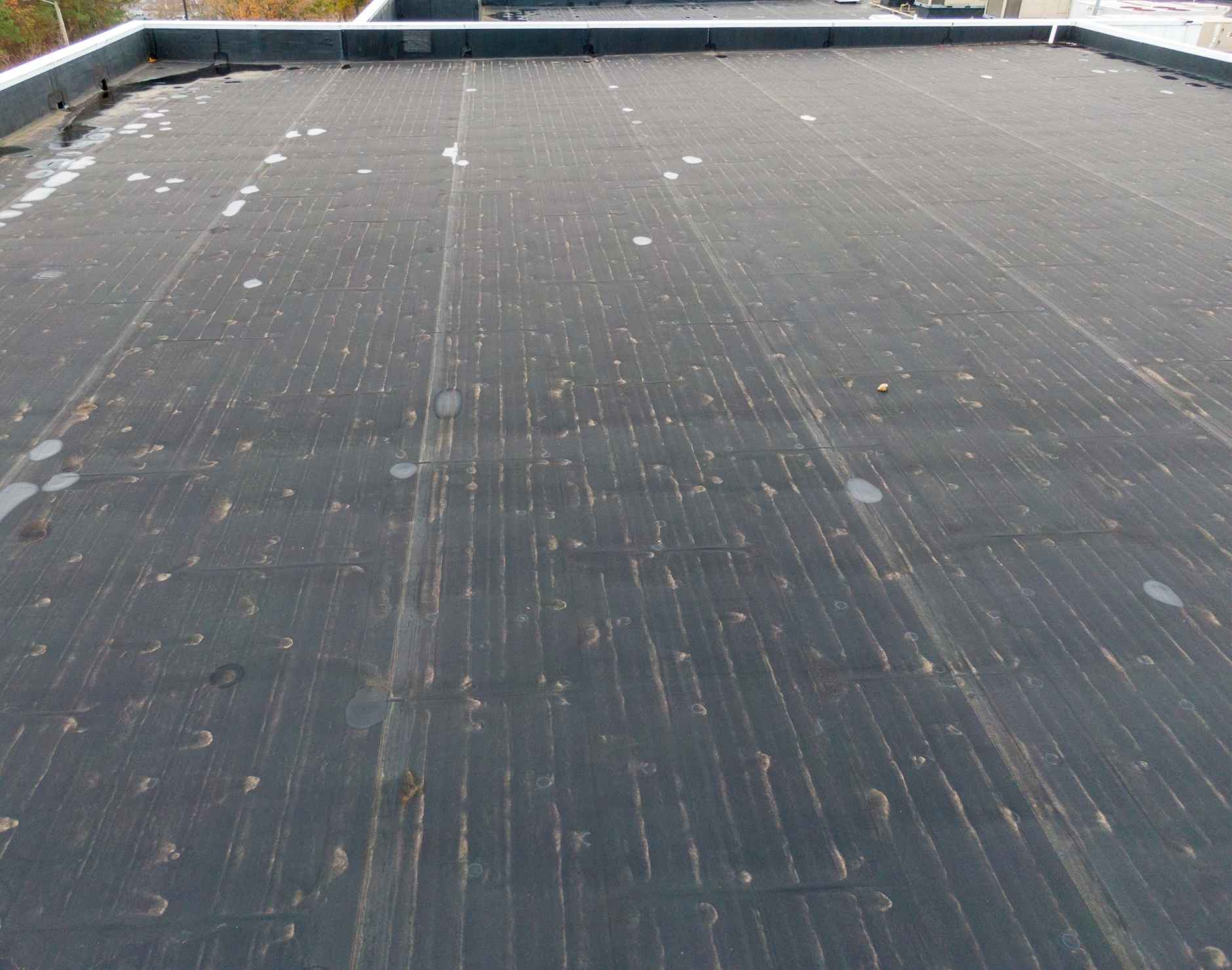
Several specific failure conditions on PBC flat roofs indicate that repair is not a viable path regardless of cost calculations. These include: membrane delamination from the substrate over more than 20% of the roof area (the adhesion failure that causes bubbling and lifting cannot be repaired section by section reliably), seam failure on heat-welded single-ply systems where seam integrity has failed at multiple locations (indicates material brittleness from UV degradation that will continue to produce new failures), and substrate rot or deterioration where the deck itself is compromised (no surface system performs correctly on a failed substrate). When a qualified contractor identifies any of these conditions, repair is treating symptoms while the underlying failure mode continues — replacement is the correct path.
When Repair Is the Right Answer
Repair is the correct decision when: the failure is isolated and clearly defined (a single penetration flashing failure, a localized seam separation, a contained area of membrane damage from foot traffic), the underlying membrane system has substantial remaining life (7+ years on a well-maintained system), the repair scope is well under the FBC 25% threshold for the 12-month period, and a qualified contractor confirms the repair will restore the system's waterproofing function at the failure location without compromising the adjacent membrane.
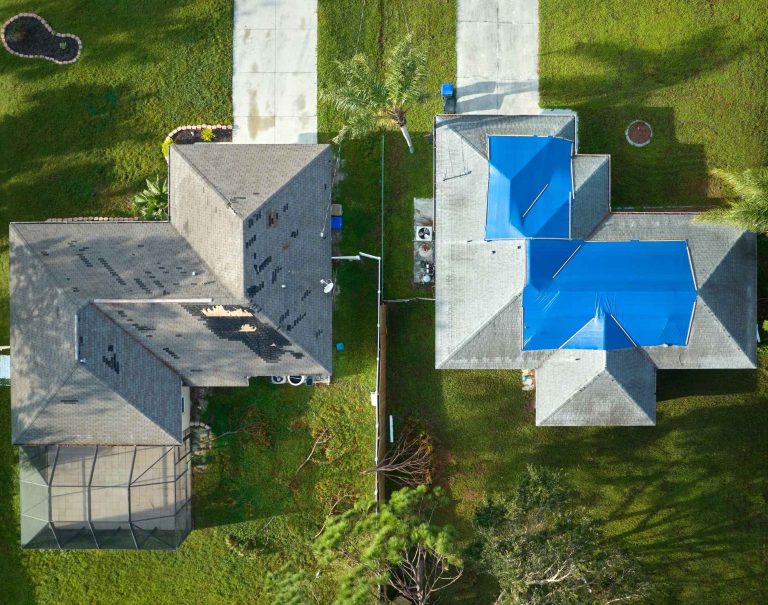
Post-storm repair is a specific case where repair is almost always the correct immediate action — emergency tarping and repair to restore waterproofing function after storm damage is both the homeowner's insurance obligation (duty to mitigate) and the financially prudent choice while the insurance claim processes. The permanent replacement decision can be made after the claim settles; the emergency repair prevents progressive water damage in the interim. The full post-storm sequence is in roof repair after a storm in Florida.
Finding a Qualified Flat Roof Contractor in PBC
Flat roof repair and replacement in Palm Beach County requires a CCC-licensed contractor with documented experience in single-ply membrane systems — TPO, PVC, and modified bitumen. The skills required for a competent flat roof repair are different from those required for tile or shingle work — specifically, heat-welding proficiency for TPO and PVC systems is a specialized skill that not all CCC-licensed contractors possess. Membrane differences are detailed in TPO vs. EPDM for South Florida. Ask specifically about the contractor's experience with the membrane system on your property, and request references for flat roof repair projects of comparable size and system type. Find verified flat roof contractors in your area through the 561 Roofers flat roofing directory.
- Track cumulative repair area over any 12-month period — FBC 25% threshold triggers full replacement requirement
- Apply the 30% cost rule: if repair exceeds 30% of replacement cost on an aging system, replacement is likely better economics
- For Citizens Insurance, note flat roofs trigger scrutiny at 15 years — not 25 years like pitched roofs
- Get an honest remaining-life assessment from a contractor who does both repair and replacement — not only replacement
- For delamination, multi-point seam failure, or substrate rot — replacement is required, not repair
- For post-storm damage, repair immediately to satisfy duty-to-mitigate obligation while claim processes
- Confirm repair contractor has heat-welding proficiency for TPO or PVC systems — ask specifically
- Get repair scope in writing with the specific membrane area covered and the failure mode addressed