Roof leaks in South Florida are more complicated than most homeowners expect — because the point where water appears on a ceiling or wall is almost never directly below the point where water entered the roof system. In Palm Beach County's driving-rain conditions, water can travel 10-20 feet along roof framing before manifesting as a stain or drip inside the home. Finding the actual entry point requires a systematic investigation process that most homeowners are not equipped to perform alone — and that many inexperienced contractors perform incorrectly, leading to repairs that address visible symptoms rather than the actual failure.
Why the Stain Is Never Where the Leak Is
Water entering a roof system travels the path of least resistance — which is almost never straight down. On a tile roof, water that enters through a failed flashing at a plumbing vent can travel along the top of the roof deck for 8-15 feet before finding a gap in the underlayment, then continue along a rafter or truss to a point where it drips onto the ceiling sheathing. The ceiling stain appears 15 feet from the actual entry point. A repair targeted at the ceiling stain location finds nothing wrong with the roof there — because the roof is fine there.
This diagnostic challenge is the primary reason roof leak repairs in Palm Beach County are frequently unsuccessful on the first attempt. The repair addresses the wrong location, the leak reappears, and the homeowner goes through another cycle of contractor visits and repairs before the actual source is identified. Understanding the diagnostic process — and confirming your contractor uses it — is the foundation of a leak repair that actually works.
The Diagnostic Process for PBC Roof Leaks
A competent roof leak diagnosis in Palm Beach County follows a systematic sequence. For the homeowner-facing version of this sequence — the five-step order that starts in the attic, not on the roof - see how to find a roof leak in Florida.
First, the interior inspection: the contractor examines the ceiling stain, traces any visible water trails, and notes the geometry of the affected area relative to the roof structure above.
Second, the attic inspection: if accessible, the attic space is inspected during or immediately after rainfall — a flashlight and a systematic scan of the deck and framing from the interior reveals the actual entry point in most cases as a water trail on the wood or a wet spot on the deck.
Third, the exterior inspection: the contractor examines the roof surface at and above the likely entry zone, specifically looking at every penetration, flashing, valley, ridge cap, and tile course in the suspect area.
The most common entry points for roof leaks in Palm Beach County tile roofs, in order of frequency: failed pipe boot flashings at plumbing vents, failed valley flashing at roof-to-roof intersections, failed ridge cap mortar, step flashing failures at vertical wall intersections, and cracked or broken tiles that were improperly repaired. For shingle roofs: failed pipe boots, missing or damaged step flashing, deteriorated valley flashing, and lifted or missing shingles from wind events.
Emergency Mitigation Before Repair
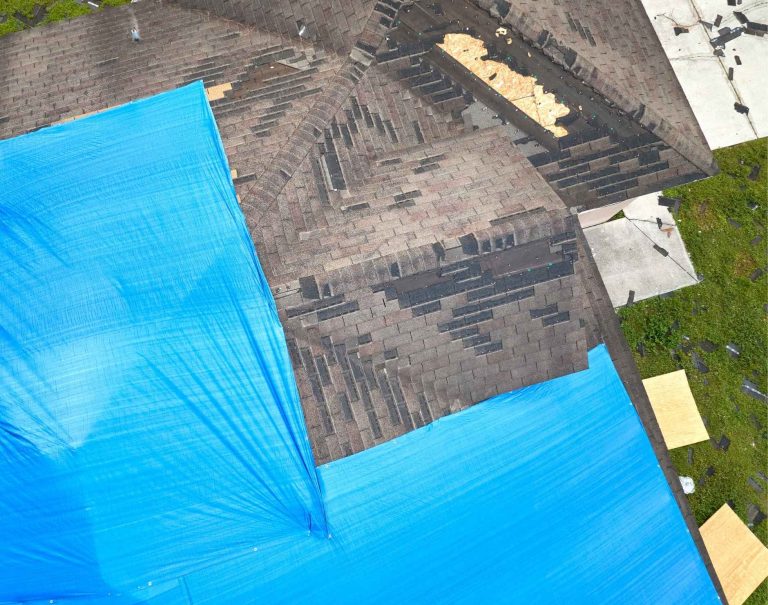
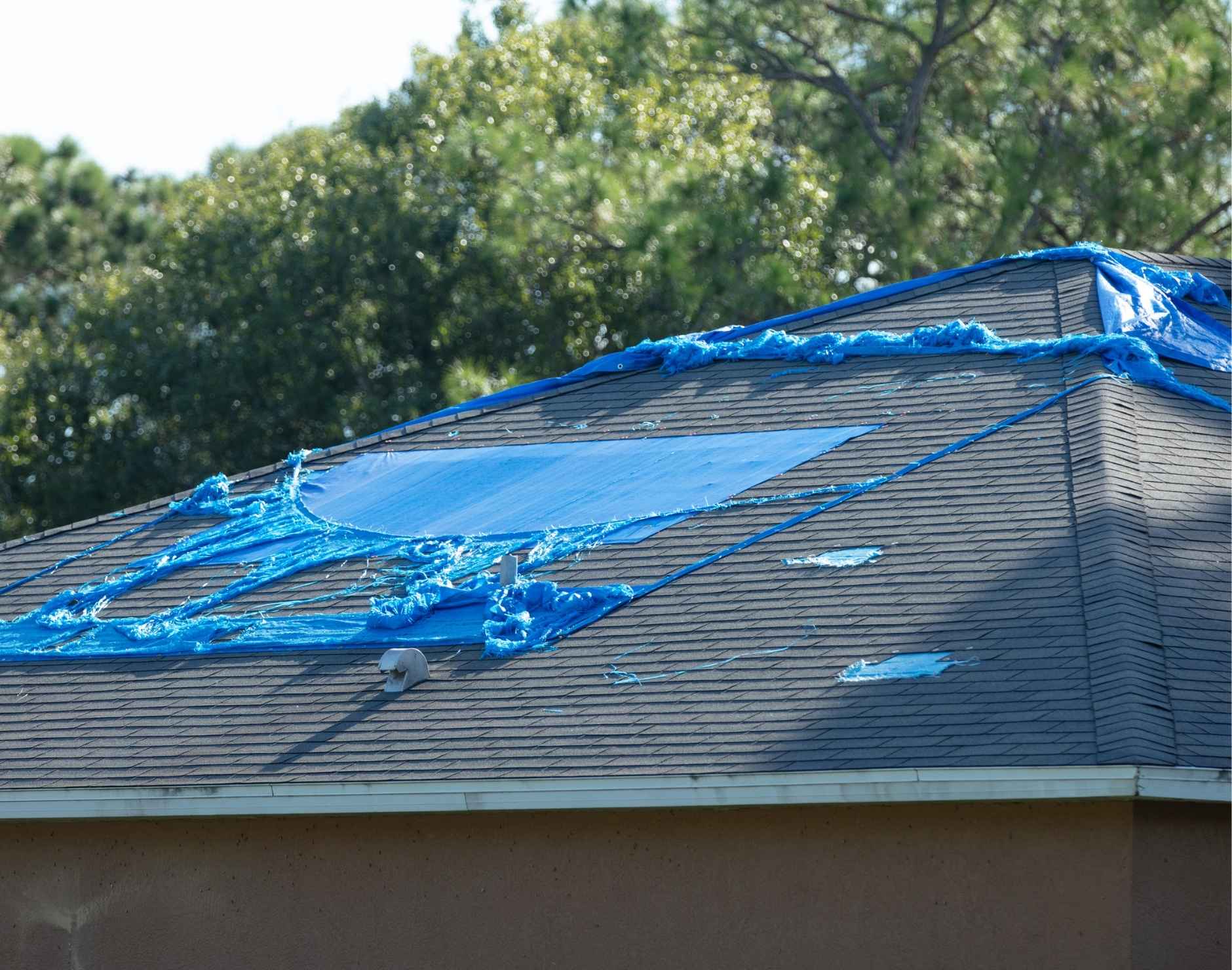
When a roof is actively leaking during or after a storm event in Palm Beach County, the first priority is stopping ongoing water intrusion — not finding the permanent repair. Emergency tarping by a licensed contractor protects the interior from progressive damage and satisfies the homeowner's duty to mitigate under Florida insurance policy terms. Emergency tarping should be installed over the entire suspect area with adequate overlap and proper tie-down for South Florida wind conditions — a tarp that fails in the next rain event has accomplished nothing.
After tarping and stabilization, the diagnostic process can proceed systematically without the pressure of active weather. The permanent repair can then be scoped accurately and executed under a building permit if the scope requires one. In Palm Beach County, roof repairs that replace more than a minimal number of tiles or involve flashing replacement generally require a permit — confirm with your contractor whether the proposed repair scope requires permitting before work begins.
Permits for Roof Repairs in Palm Beach County
Not all roof repairs require permits in Palm Beach County, but significant repairs do. The general guidance from PBC Building Division: replacing fewer than 25 individual tiles or shingles with like-for-like materials may qualify for a minor repair permit or no permit; replacing flashing systems, repairing underlayment, or replacing more than a minimal quantity of surface material requires a standard permit. Unlicensed repair work — regardless of permit status — voids manufacturer warranties and creates insurance claim complications if future damage occurs in the repaired area.
Always use a CCC-licensed contractor for any roof repair in PBC — the directory lists verified roofers in Greenacres and every other municipality.
Typical leak repair pricing by scope is covered in the roof repair cost guide for Palm Beach County. Find one through the 561 Roofers repair contractor directory.
- Do not target repair at ceiling stain location — the entry point is almost always elsewhere
- Require attic inspection as part of contractor diagnostic if home has attic access
- For active leaks, arrange emergency tarping immediately to satisfy duty-to-mitigate obligation
- Inspect these first for tile roofs: pipe boots, valley flashing, ridge cap mortar, step flashing, cracked tiles
- Inspect these first for shingle roofs: pipe boots, step flashing, valley flashing, lifted or missing shingles
- Confirm whether repair scope requires a permit — significant flashing or underlayment work typically does
- Use only CCC-licensed contractors for all repair work — unlicensed work voids warranties and creates insurance issues
- After repair, monitor through at least 2 South Florida rain events before confirming the repair was successful