After a storm clears Palm Beach County, homeowners face an immediate choice: emergency tarping to stop active water intrusion, or permanent roof repair to restore the system. These are not interchangeable options. Florida insurance law, Florida Building Code, and Citizens Insurance claims procedures treat each differently — and choosing the wrong one at the wrong moment can reduce or eliminate your claim payout.
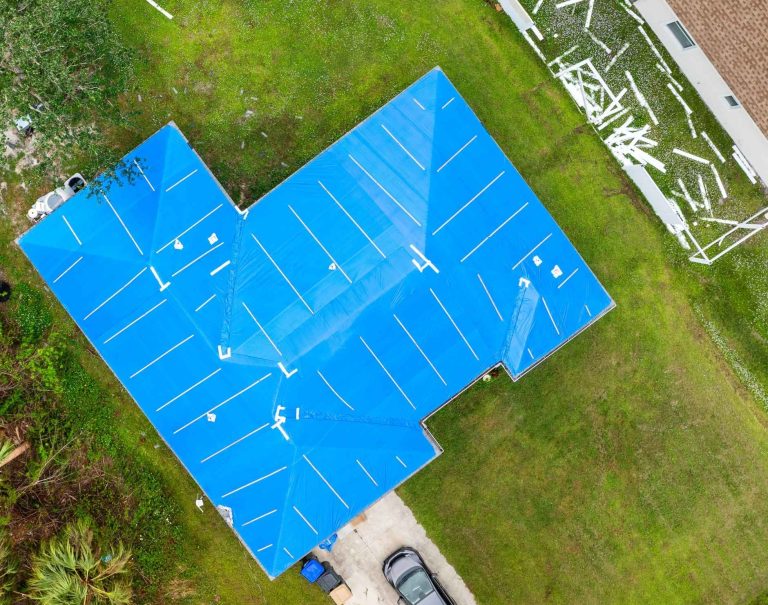
Emergency tarping is the correct first response to any active roof penetration following storm damage in Palm Beach County. A licensed CCC contractor can install emergency tarping without a building permit, and Citizens Insurance and most private carriers reimburse tarping as a covered emergency expense - provided the tarp is installed before permanent repairs begin and photographic documentation exists prior to installation.
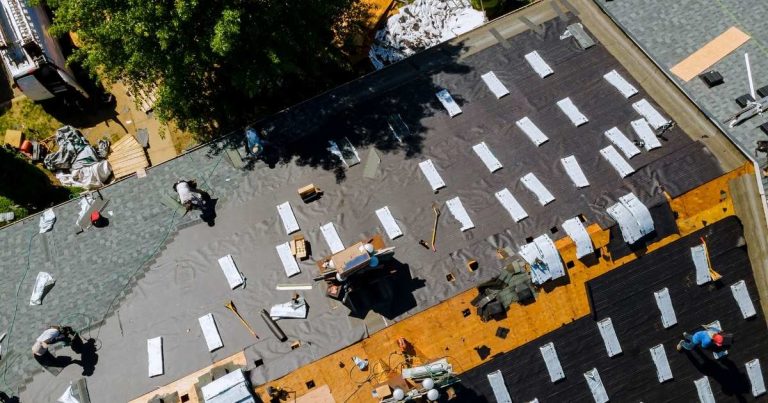
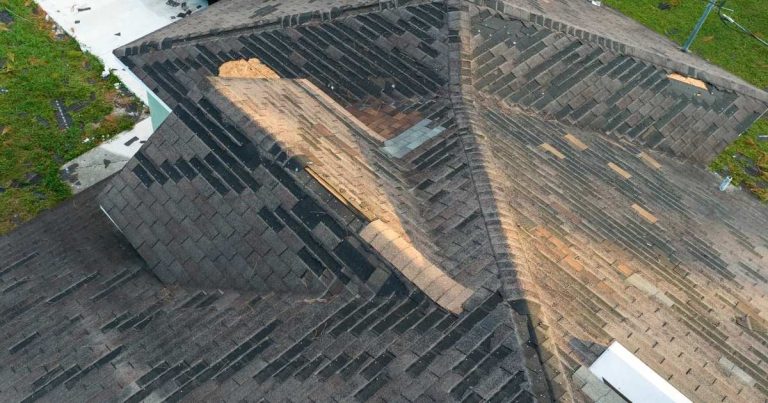
Permanent roof repair is different in every respect. Any structural repair, shingle or tile replacement, flashing work, or modification to the roof assembly requires a permit from the municipality's building department. More critically, permanent repairs completed before a Citizens Insurance adjuster has inspected the damage create the most common grounds for claim reduction and denial in South Florida. Citizens uses its own Independent Inspector network to assess storm damage. Once a permanent repair covers the original damage, the inspector cannot document what existed. The claim shrinks to what can still be observed — which is often nothing.
The 48-hour rule is real, but it applies to claims — not repairs. Palm Beach County homeowners should open a Citizens Insurance claim within 48 hours of a storm event and document all visible damage with date-stamped photographs before anything touches the roof. Emergency tarping can and should proceed immediately. Permanent repair must wait for the adjuster's inspection, unless the structure is unsafe to occupy — in which case the contractor documents the pre-repair condition in writing and in photographs before work begins.
Florida Building Code Section 706 adds another layer of consequence to the repair-vs-replacement decision. Under FBC Section 706, any storm event that damages more than 25% of a roof's total surface area triggers a mandatory full replacement — not a partial repair. A licensed CCC contractor calculates this by measuring damaged square footage against total roof square footage. Homeowners who approve partial permanent repairs before an adjuster inspection may unknowingly reduce the documented scope below the 25% threshold, converting a full-replacement claim into a partial-repair claim. For a comprehensive explanation of how how the FBC 25% rule triggers a mandatory full replacement, see our dedicated guide.
For licensed storm damage roof repair in Palm Beach County, the contractor's role in the claims process begins before the adjuster arrives — not after.
When emergency tarping is the correct response
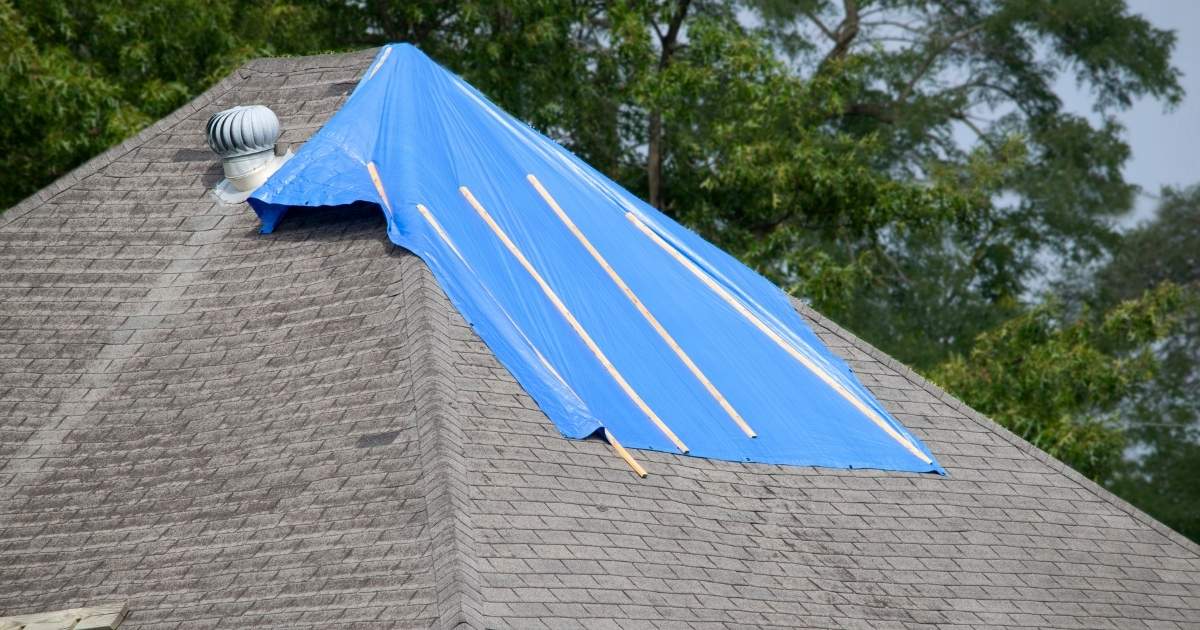
Emergency tarping is appropriate when a storm has created an active penetration — missing shingles, displaced tile, cracked or punctured membrane — that will allow water intrusion before permanent repairs can be permitted and scheduled. Tarping costs $500–$1,500 for most residential applications in PBC, is reimbursable under most homeowner policies, and does not compromise the adjuster's ability to document the original damage. For what carriers actually require from a valid tarp - coverage overlap, attachment, and invoice standards - see the emergency roof tarping guide for Palm Beach County.
A proper emergency tarp installation by a licensed CCC contractor includes:
- Photographic documentation of all visible damage before any tarp material is placed
- A written damage assessment identifying the penetration type, location, and approximate affected area
- Tarp secured over the ridge line or anchored with weighted boards — never stapled directly into the sheathing
- A written receipt identifying the contractor's CCC license number
When permanent repair must wait
Permanent repair — defined as any work that replaces, repairs, or modifies the roof assembly — must wait until:
- The homeowner has opened a claim with Citizens Insurance or their private carrier
- An adjuster inspection has been completed, or the carrier has issued written authorization to proceed
- The contractor has provided a written scope of work with itemized pricing that the carrier has reviewed
The single most common claim reduction scenario in Palm Beach County: a homeowner allows a contractor to complete full repairs before the adjuster arrives. The adjuster inspects a completed roof, finds no visible damage, and closes the claim. The homeowner has paid out of pocket for a repair that was fully covered. Once properly authorized, permanent work follows standard pricing - see roof repair costs in Palm Beach County.
The sequence that protects your claim
- Photograph all visible damage immediately after the storm — before anyone touches the roof
- Open your insurance claim within 48 hours
- Have a licensed CCC contractor install emergency tarping if active water intrusion exists
- Schedule the adjuster inspection with your contractor present
- Receive written authorization or adjuster sign-off before any permanent work begins
- Pull the required permit from your municipality's building department before permanent repairs start
Licensed CCC contractors serving Lake Worth Beach and every PBC municipality are listed in the directory with DBPR verification confirmed.
For a step-by-step walkthrough of the full claims process, see the correct sequence for filing a storm damage roof claim in Florida.
- ✓ Is there active water intrusion? → Emergency tarping can proceed immediately. No permit required. Document before installation.
- ✓ Have you opened your insurance claim? → Do this within 48 hours of the storm event, before any permanent work begins.
- ✓ Has your adjuster inspected? → Permanent repair must wait for this step, or written carrier authorization to proceed.
- ✓ Has your contractor verified CCC license? → Check at floridacontractorcheck.com before signing any document. License must be active and current in Florida.
- ✓ Has your contractor presented an AOB? → Decline it. Report to DBPR at 850-487-1395. AOB transfers your claim rights.
- ✓ Does the damage exceed 25% of total roof area? → Your contractor should calculate this. If yes, FBC Section 706 requires full replacement — not partial repair. This affects your claim scope.
- ✓ Is a permit pulled for permanent work? → Any structural repair requires a building permit. Unpermitted permanent repairs void Citizens Insurance wind mitigation eligibility.