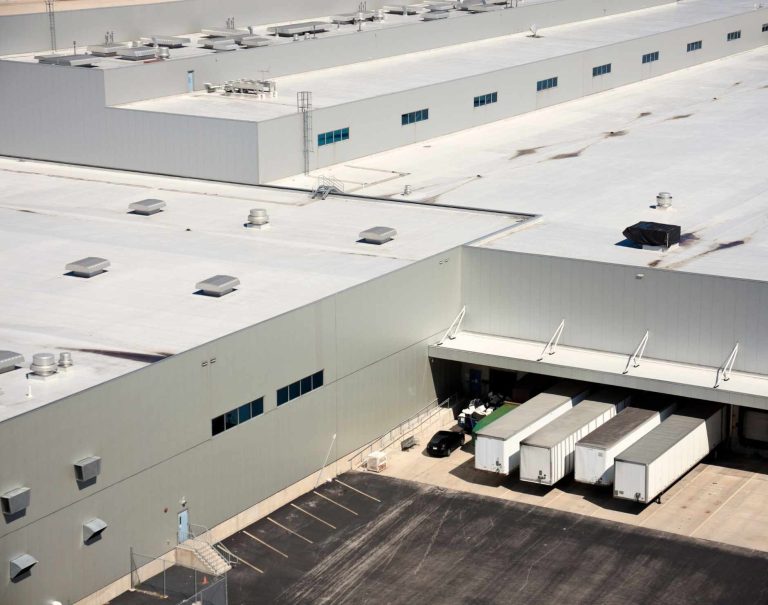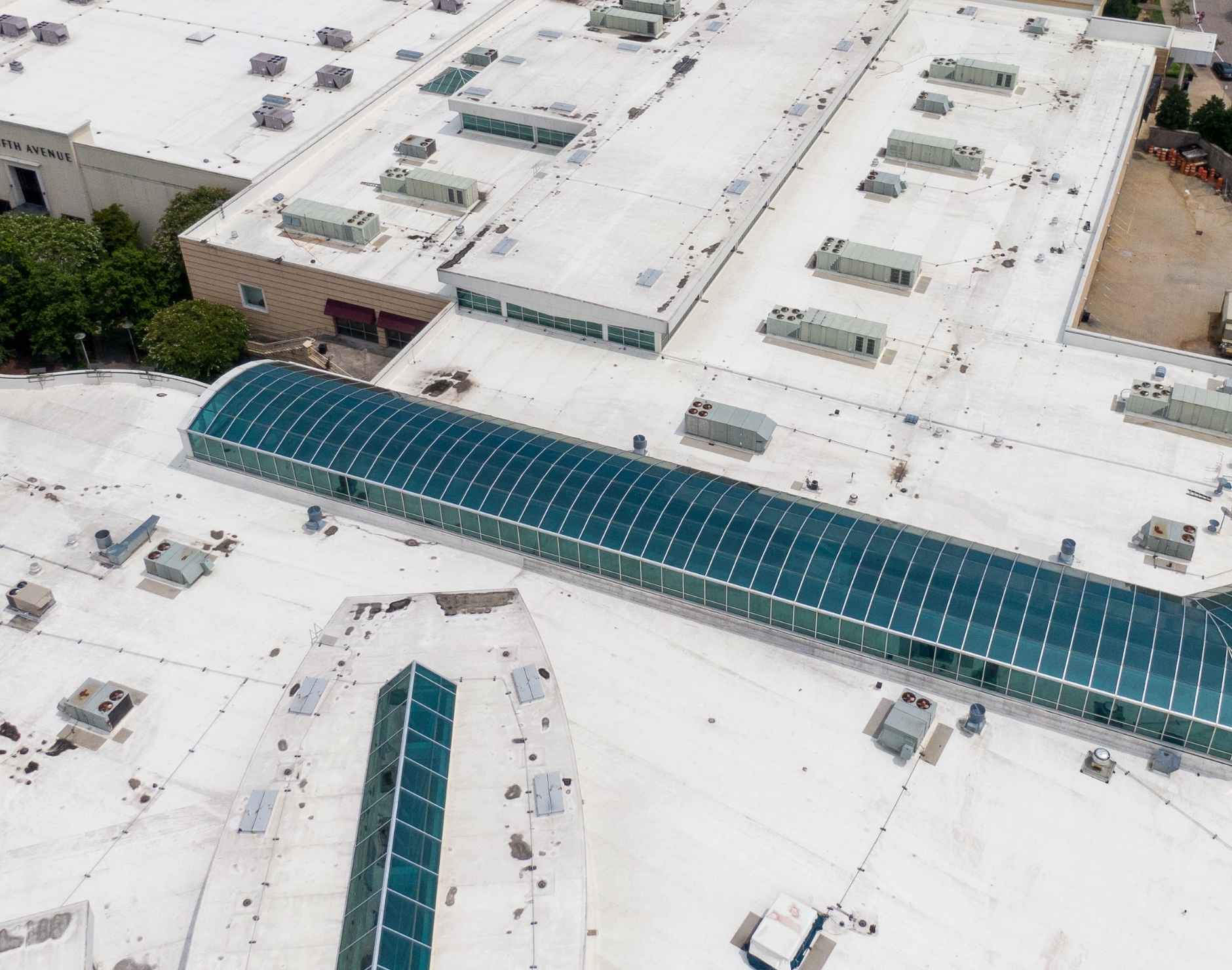
The TPO vs. EPDM decision is the first material specification question for any commercial flat roof replacement or new installation in Palm Beach County — and it is one where the correct answer has shifted significantly over the past decade. EPDM dominated the commercial flat roofing market through the 1990s and early 2000s. TPO has displaced it as the standard for most new PBC commercial installations since then. Understanding why that shift happened — and the specific conditions where EPDM remains the appropriate specification — is the practical knowledge that separates an informed commercial property owner from one who accepts whatever material a contractor happens to stock. This guide provides the objective comparison for South Florida's specific performance environment.
What TPO is and how it performs in South Florida
Thermoplastic polyolefin (TPO) is a single-ply roofing membrane composed of a polypropylene and ethylene-propylene rubber blend reinforced with a polyester scrim. TPO membranes are typically available in 45-mil, 60-mil, and 80-mil thicknesses, with 60-mil being the standard commercial specification for most PBC applications and 80-mil appropriate for high-traffic roofs and areas with significant mechanical equipment.
TPO's performance advantages in South Florida's climate are substantial. The membrane's white or light gray surface reflects 70–80% of solar radiation, producing roof surface temperatures 50–80°F lower than dark-colored EPDM under direct South Florida summer sun. Lower surface temperatures reduce the thermal cycling stress on the membrane itself and meaningfully reduce cooling load for the building below — a significant operational cost benefit in a market where commercial air conditioning runs year-round.
TPO seams are heat-welded — a hot-air welding gun fuses the membrane at overlaps to create a bond that, when executed correctly, is stronger than the membrane itself. A properly welded TPO seam will not peel, separate, or allow water infiltration at the joint. This is TPO's most significant performance advantage over EPDM: seam integrity in South Florida's rain intensity environment is the defining leak risk for any flat membrane system, and welded seams categorically outperform adhesive seams under the high-volume rainfall PBC receives during the June–November wet season.
TPO is also the membrane most widely specified under current Florida Product Approvals for PBC's High Velocity Hurricane Zone. Most major TPO manufacturers — Carlisle, GAF, Johns Manville, Firestone — maintain current Product Approval for their TPO systems in PBC's 160–175 mph HVHZ design wind speed zone under both mechanically attached and fully adhered installation methods.
What EPDM is and where it remains appropriate
Ethylene propylene diene monomer (EPDM) is a synthetic rubber membrane that has been used in commercial flat roofing since the 1960s. It is available in 45-mil, 60-mil, and 90-mil thicknesses and is typically installed in large sheets with minimal seams — a characteristic that was historically its primary advantage over multi-piece membrane systems.
EPDM's performance profile in South Florida is weaker than TPO in two critical areas. First, EPDM seams are adhesive-bonded rather than heat-welded. The adhesive bond is the weakest point in any EPDM installation and is subject to degradation from UV exposure, thermal cycling, and the mechanical stress of South Florida's wind events. Seam failures are the most common source of leaks on aging EPDM roofs in PBC, and they are progressive — a seam that has begun to separate will continue to open with each thermal cycle and each wind event until it is actively repaired.
Second, standard black EPDM absorbs rather than reflects solar radiation. Surface temperatures on a black EPDM roof in South Florida summer conditions can reach 180–200°F — significantly higher than a white TPO surface under the same conditions. These temperatures accelerate the rubber compound's degradation over its service life and impose substantial additional cooling load on the building below.
White EPDM addresses the solar reflectance disadvantage but not the seam adhesive issue. EPDM remains appropriate in several specific circumstances: roofs with significant irregular geometry where large-format rubber sheets minimize seam count better than TPO panels; re-roofing applications where the existing EPDM system is sound and a recover is scoped; and specific owner preferences for rubber membrane construction where the seam maintenance requirement is understood and accepted.
Wind uplift — the critical HVHZ performance criterion
For any commercial flat roofing membrane in Palm Beach County's HVHZ, wind uplift resistance is the primary performance criterion that the Florida Product Approval must address. FBC Chapter 15 requires that any roofing system installed in the HVHZ carry a current Florida Product Approval confirming the system meets the wind uplift resistance requirements for PBC's design wind speed zone.
Both TPO and EPDM systems are available with Product Approvals for PBC's HVHZ. The specific approval depends on membrane manufacturer, thickness, installation method (mechanically attached vs. fully adhered), and attachment pattern to the substrate. A mechanically attached TPO system with 60-mil membrane and fastener rows at 12-inch spacing carries a different wind uplift rating than a fully adhered system — and both may be appropriate for different PBC commercial applications depending on the building's structural capacity and required uplift resistance for the specific roof zone.
For commercial roofing services in Palm Beach County from a licensed CBC contractor, the Product Approval selection is determined by the wind uplift calculation for the specific building — not by material preference alone. A contractor who proposes a system without referencing its Product Approval and the wind uplift calculation for your building is not providing a code-compliant commercial roofing proposal.
Cost comparison — TPO vs EPDM for PBC commercial installations
TPO and EPDM are broadly comparable in material cost for equivalent thicknesses — the price difference between a 60-mil TPO and a 60-mil EPDM membrane is typically under 10%. The meaningful cost differences are in installation labor and long-term maintenance. TPO's hot-air welding requires precision and quality control via probe testing, adding modest labor cost over EPDM. However, welded seams eliminate the periodic re-adhesion maintenance that EPDM requires in South Florida's thermal cycling environment. Full replacement-scale budgets are in the commercial roof cost guide for PBC.
Installed cost for a commercial TPO replacement on a standard PBC flat-roof building runs $8–$14 per square foot for 60-mil mechanically attached systems and $10–$16 per square foot for 60-mil fully adhered systems. EPDM installed cost runs $7–$13 per square foot for comparable thickness and installation method. On a 10,000 square foot commercial roof, the total installed cost difference is typically $5,000–$15,000 — a modest premium for a system with meaningfully lower seam maintenance requirements over a 20–25 year service life.
Service life — realistic expectations for South Florida
A properly installed 60-mil TPO system on a PBC commercial building realistically delivers 20–25 years of service life before replacement is warranted. The limiting factors are UV degradation of the membrane surface, thermal cycling fatigue at seam edges and penetration details, and the mechanical stress of annual hurricane season wind events. Preventive maintenance — annual inspections, prompt repair of any seam edge lifting or penetration flashing separation — extends realistic service life toward the upper end of this range. Structuring that program correctly is covered in the commercial roof maintenance contract guide.
A properly installed 60-mil black EPDM system realistically delivers 15–20 years on a PBC commercial building before seam maintenance costs and membrane degradation make replacement the more economical choice. White EPDM extends this range to 18–22 years through reduced surface temperature cycling. The seam adhesive maintenance requirement — typically every 5–7 years on a South Florida EPDM installation — is the primary ongoing cost not present on a welded TPO system.
Both membrane types require the same underlying system components for a compliant PBC HVHZ installation: a continuous tapered insulation system sloped to achieve positive drainage at all points, cover board above the insulation layer, and appropriate flashings at all penetrations, perimeters, and transitions. The membrane is the visible top layer of a multi-component assembly — its service life is directly dependent on the quality of every component below it.
Making the correct specification decision for your PBC commercial property
For most PBC commercial building owners replacing a flat roof system in 2026, 60-mil white TPO fully adhered or mechanically attached is the appropriate default specification. It delivers the best combination of wind uplift resistance, seam integrity, solar reflectance, and long-term maintenance profile for South Florida's climate.
EPDM remains appropriate in specific circumstances: existing systems in good condition where a recover specification avoids full removal cost; buildings with highly irregular roof geometry where large-format sheets minimize seam count; and specific owner preferences for white EPDM rubber construction where the seam maintenance requirement is understood.
The specification decision should be made by a licensed CBC contractor who pulls the permit, provides the Product Approval documentation, and warrants the installation. The three-way comparison including modified bitumen is in the flat roof system comparison. For a complete overview of flat roofing systems available for Palm Beach County commercial buildings — including TPO, EPDM, modified bitumen, and spray polyurethane foam — see our flat roofing services page.
- Default to 60-mil white TPO for most new PBC commercial installations.** Welded seams, high solar reflectance, and broad Product Approval coverage make TPO the correct specification for the majority of PBC commercial flat roof replacements in 2026.
- Request the Florida Product Approval number for the proposed system before signing.** Membrane type, thickness, and installation method all affect which Product Approval applies. Confirm it covers PBC's 160–175 mph HVHZ design wind speed zone.
- Confirm the proposal includes a tapered insulation system for positive drainage.** Ponding water accelerates membrane degradation on any flat roof. Positive drainage is a code requirement and a service life prerequisite.
- For EPDM proposals, confirm white membrane and ask about the seam adhesive maintenance schedule.** Black EPDM is not appropriate for most PBC commercial applications. White EPDM requires periodic re-adhesion maintenance — confirm the contractor's warranty covers this.
- Verify the contractor holds a current CBC license at myfloridalicense.com.** Commercial roofing requires a CBC or CC license — not a residential CCC license. Verify before signing.
- Confirm the proposal includes permit, inspection, and Product Approval documentation as written line items.** A commercial flat roofing proposal without a permit line item is not code-compliant.
- After installation, schedule a post-hurricane-season inspection every November.** Commercial flat roofs accumulate debris at drains and scuppers during hurricane season. Annual inspection and drain clearing prevents ponding water that accelerates membrane degradation.