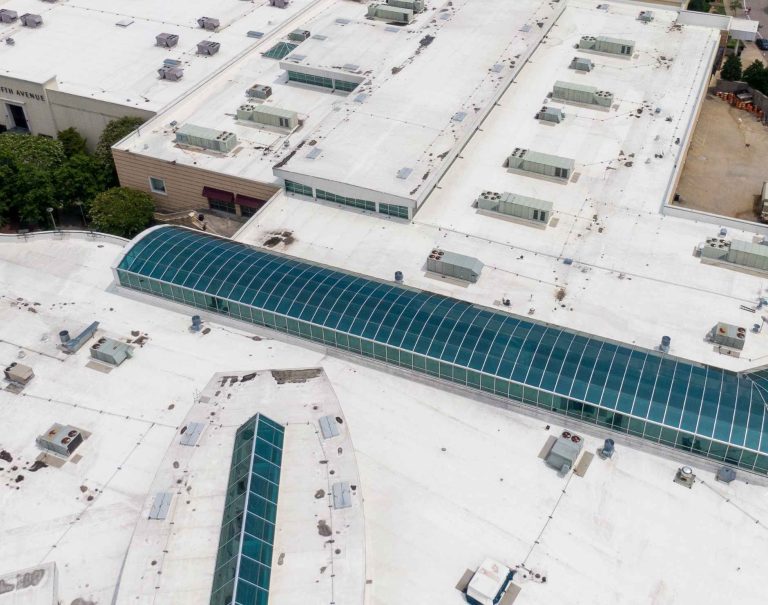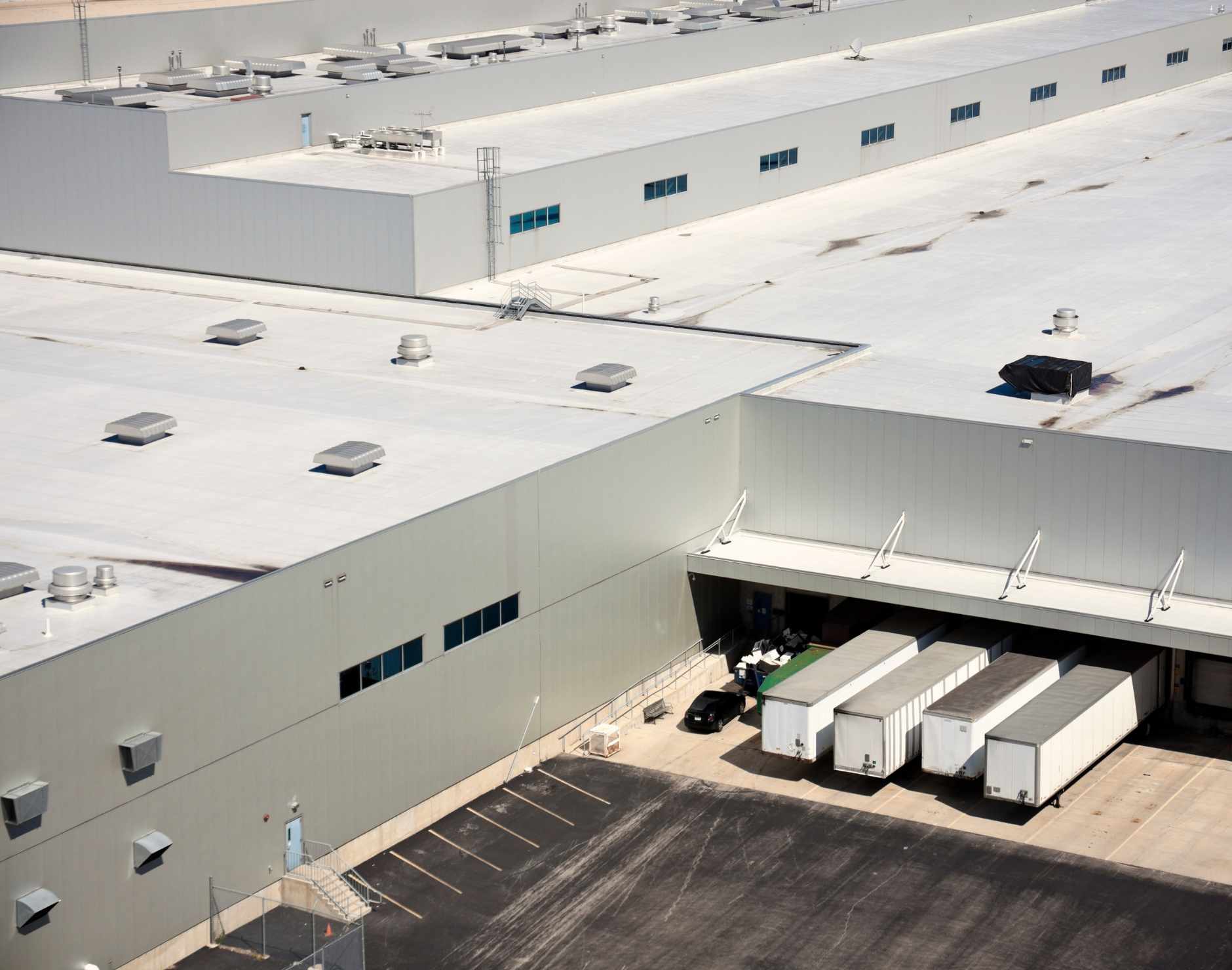
Commercial roof replacement costs in Palm Beach County vary more than residential costs because commercial flat roofing involves more system variables - membrane type, thickness, installation method, insulation specification, drainage design, and the number and complexity of penetrations and HVAC curbs. A 10,000 square foot TPO replacement on a simple single-story retail building in Boynton Beach and a 10,000 square foot TPO replacement on a multi-tenant building in Boca Raton with twelve HVAC units, a rooftop equipment platform, and complex parapet geometry are both "10,000 square foot TPO replacements" - but they will not cost the same. This guide provides honest 2026 cost ranges for every common commercial roofing system in PBC, explains the variables that drive cost within each range, and gives commercial property owners the framework to evaluate whether a bid is within the correct range for their specific building.
What every compliant PBC commercial roof replacement must include
Before reviewing cost ranges, the scope baseline for a compliant commercial roof replacement in Palm Beach County's HVHZ must be established. Every compliant commercial flat roof replacement in PBC must include tear-off and disposal of the existing system, deck inspection and repair of any damaged substrate, a continuous tapered insulation system providing positive drainage to all drain and scupper locations (minimum 1/4 inch per foot slope), cover board above the insulation, the primary membrane system with Florida Product Approval for PBC's 160–175 mph HVHZ zone, perimeter and edge metal to the specified wind uplift rating, complete flashing at all penetrations and HVAC curbs, permit pulled by the licensed CBC contractor, and final inspection.
A commercial roofing proposal that omits tapered insulation, cover board, perimeter edge metal, or permit is not a compliant proposal — it is a reduced-scope bid that will not produce a code-compliant installation. Comparing a compliant proposal against an incomplete one on price alone is not a valid cost comparison. The full bid-evaluation framework is in how to choose a commercial roofing contractor in Palm Beach County.
TPO replacement cost — the standard PBC commercial specification
60-mil white TPO is the standard membrane specification for most new commercial flat roof replacements in Palm Beach County in 2026. It is the membrane with the widest Product Approval coverage for PBC's HVHZ, the strongest seam integrity profile for South Florida's rainfall environment, and the best solar reflectance for year-round commercial cooling load reduction.
Mechanically attached 60-mil TPO with tapered insulation, cover board, and full perimeter and penetration flashing scope runs $8–$12 per square foot installed on standard commercial buildings in PBC. Fully adhered 60-mil TPO — required on buildings where mechanical fasteners would compromise the deck substrate, or where higher wind uplift resistance values are required — runs $11–$16 per square foot installed. On an 80-mil TPO specification for high-traffic roofs or buildings with significant rooftop mechanical equipment, installed cost runs $13–$18 per square foot.
For a standard 10,000 square foot PBC commercial building, the total installed cost of a compliant 60-mil mechanically attached TPO replacement runs $80,000–$120,000. For a 25,000 square foot building, total installed cost runs $200,000–$300,000. For a 50,000 square foot building, $400,000–$600,000 — with per-square-foot cost typically declining on larger buildings due to reduced mobilization cost per square foot and more favorable material purchasing.
EPDM replacement cost
60-mil white EPDM replacement on a standard PBC commercial building runs $7–$11 per square foot installed for mechanically attached systems and $9–$14 per square foot for fully adhered systems. The material cost advantage of EPDM over TPO is modest — typically $0.50–$1.50 per square foot — and is offset by the higher long-term maintenance cost that EPDM's adhesive seams require in South Florida's thermal cycling environment.
For a 10,000 square foot building, a compliant 60-mil white EPDM replacement runs $70,000–$110,000 installed. The $10,000–$30,000 cost saving relative to TPO on this building size must be evaluated against the expected additional maintenance cost over the system's service life — typically $3,000–$6,000 per year in seam re-adhesion and inspection costs that TPO does not require.
Modified bitumen replacement cost
Modified bitumen (mod-bit) is a multi-ply asphalt-based membrane system that was the dominant commercial flat roofing specification in PBC through the 1990s and remains appropriate for specific applications — particularly low-slope roofs with irregular geometry, roofs with significant foot traffic, and re-roofing applications where the existing mod-bit system is being recovered rather than fully replaced.
Two-ply modified bitumen replacement runs $9–$14 per square foot installed on standard PBC commercial buildings. The higher labor cost relative to single-ply TPO or EPDM reflects the multi-layer torch-applied or cold-applied installation process. On a 10,000 square foot building, a compliant two-ply mod-bit replacement runs $90,000–$140,000 installed.
For commercial roofing services in Palm Beach County from licensed CBC contractors, the system selection and cost estimate for your specific building is based on the wind uplift calculation, existing substrate condition, drainage geometry, and Product Approval requirements for your building's HVHZ exposure zone — not on a standard price list.
Cost variables that drive price within each range
Several building-specific variables drive cost within the per-square-foot ranges above. Penetration count is the most significant — each HVAC curb, pipe penetration, drain, and skylight requires individual flashing work that adds $300–$1,200 in labor and material per penetration depending on complexity. A building with twenty HVAC units on a 10,000 square foot roof adds $6,000–$24,000 in penetration flashing scope relative to a simple roof with minimal mechanical equipment.
Parapet height and complexity adds cost through additional edge metal scope, counterflashing work, and the access difficulty of working at elevated parapet walls. Buildings with multiple roof levels, step-downs, or connecting structures require additional flashing at each transition that is not captured in the flat per-square-foot rate.
Building height affects both material and labor cost. Multi-story commercial buildings in PBC require crane or hoist access for material delivery to the roof, adding $3,000–$8,000 in mobilization cost that single-story buildings do not incur. Access restriction hours — common in occupied retail and office buildings — add labor cost through extended project timelines that cannot be compressed by working standard hours. CBC-licensed commercial roofers in Boynton Beach and across PBC price these variables into the written proposal.
Permit fees in PBC's 39 municipalities range from $400 to $2,500 for standard commercial roofing replacement permits. The permit fee is typically 1–3% of the declared project value and varies by municipality. A contractor who provides a proposal without specifying the permit fee is either not including the permit or has not determined the applicable fee for your municipality.
Insurance and financing considerations for PBC commercial owners
Commercial property insurance in Palm Beach County increasingly requires documented roof age and condition as part of policy underwriting. A commercial roof over 15 years old with no maintenance documentation will face carrier scrutiny, potential coverage restrictions, or premium increases that a new roof replacement eliminates. The insurance cost benefit of a new compliant commercial roof installation — reduced premiums, elimination of roof-related coverage restrictions, and favorable remaining life estimates on inspection — should be factored into the replacement cost analysis alongside the direct installation cost.
For a complete understanding of how TPO and EPDM compare as system specifications for PBC commercial buildings - including their relative service life, maintenance requirements, and Product Approval coverage — see our dedicated membrane comparison guide before finalizing your system specification.
- Confirm the proposal includes tapered insulation, cover board, perimeter edge metal, and permit as written line items.** A proposal missing any of these is an incomplete scope — not a lower-cost alternative.
- Get the substrate replacement contingency rate in writing before signing.** Ask for the per-square-foot rate for insulation replacement and deck repair. This is the largest cost variable and should be defined before tear-off begins.
- Count the penetrations on your roof before reviewing bids.** HVAC units, pipe penetrations, drains, and skylights each add $300–$1,200 in flashing scope. A proposal that does not account for your specific penetration count is not priced for your building.
- Confirm the permit fee and municipality in the proposal.** PBC's 39 municipalities have different permit fee structures. The permit fee should be a named line item, not buried in overhead.
- Evaluate total cost of ownership — not just installed cost.** A TPO system at $10/sq ft with $2,000/year maintenance cost outperforms an EPDM system at $8.50/sq ft with $5,000/year maintenance cost over a 20-year service life.
- Factor insurance premium changes into the replacement decision.** A new compliant roof on a commercial building with an aging system often reduces annual insurance premiums enough to offset a meaningful portion of the replacement cost over the warranty period.
- Verify the contractor's CBC license and request Product Approval documentation before awarding the contract.** Compliance verification before signing is the only time it is cost-free.