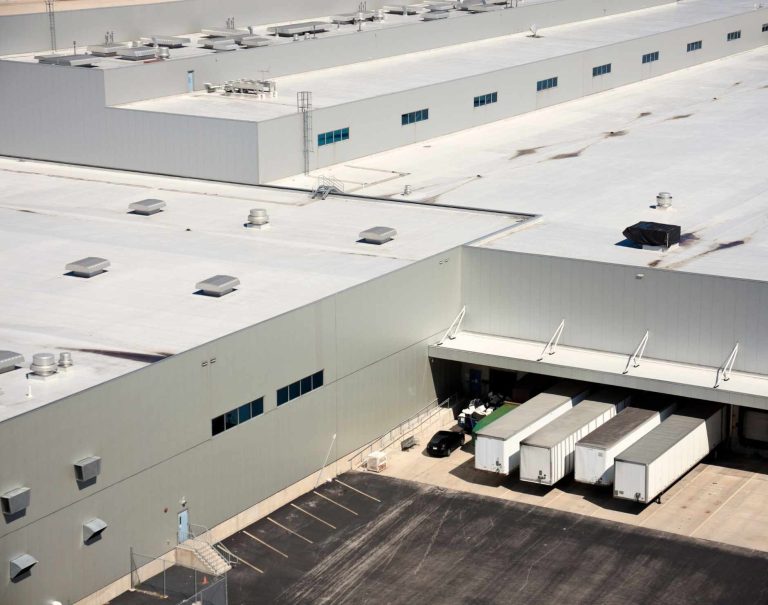
The commercial roofing contractor selection process in Palm Beach County involves a different set of criteria than residential roofing — and the consequences of selecting incorrectly are proportionally larger. A commercial roofing project on a 15,000 square foot retail building in Boynton Beach or a 40,000 square foot industrial property in West Palm Beach involves permits, Product Approvals, wind uplift calculations, and installation tolerances that require a licensed CBC contractor with documented commercial experience in PBC's specific code environment. A contractor who does excellent residential work but has limited commercial flat roofing experience in the HVHZ is not the correct contractor for a commercial project — regardless of price. This guide provides the evaluation framework that separates qualified PBC commercial roofing contractors from those who should not be on your bid list.
License verification — the non-negotiable first filter
The first evaluation criterion for any commercial roofing contractor in Palm Beach County is license verification — and it is a binary filter, not a weighted factor. A contractor without a current CBC (Certified Building Contractor) or CC (Certified Contractor) license issued by the Florida DBPR is not qualified to perform commercial roofing work in PBC above certain project thresholds, regardless of experience, price, or references.
This distinction matters because many roofing contractors in the PBC market hold a CCC (Certified Roofing Contractor) license — the standard residential roofing license — but not a CBC. A CCC license authorizes residential roofing work and some limited commercial work, but it does not authorize general commercial construction above the scope of the roofing trade itself. For commercial roofing projects involving structural modifications, significant penetration work, or projects above the dollar threshold defined in the CCC license scope, a CBC is required.
Verify every contractor's license at myfloridalicense.com before issuing a bid invitation. Confirm the license type (CBC, not only CCC), the license status (Current/Active), and the name on the license matches the entity submitting the bid. A license that is active but held by an individual contractor is not transferable to a corporate entity — the licensed individual must be the qualifier for the business entity performing the work.
Commercial project history in PBC's HVHZ — the experience filter
License verification confirms a contractor is legally authorized to perform commercial roofing work. It does not confirm they have done it competently in PBC's specific code environment. The second evaluation criterion is commercial project history — specifically, documented commercial flat roofing projects completed under permit in Palm Beach County's HVHZ within the past three years.
Ask every contractor on your bid list for a reference list of commercial projects in PBC completed in the past 36 months. The reference list should include the property address, the project scope (replacement vs. new installation, membrane type, square footage), the permit number, and a contact for the property owner or property manager. Call at least two references before issuing a contract.
The permit number is the most important item on the reference list. A contractor who completed a commercial roofing project in PBC under permit has a documented compliance record at the building department — the permit was opened, the work was performed, and the final inspection was passed. A contractor whose reference list does not include permit numbers either did not pull permits on past work or is providing references for projects outside PBC's jurisdiction. Neither is acceptable for a commercial roofing project in the HVHZ.
For commercial roofing services in Palm Beach County from licensed CBC contractors with documented HVHZ project history, the reference and permit record is available as a standard part of the pre-bid qualification process. CBC-licensed commercial roofers in West Palm Beach and across PBC are listed with license type shown.
Product Approval documentation — the technical competence filter
A qualified commercial roofing contractor in PBC's HVHZ should be able to provide, as part of the bid proposal, the specific Florida Product Approval for the proposed roofing system — including the membrane manufacturer, membrane thickness, installation method (mechanically attached vs. fully adhered), attachment pattern, and the wind uplift resistance values the system achieves under that approval.
This is not a technical question that requires the property owner to understand roofing engineering. It is a qualification filter: a contractor who can provide the Product Approval documentation and explain how it applies to your building has done this before in PBC's code environment. A contractor who cannot produce this documentation — or who says "we'll take care of the permit" without being able to specify the Product Approval — has not demonstrated the technical competence required for a compliant HVHZ commercial installation.
The wind uplift calculation for your specific building — accounting for building height, roof zone classification (field, edge, corner), exposure category, and design wind speed for your specific PBC municipality — should be part of every commercial roofing proposal. If a contractor submits a proposal without a wind uplift calculation, ask for it. If they cannot provide one, remove them from your bid list.
Insurance and bonding — the financial responsibility filter
A qualified commercial roofing contractor in PBC should carry general liability insurance at a minimum of $1,000,000 per occurrence and $2,000,000 aggregate, workers' compensation insurance covering all employees and subcontractors, and a contractor's bond. Request certificates of insurance directly from the contractor's insurance carrier — not a copy of the certificate from the contractor — and confirm the certificates are current and the coverage limits meet your property's requirements.
Workers' compensation coverage is particularly important on commercial roofing projects in PBC. Roofing is a high-risk trade and workers' compensation claims on uninsured crews become the property owner's liability in Florida. A contractor who uses uninsured subcontractors — common in PBC's post-storm contractor market — exposes the property owner to liability for any injury on the project regardless of the prime contractor's own coverage.
The proposal evaluation framework — what a complete commercial roofing proposal must include
A complete commercial roofing proposal in PBC should include the following as written line items: contractor name and CBC license number; membrane manufacturer, product name, and thickness; Florida Product Approval number for the proposed system; installation method (mechanically attached or fully adhered) and attachment pattern; tapered insulation specification for positive drainage; cover board specification; perimeter and penetration flashing scope; permit fee and municipality; project timeline with defined start and substantial completion dates; warranty terms — both manufacturer membrane warranty and contractor workmanship warranty; and total installed cost broken down by material and labor.
A proposal missing any of these items is an incomplete proposal. Do not award a contract based on an incomplete proposal — request the missing information and evaluate the contractor's response. A qualified contractor will provide the requested documentation without friction. A contractor who cannot or will not provide complete proposal documentation is telling you something important about how they will manage the project.
Selecting between qualified contractors
Once the bid list has been filtered by license, commercial project history, Product Approval capability, and insurance coverage, the remaining qualified contractors should be evaluated on three additional criteria: responsiveness during the bid process (a contractor who is slow to respond to questions before the contract is signed will be slower after), the warranty structure (manufacturer membrane warranty backed by a licensed installer credential is more valuable than a contractor workmanship warranty alone), and the clarity of the contract scope (a contract with vague scope language will produce disputes during execution). Post-award, a commercial roof maintenance contract is what keeps the manufacturer warranty valid.
Price among qualified contractors is a legitimate final selection criterion — but only after the qualification filters above have been applied. A $15,000 difference between two fully qualified proposals with identical scope is a legitimate price negotiation. A $15,000 difference between a compliant proposal and an incomplete one is a scope gap, not a price advantage.
For a clear explanation of the difference between CBC and CCC licenses and which is required for commercial roofing work in Florida, see our dedicated license comparison guide.
- Verify CBC license at myfloridalicense.com before issuing a bid invitation.** Confirm license type (CBC or CC — not only CCC), status (Current/Active), and that the licensed qualifier matches the business entity submitting the bid.
- Request a reference list of commercial projects completed under permit in PBC within the past 36 months.** The list must include permit numbers. Call at least two references before awarding a contract.
- Require the Florida Product Approval number for the proposed system in the written proposal.** A contractor who cannot specify the Product Approval has not demonstrated HVHZ technical competence.
- Request certificates of insurance directly from the carrier — not from the contractor.** Confirm general liability ($1M/$2M minimum), workers' compensation, and contractor's bond are current and cover the full project duration.
- Evaluate the proposal for completeness before evaluating price.** Membrane spec, Product Approval, tapered insulation, permit fee, warranty terms, and project timeline must all be present as written line items.
- Do not award based on price alone.** The lowest bid on a PBC commercial roofing project is almost always incomplete. Identify what is missing before concluding it is a price advantage.
- Confirm the contractor will pull the permit in their name.** A contractor who asks you to pull the permit, or who suggests the permit is not required, is a disqualifying red flag.