Evaluating the return on investment for a roof replacement in Palm Beach County requires accounting for more variables than national Cost vs. Value averages capture. Insurance premium savings, home value impact, avoided emergency replacement costs, storm damage risk reduction, and the cost of deferred replacement all factor into the true ROI calculation. For most PBC homeowners with aging roofs, the full financial picture makes proactive replacement substantially more economical than the sticker price suggests.
The Five ROI Components for a PBC Roof Replacement
A complete financial analysis of a roof replacement in Palm Beach County includes five distinct return components that most homeowners evaluate separately — if at all. Considered together, they significantly change the economic picture.
Component 1 — Resale value increase. The national Cost vs. Value Report shows 61.1% direct resale value recoup for shingle replacement. In PBC, insurance market dynamics push the effective resale value impact above this figure. On a $25,000 tile replacement, a conservative PBC estimate is $16,000-$20,000 in added resale value. See our full analysis in the guide on how a new roof increases home value in Palm Beach County.
Component 2 — Insurance premium savings. A new roof with a wind mitigation inspection typically reduces annual homeowners insurance premiums by 20-45% in PBC. On a $5,000 annual Citizens premium, that is $1,000-$2,250 in annual savings. Over a 10-year ownership horizon, that is $10,000-$22,500 in cumulative savings. See our detailed guide on insurance premium impact of a new roof in PBC.
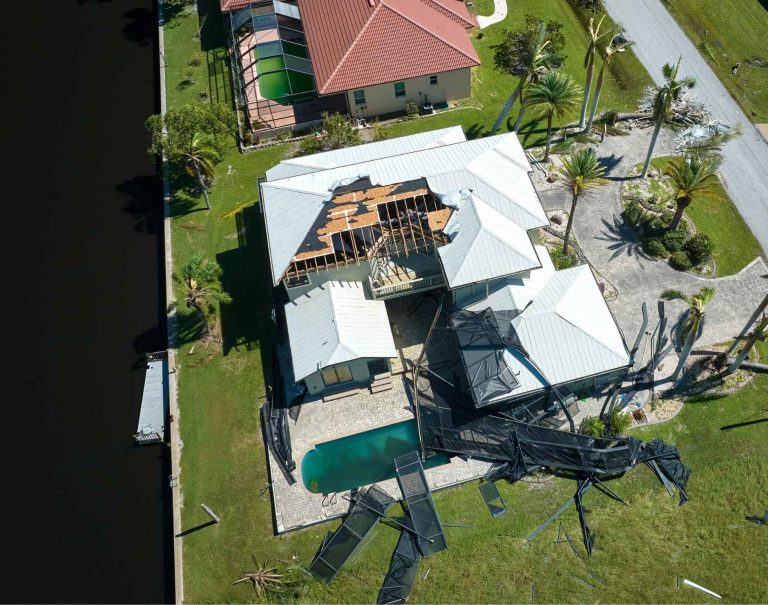
Component 3 — Avoided emergency replacement premium. Emergency post-storm replacement in PBC runs 15-35% above standard pricing. A homeowner who defers a $22,000 tile replacement until after a hurricane may pay $26,000-$30,000 for the same project under emergency conditions. The cost of deferral is not zero.
Component 4 — Storm damage risk reduction. A new roof compliant with current FBC reduces the probability of storm-related damage claims. Older roofs with degraded mortar, failed underlayment, or inadequate deck attachment generate more storm damage per event.
Component 5 — Tax and financing treatment. Roof replacement on homestead property in PBC does not increase property tax beyond the SOH cap. The interest on home equity financing used for the replacement may be tax-deductible.
Running the Numbers - A PBC Example
A 2,000 sq ft tile-roofed home in Boca Raton, currently insured through Citizens at $5,500/year, with a 22-year-old tile roof. The homeowner is considering a $24,000 roof replacement.
Over 10 years with replacement: $24,000 upfront cost, $20,000 in insurance savings, approximately $16,000 in resale value added, avoided emergency premium risk. Net 10-year cost: approximately $8,000 for a new roof on a home now insured at maximum efficiency and positioned for sale. Licensed roofers in Palm Beach Gardens and across PBC can produce this analysis with a written condition assessment.
Over 10 years without replacement: saves $24,000 now, pays elevated insurance for 10 years (approximately $5,000 in extra premium vs new roof rate), faces increasing storm damage risk as the roof ages further. If one major storm occurs and triggers emergency replacement: $24,000 emergency replacement plus $3,000-$6,000 emergency premium plus potential deductible. The expected value strongly favors replacement.
- Calculate current annual insurance premium and estimate post-replacement savings from wind mitigation credits
- Estimate resale value impact using 61.1% national baseline adjusted for PBC insurance market factors
- Factor in avoided emergency replacement premium — post-storm work runs 15-35% above standard pricing
- Use our free roof cost estimator to establish a precise replacement cost benchmark before analysis
- Get a wind mitigation inspection quote — $150-$250 upfront generates years of premium savings
- Confirm home equity loan rate vs PACE rate if financing — the cost of capital affects ROI significantly
- If within 5 years of selling, factor full resale value impact into the calculation
- Document all replacement costs, permits, and warranty materials — this evidence supports resale premium