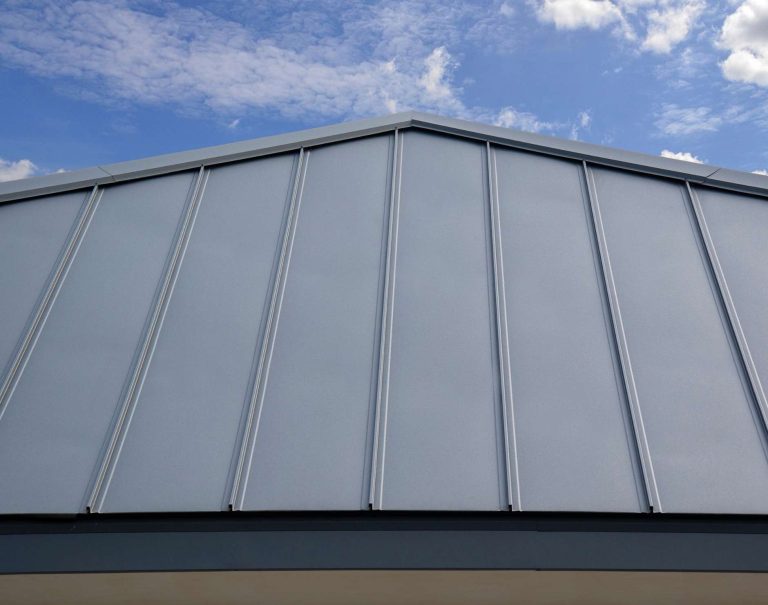
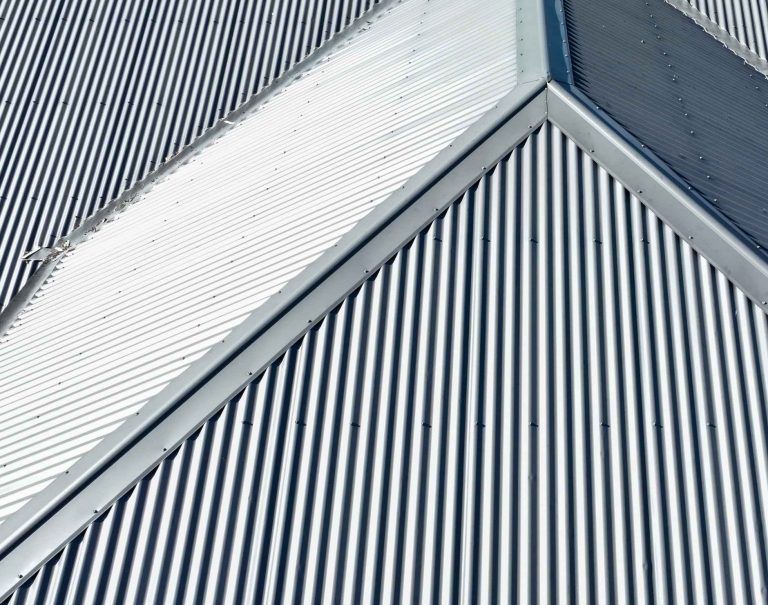
Metal roofing costs in Palm Beach County are driven by four variables that most homeowners do not fully account for when comparing quotes: profile type (standing seam vs. metal tile), substrate material (aluminum vs. Galvalume steel), property location relative to the coastal salt-air zone, and scope completeness (secondary water barrier, permit, and Florida Product Approval compliance). A standing seam aluminum installation on a barrier island property and a metal tile Galvalume installation on a Wellington home are both called "metal roofing" — but their costs, their material specifications, and their Citizens Insurance wind mitigation outcomes are materially different. This guide provides the complete 2026 cost breakdown for every metal roofing scenario in Palm Beach County.
What every compliant PBC metal roof installation must include
Before reviewing profile-specific pricing, the baseline scope for a compliant metal installation in Palm Beach County must be established. A complete, code-compliant metal roof installation quote includes: full tear-off and disposal of the existing system, deck preparation and inspection (with decking replacement quoted as a contingency at $2.00–$4.50 per square foot for affected areas), self-adhering secondary water barrier bonded to the prepared deck surface, metal roofing panels with current Florida Product Approval for PBC's applicable design wind speed zone, FBC-compliant fastener or clip specification, all flashing at penetrations and transitions, permit pulled by the CCC contractor, and final inspection scheduling.
A quote that omits secondary water barrier, permit, or Product Approval documentation is a quote for non-compliant work — regardless of how competitive the per-square-foot number appears. Verify any contractor at myfloridalicense.com before signing.
Standing seam Galvalume steel — $18 to $26 per square foot
Galvalume steel standing seam is the standard specification for inland PBC properties — Wellington, Royal Palm Beach, Greenacres, Boynton Beach inland, and similar communities more than one mile from the waterline. Galvalume is a zinc-aluminum alloy-coated steel that provides strong corrosion resistance in non-coastal environments at significantly lower material cost than aluminum.
At $18–$26 per square foot installed on a 2,400 square foot roof surface, total cost runs $43,200–$62,400. The range reflects panel gauge selection (standard 26-gauge vs. heavier 24-gauge for improved dent resistance and longevity), clip spacing and specification, underlayment system, and installation complexity driven by roof geometry. Hip roofs with multiple valleys and penetrations carry higher labor cost than simple gable geometries.
Galvalume standing seam carries realistic service life of 40–60 years in non-coastal PBC environments. Its FBC Product Approval for PBC's 160 mph design wind speed zone makes it fully compliant for inland applications.
Standing seam aluminum — $22 to $32 per square foot
Aluminum standing seam is the required specification for PBC coastal properties within one mile of the waterline — barrier island communities including Palm Beach, Gulf Stream, Manalapan, and Jupiter Inlet Colony, as well as oceanfront and Intracoastal-adjacent properties in Boca Raton, Delray Beach, and Riviera Beach.
Aluminum does not corrode in salt-air environments. Galvalume steel, while resistant in non-coastal conditions, shows accelerated corrosion at the cut edges, fastener holes, and any surface scratches when exposed to the chloride ions in coastal salt air. The full substrate comparison is in Galvalume vs. aluminum for PBC roofs. The cost premium for aluminum — 20–30% above equivalent Galvalume specification — is a one-time investment against the alternative of premature panel corrosion, staining, and system failure.
At $22–$32 per square foot installed, a 2,400 square foot aluminum standing seam installation runs $52,800–$76,800. The upper end of the range reflects specialty coastal architectural profiles — snap-lock, batten seam, and concealed clip systems specified on estate properties in Palm Beach and Manalapan where ARCOM architectural standards govern the installation.
Aluminum standing seam carries a realistic service life of 50+ years in coastal PBC applications and requires minimal maintenance beyond annual inspection of ridge cap and penetration sealant.
Metal tile Galvalume — $12 to $18 per square foot
Metal tile at the Galvalume specification is the cost-effective metal alternative for inland PBC communities where the visual profile of tile or shingle roofing is preferred and standing seam's commercial aesthetic is not appropriate. HOA-governed communities in Wellington, Royal Palm Beach, Palm Beach Gardens inland, and similar areas where design standards require tile aesthetics represent the primary market for metal tile.
At $12–$18 per square foot installed, a 2,400 square foot metal tile installation runs $28,800–$43,200. The range reflects tile profile selection (standard interlocking vs. dimensional shake or slate profiles), fastener specification, and substrate preparation scope.
Important cost consideration: not all metal tile profiles carry full HVHZ Product Approval for PBC's 160–175 mph design wind speed zone. Confirm the specific product's approval envelope before specification. Products without full HVHZ approval may require supplemental corner and edge attachment that adds cost above the base per-square-foot quote.
Metal tile aluminum — $16 to $22 per square foot
Metal tile in aluminum specification is the appropriate choice for HOA-governed coastal communities where tile aesthetics are required and the property is within the coastal salt-air zone. At $16–$22 per square foot, a 2,400 square foot aluminum metal tile installation runs $38,400–$52,800.
For metal roofing services in Palm Beach County across all four profile and material combinations, a licensed CCC contractor's written scope identifies the specific product, its Florida Product Approval number, and the complete installation specification before contract signing.
The coastal vs. inland cost differential — why location matters
The cost differential between aluminum and Galvalume specification — 20–30% in material cost — produces a real dollar difference that ranges from approximately $8,000–$15,000 on a standard 2,400 square foot PBC installation. Whether that premium is appropriate depends entirely on the property's location relative to the coastal salt-air zone.
For barrier island properties and oceanfront properties, the aluminum premium is not a choice — it is the correct specification. A Galvalume installation on a barrier island property will show accelerated corrosion within 5–10 years and require panel replacement well before the 40–60 year service life is reached. The aluminum premium eliminates that risk entirely.
For properties two or more miles from the waterline, Galvalume is the appropriate and cost-effective specification. The corrosion conditions that require aluminum do not apply at inland PBC locations, and the 20–30% material premium for aluminum produces no performance benefit beyond what Galvalume delivers.
The one-mile rule is a general guideline — the actual corrosion zone depends on prevailing wind direction, property elevation, and proximity to open water in any direction. A licensed CCC contractor familiar with PBC's coastal geography can advise on the appropriate specification for any specific property location.
Citizens Insurance wind mitigation value for metal roofing
Metal roofing — both standing seam and metal tile — qualifies for Citizens Insurance wind mitigation credits on OIR-B1-1802 when installed with a Florida Product Approval-compliant product, secondary water barrier, and FBC-compliant fastener or clip specification. The wind mitigation credit calculation treats metal roofing identically to tile systems — credits are based on construction features, not material type. Category-by-category dollar values are in wind mitigation credits for Palm Beach County.
Annual Citizens Insurance premium credits for metal roofing installations with favorable construction features in coastal PBC zip codes typically range from $800–$2,500. On standing seam aluminum systems with hip roof shape, secondary water barrier, double-wrap roof-to-wall connections, and protected openings, credits at the higher end of this range are achievable. For a complete comparison of the two metal roofing system types and their implications beyond cost, see our complete standing seam vs. metal tile comparison for PBC homeowners.
Energy efficiency and the cool roof factor
Metal roofing's energy efficiency benefit in South Florida's cooling-dominated climate is a meaningful offset to installation cost that does not apply to tile or shingle systems at the same level. Metal panels with ENERGY STAR-rated cool roof coatings reflect solar radiation rather than absorbing it, reducing attic temperatures and cooling loads by 15–25% in South Florida's conditions. On a home with $300–$400 monthly summer cooling costs, a 15% reduction represents $45–$60 per month in savings — approximately $500–$720 annually in the peak cooling season.
Over a 50-year standing seam service life, the cumulative energy savings from cool roof performance range from $25,000–$36,000 at current energy costs — before accounting for energy cost inflation. This offset does not appear in the installation cost comparison but is a real component of metal roofing's total cost of ownership versus tile and shingle alternatives. The complete savings math is in metal roof energy savings in South Florida.
- Confirm aluminum vs. Galvalume specification based on property location.** Within one mile of the waterline: aluminum required. Beyond one mile: Galvalume is appropriate and 20–30% less expensive. Do not accept Galvalume on a coastal property.
- Confirm Florida Product Approval for the specified product.** Both standing seam and metal tile must carry current Product Approval for PBC's applicable wind speed zone. Ask for the Product Approval number before signing.
- Confirm secondary water barrier is a written line item.** FBC requires secondary water barrier on metal roof installations in PBC's HVHZ. Its absence means non-compliant installation and loss of the Citizens Insurance wind mitigation credit.
- Confirm permit is included as a written line item.** Permit fees run $265–$580 in PBC. A quote without a permit line item is either incomplete or proposing unpermitted work.
- For metal tile, confirm full HVHZ Product Approval — not partial approval.** Some metal tile products require supplemental corner and edge attachment to meet PBC's design wind pressure requirements. Confirm the product's complete approval envelope before specification.
- Ask about the decking replacement contingency.** Get the per-square-foot rate in writing before tear-off begins.
- Schedule a wind mitigation inspection within 30 days of permit close.** Annual Citizens Insurance premium credits of $800–$2,500 in coastal PBC zones start from the date the carrier processes the report.