Metal roofing in Palm Beach County means two materially different products that are frequently grouped under the same label. Standing seam metal roofing — continuous vertical panels with concealed fasteners and raised seams — and metal tile roofing — individual shingle or tile-profile panels with exposed fasteners — differ in cost, wind performance, installation complexity, aesthetic application, and long-term maintenance requirements. Choosing between them requires understanding what each system actually is, where each performs best in PBC's specific environment, and what each requires for FBC compliance and Citizens Insurance wind mitigation eligibility.
What standing seam metal roofing is
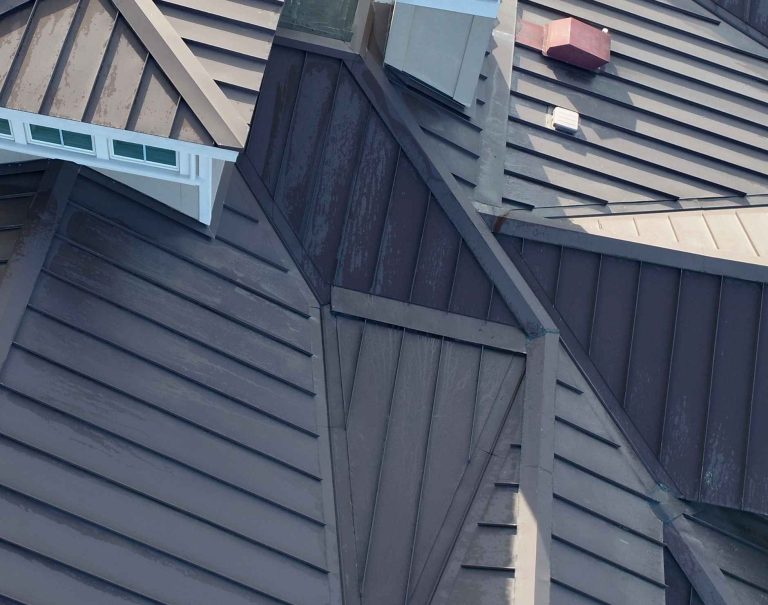
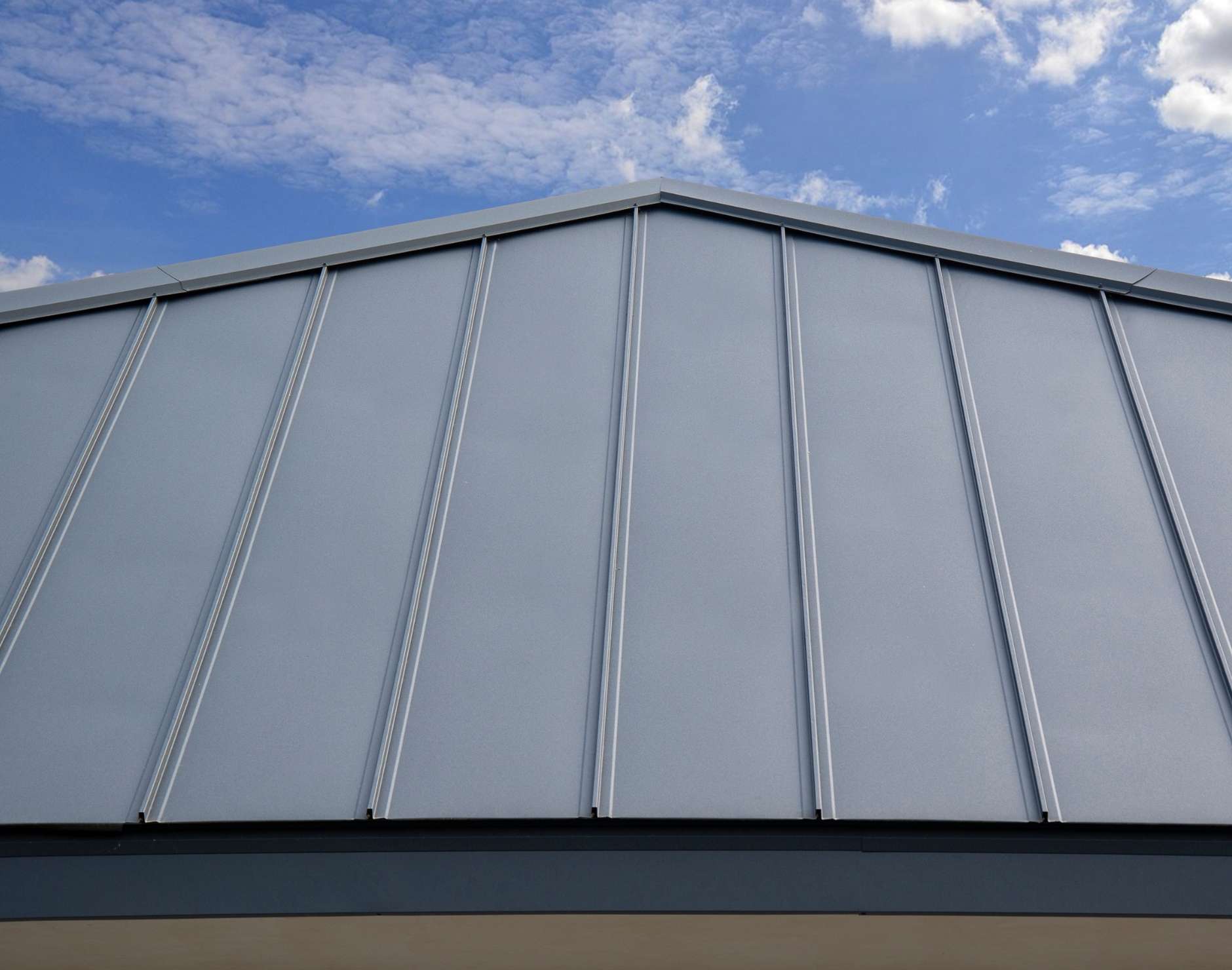
Standing seam is a continuous-panel metal roofing system where long vertical panels — running from ridge to eave without horizontal laps — are joined by raised interlocking seams along their vertical edges. The seams stand 1.5 to 2 inches above the panel surface and conceal the fasteners entirely. No fastener penetrates the panel face — attachment is achieved through hidden clips that engage the seam and attach to the substrate below.
The concealed fastener system is the defining characteristic of standing seam from a performance standpoint. In a high-wind event, there are no exposed fastener heads to back out, no washers to deteriorate, and no penetrations through the panel surface to admit water. The seam itself is the structural connection — and a properly seamed standing seam panel can resist uplift forces well in excess of the FBC design requirements for PBC's 160–175 mph wind speed zone when installed with the correct clip spacing and substrate preparation.
Standing seam is the appropriate choice for contemporary, modern, and coastal-minimalist architecture, for commercial and light commercial applications where long panel runs and low-slope capability are required, and for any PBC property within the coastal salt-air zone where corrosion resistance is a primary material selection criterion. Aluminum standing seam is the standard specification for properties within one mile of the waterline — it does not corrode in salt-air environments the way Galvalume steel does. The full substrate decision is in Galvalume vs. aluminum for coastal PBC.
What metal tile roofing is
Metal tile is a panel-based system that mimics the visual profile of tile, shingle, shake, or slate roofing in a formed metal panel. Individual panels are typically 2–4 square feet in size and are installed with exposed or concealed fasteners at each panel edge. The visual result approximates the dimensional appearance of traditional tile or shingle roofing while delivering the lighter weight and faster installation of metal.
Metal tile is well-suited to HOA-governed communities that require the visual aesthetic of tile but where the structural load of concrete or clay tile is a constraint, and for homeowners who want the perceived permanence of metal with a profile that blends into PBC's established residential aesthetic better than the commercial appearance of standing seam.
The exposed-fastener characteristic of most metal tile systems is a meaningful distinction from standing seam in PBC's environment. Fastener heads exposed to South Florida's UV, heat cycling, and coastal humidity require corrosion-resistant specification and periodic inspection over the system's life. A metal tile installation with inadequately specified fasteners in a coastal environment will show fastener corrosion and backing-out before the panels themselves show any degradation.
FBC wind rating comparison
Both standing seam and metal tile must carry current Florida Product Approval for installation in PBC's High Velocity Hurricane Zone. The Product Approval document for each product specifies the maximum design wind pressure the system can resist at the approved fastener pattern or clip spacing, the substrate requirements, and the applicable wind speed zones.
Standing seam systems with appropriate clip spacing typically carry Product Approval for the full 160–175 mph design wind speed zone across PBC. The concealed clip attachment distributes uplift forces across the full panel length rather than concentrating them at discrete fastener points. Attachment mechanics are covered fully in the metal roof wind rating guide for PBC.
Metal tile systems vary more widely in their Product Approval wind ratings. Some metal tile products carry full HVHZ approval. Others are approved only for lower design wind pressures and require corner and edge zone supplemental attachment to meet PBC's requirements. Confirm the specific Product Approval for any metal tile product before specification — not all metal tile carries the same wind performance in PBC's zone.
For metal roofing services in Palm Beach County — standing seam or metal tile — FBC Product Approval verification is a standard component of every licensed CCC contractor's proposal.
Cost comparison — standing seam vs. metal tile
Standing seam installation in PBC runs $18–$32 per square foot installed. The range reflects panel gauge and profile selection (standard 24-gauge Galvalume vs. heavier gauge aluminum for coastal applications), clip type and spacing, substrate preparation requirements, and installation complexity driven by roof geometry.
Metal tile installation runs $12–$22 per square foot installed for most PBC residential applications. The lower cost reflects faster installation (individual panels rather than continuous runs), simpler substrate preparation, and lower material cost per square foot for standard profiles.
For a 2,400 square foot roof surface, the cost differential between standing seam ($43,200–$76,800) and metal tile ($28,800–$52,800) is approximately $14,000–$24,000 in favor of metal tile. Whether that differential is worth trading the standing seam's concealed fastener system, its continuous-panel wind performance, and its better coastal salt-air resistance depends on the property's location, exposure, and architectural context. Verified roofers in Juno Beach and across coastal PBC quote both systems side by side.
Citizens Insurance wind mitigation comparison
Citizens Insurance wind mitigation credits for metal roofing — whether standing seam or metal tile — are based on the same OIR-B1-1802 construction features that apply to tile and shingle systems: roof shape, secondary water barrier presence, roof deck attachment, roof covering type, roof-to-wall connections, and opening protection. The roof covering credit category on OIR-B1-1802 evaluates whether the installed metal product carries a current Florida Product Approval for the applicable wind speed zone.
Both standing seam and metal tile can qualify for the full roof covering credit on OIR-B1-1802 when installed with a Product Approval-compliant product. The credit calculation does not distinguish between standing seam and metal tile — both receive identical treatment in the wind mitigation formula when installed with equivalent construction features.
The secondary water barrier requirement applies to both systems in PBC's HVHZ — a metal roof installation without a secondary water barrier is non-compliant under FBC and does not qualify for the secondary water barrier wind mitigation credit.
Maintenance and longevity comparison
Standing seam metal roofing requires minimal maintenance over its service life — the concealed fastener system eliminates the primary maintenance point of exposed-fastener systems, and the continuous panel eliminates horizontal laps where water can infiltrate. Annual inspection for sealant condition at terminations (ridge cap, eave edge, penetrations) and clearing of debris from valleys and drainage points is the extent of routine maintenance.
Metal tile requires more consistent maintenance attention focused on fastener condition. Exposed fasteners should be inspected every 3–5 years for corrosion development and backing-out, particularly in coastal applications. Sealant at panel overlaps and penetrations should be assessed at the same interval.
Realistic service life for standing seam aluminum in PBC coastal applications is 50+ years. For Galvalume steel standing seam in inland applications, 40–60 years. For metal tile in non-coastal applications, 30–50 years depending on fastener specification and maintenance history. For a complete breakdown of what metal roofing costs in Palm Beach County in 2026 by profile type, material specification, and location, see our dedicated cost guide.
- Confirm Florida Product Approval for any metal roofing product before signing.** Both standing seam and metal tile must carry current Product Approval for PBC's 160–175 mph HVHZ zone. Ask for the Product Approval number before specification.
- For coastal properties within one mile of the waterline, specify aluminum — not Galvalume steel.** Galvalume corrodes in the coastal salt-air zone. Aluminum costs 20–30% more but eliminates corrosion risk entirely.
- For HOA-governed communities that require tile aesthetics, evaluate metal tile profiles that carry HVHZ Product Approval.** Not all metal tile products are approved for PBC's wind speed zone. Confirm the specific product's approval envelope before specification.
- For contemporary, commercial, or coastal-minimalist applications, standing seam is the appropriate system.** The concealed fastener system, continuous panel wind performance, and 50+ year aluminum service life justify the cost premium over metal tile.
- Confirm secondary water barrier is included in the scope.** FBC requires secondary water barrier under metal roofing installations in PBC's HVHZ. Its absence makes the installation non-compliant and eliminates the associated Citizens Insurance wind mitigation credit.
- After installation, schedule a wind mitigation inspection within 30 days of permit close.** Metal roofing with secondary water barrier, Product Approval compliance, and hip roof shape generates comparable Citizens Insurance premium credits to tile systems.