
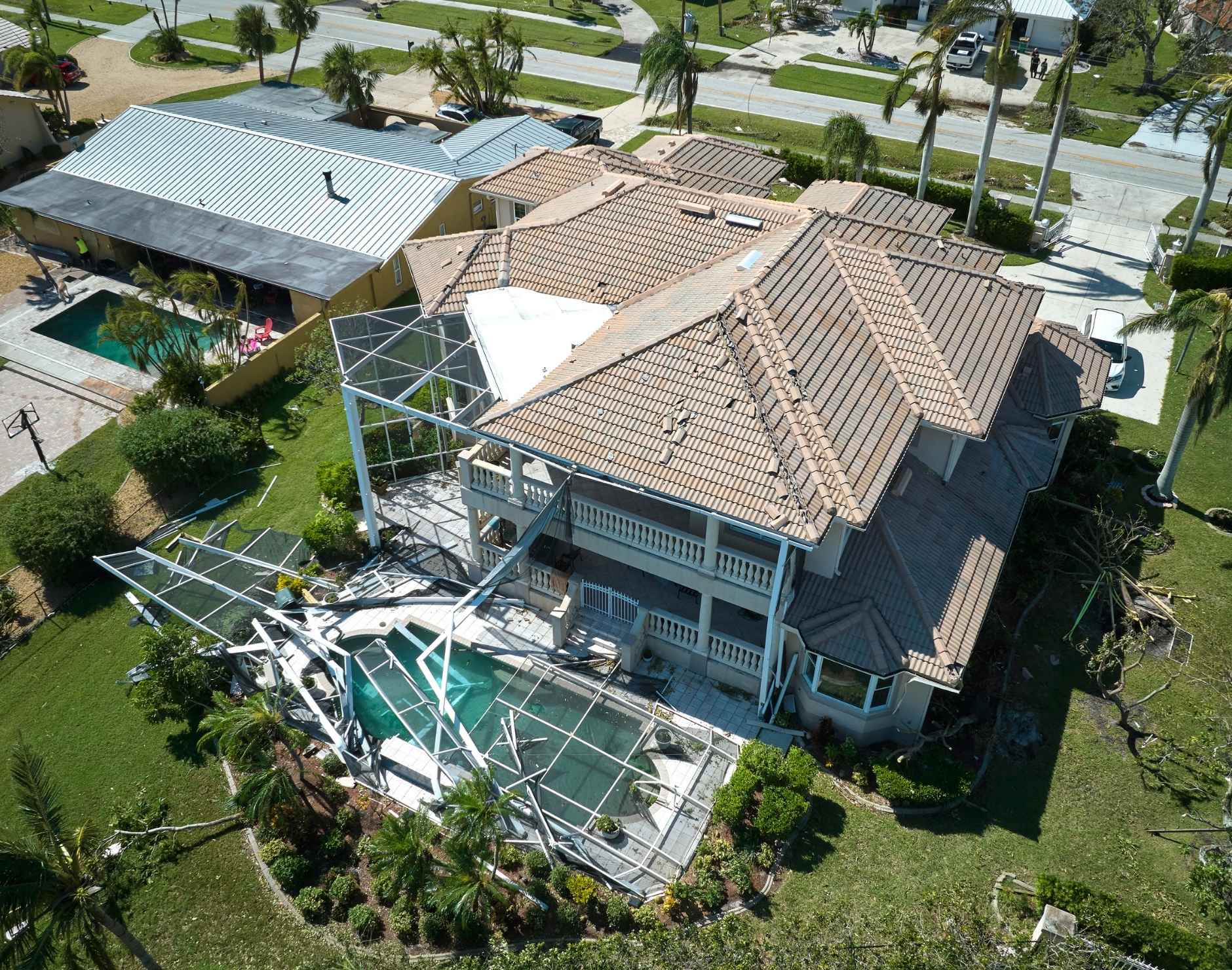
Florida Building Code Chapter 15 is the single most consequential regulatory document for any roofing project in Palm Beach County — and most homeowners have never read it, while many contractors apply it inconsistently. The FBC establishes the minimum performance requirements that every roofing system installed in PBC must meet: wind uplift resistance, impact protection, secondary water barrier requirements, drainage design, product approval, and the permit and inspection process that verifies compliance. Understanding the code's key provisions is not a technical exercise for engineers — it is practical knowledge that every PBC homeowner needs to evaluate contractor proposals, understand insurance requirements, and make informed decisions about the largest maintenance investment most homes require. This guide covers every major FBC Chapter 15 provision that applies to residential and commercial roofing in Palm Beach County.
What the Florida Building Code is and how it applies to PBC
The Florida Building Code (FBC) is the statewide construction standard adopted by the Florida Building Commission and enforced by local building departments in each of Florida's 67 counties and 400+ municipalities. It is updated on a three-year cycle — the current edition is the 8th Edition (2023), which governs all permits issued in 2024, 2025, and 2026. Chapter 15 of the FBC specifically addresses roof assemblies and rooftop structures.
Palm Beach County falls within Florida's High Velocity Hurricane Zone (HVHZ) — the coastal designation that applies to Miami-Dade and Broward counties in full and to the coastal portions of PBC. The HVHZ designation triggers the most demanding roofing requirements in the Florida Building Code, including higher wind speed design criteria, mandatory secondary water barriers, and the Florida Product Approval requirement that ensures every roofing product installed in PBC has been tested and approved for the zone's design conditions.
The FBC is enforced through the permit and inspection process. Any roofing work that meets the permit threshold — in most PBC municipalities, any roof repair or replacement that constitutes a structural change to the roof assembly — requires a permit pulled by the licensed contractor, inspections at specified stages, and a final inspection that closes the permit. Work performed without a permit is non-compliant regardless of how well it was executed, and creates compliance, insurance, and resale liability for the property owner.
FBC Chapter 15 — Wind speed and design criteria for PBC
FBC Chapter 15 establishes design wind speeds for roofing systems based on geographic location, building height, exposure category, and occupancy classification. For Palm Beach County's HVHZ, the design wind speed for standard one and two-story residential construction ranges from 160 mph along the coast to 175 mph on barrier island and oceanfront properties. These design wind speeds — based on ASCE 7 wind speed maps — are the basis for all wind uplift calculations and Product Approval requirements for roofing systems installed in PBC.
The design wind speed determines the minimum wind uplift resistance that any roofing system must achieve at each roof zone — field (center), edge (perimeter), and corner (intersections of edge zones). Corner zones experience the highest uplift pressures — typically 1.5–2.5 times the field zone uplift — and require the most intensive fastening patterns and heaviest attachment specifications. A roofing system that meets the field zone uplift requirements may still fail FBC compliance if its edge and corner zone attachment does not meet the higher pressures those zones experience.
Secondary water barrier — the HVHZ requirement most often misunderstood
FBC Section 1507 requires a secondary water barrier on all HVHZ roof assemblies — a self-adhering modified bitumen membrane bonded directly to the roof deck beneath the primary underlayment and roofing system. The secondary water barrier's purpose is to maintain a watertight deck surface if the primary roofing system is damaged or displaced during a hurricane event — preventing water intrusion into the structure even when the primary system has failed.
The secondary water barrier requirement applies to all tile, shingle, and metal roofing installations in PBC's HVHZ. It does not apply to single-ply membrane roofing on flat roofs (TPO, EPDM) where the membrane itself serves as both primary and secondary waterproofing. On any pitched roof replacement in PBC — tile, shingle, or metal — a self-adhering modified bitumen secondary barrier applied directly to the clean deck surface is a required scope item before any other roofing component is installed. Installation detail is in the secondary water barrier guide.
The secondary water barrier is a Citizens Insurance wind mitigation credit item on OIR-B1-1802. A roof installed without secondary water barrier does not qualify for the wind mitigation credit category, reducing the annual Citizens Insurance premium savings available to the property owner over the life of the installation. A contractor who omits the secondary water barrier from a PBC roof replacement is simultaneously proposing non-compliant work and eliminating a significant long-term insurance value for the homeowner.
Florida Product Approval — what it is and why it matters
Florida Product Approval is the state certification system that verifies roofing products have been tested to meet FBC performance requirements for the applicable climate zone. Every roofing product installed in PBC's HVHZ — shingles, tiles, metal panels, underlayment, adhesives, fasteners, skylights, and membrane systems — must carry a current Florida Product Approval confirming it meets the wind uplift, impact resistance, and installation requirements for PBC's design wind speed zone.
The Product Approval system is administered by the Florida Building Commission and searchable at floridabuilding.org. Each approved product has a Product Approval number that identifies the manufacturer, product name, applicable installation method, and the wind speed zones for which it is approved. A contractor who proposes a roofing product without referencing its Product Approval number is proposing an unverified specification — the product may or may not be compliant for PBC's HVHZ.
Product Approvals expire and are revised when manufacturers update products or testing standards change. A Product Approval that was valid in 2020 may have been superseded by a revised approval in 2024. Verifying that the proposed product's Product Approval is current — not just that the product was previously approved — is part of the pre-installation verification process for any compliant PBC roofing installation.
For the full range of roofing services in Palm Beach County performed under current Florida Product Approvals by licensed CCC and CBC contractors, every installation scope references the applicable Product Approval as a standard proposal element.
FBC Section 706 — the 25% cumulative repair rule
FBC Section 706 establishes the cumulative repair threshold that converts a repair scope into a replacement requirement. When the area of roof repairs and alterations on any existing roof system cumulatively exceeds 25% of the total roof area — whether in a single repair event or accumulated across multiple repair events over time — the entire roof system must be replaced rather than repaired.
The 25% threshold applies cumulatively — not per individual repair event. A series of repairs that each individually covers 5–8% of the roof area can accumulate to 25% over several years, triggering the replacement requirement even though no single repair event appeared to be a replacement trigger. A licensed contractor performing any repair should calculate and disclose the cumulative repair coverage to the homeowner, particularly when the property has a history of prior repairs.
The 25% rule is enforced through the permit process — a contractor pulling a repair permit is required to assess and disclose the cumulative repair coverage and whether the replacement threshold has been reached. Unpermitted repairs that accumulate toward the 25% threshold create a compliance record gap that cannot be retroactively corrected and that building officials will identify when a permit for subsequent work is applied for.
Permit requirements for roofing work in PBC
Florida Building Code Section 105.1 requires a permit for any construction, alteration, or repair of a building. For roofing work in PBC, the permit threshold includes: any complete or partial roof replacement; any roof repair that constitutes a structural change (replacing decking, underlayment, or primary roofing components); skylight installation or replacement; and any work that requires a licensed roofing contractor. Minor maintenance — clearing gutters, replacing a single displaced tile without disturbing the underlying assembly, applying sealant to a flashing joint — typically does not require a permit.
The permit process in PBC's 39 municipalities varies in processing time (5–20 business days for standard residential roofing permits) and fee structure (typically 1–3% of declared project value). Every permit-required roofing project in PBC involves a minimum of two inspections: a dry-in inspection after the secondary water barrier and underlayment are installed but before the primary roofing system is applied, and a final inspection after all work is complete. The dry-in inspection is the most critical quality control point — it is the only time the secondary water barrier and underlayment can be verified as correctly installed before they are covered by the primary system. Licensed roofers in West Palm Beach and across all 39 municipalities schedule both inspections as standard scope.
Impact resistance requirements in PBC's HVHZ
FBC Chapter 15 and the Product Approval system establish impact resistance requirements for roofing products installed in PBC's HVHZ. The large missile impact test — simulating the impact of wind-driven debris during hurricane conditions — is the standard against which roofing products are tested. Products that pass the large missile impact test carry the "impact-rated" designation in their Florida Product Approval.
Impact resistance is required for: skylights and solar tube domes (mandatory); roofing systems on buildings in the HVHZ where the Product Approval specifies impact-rated installation (varies by product type and installation method). For shingle and tile roofing in PBC, the Product Approval installation method — rather than an explicit impact rating on the primary covering — provides the wind and debris resistance specification. Metal roofing systems with standing seam profiles and continuous clip attachment provide inherent impact and uplift resistance that their Product Approvals reflect.
Drainage requirements for flat and low-slope roofing
FBC Section 1503 establishes minimum drainage requirements for all low-slope roofing systems: a minimum slope of 1/4 inch per foot to all drain and scupper locations, drain sizing based on the local design rainfall intensity (8–9 inches per hour for PBC's climate zone), and overflow drainage capacity at 2 inches above the primary drainage level. These requirements apply to all new flat roof installations and replacements in PBC.
Compliance with FBC drainage requirements is verified through the permit and inspection process — a building official reviewing a flat roofing permit application will verify that the tapered insulation design achieves the required slope and that the proposed drain sizing meets PBC's rainfall intensity requirements. A flat roofing proposal that does not include a drainage plan demonstrating compliance with these requirements is an incomplete proposal.
CCC and CBC license requirements for roofing contractors
Florida Statute 489.105 defines the contractor license categories authorized to perform roofing work in Florida. The CCC (Certified Roofing Contractor) license authorizes roofing work within the scope of the roofing trade. The CBC (Certified Building Contractor) license authorizes broader construction work including commercial roofing. For most residential roofing work in PBC, a CCC license is the minimum required contractor credential. For commercial roofing projects above certain scope thresholds, a CBC license is required.
Verify any roofing contractor's license at the Florida DBPR license verification system before authorizing any work. For a complete step-by-step guide to verifying a Florida roofing contractor's CCC license — including what to look for in the license record and what to do if a contractor's license is not current — see our dedicated license verification guide.
- Confirm the contractor will pull the permit in their name before work begins.** No permit = no dry-in inspection = no verification of secondary water barrier and underlayment installation. Non-negotiable for any permitted scope in PBC.
- Confirm secondary water barrier is a written scope item on any pitched roof replacement.** Required on all HVHZ tile, shingle, and metal roof installations. Its omission is simultaneously a code violation and an insurance value reduction.
- Request the Florida Product Approval number for every proposed roofing product.** Shingles, tiles, metal panels, underlayment, and fasteners all require current Product Approvals for PBC's HVHZ. Confirm before installation begins.
- Ask the contractor to calculate cumulative repair coverage before any repair is authorized.** If prior repairs plus the current scope approach 25% of total roof area, full replacement is the code-required scope.
- Confirm the drainage design achieves FBC minimum 1/4 inch per foot slope on any flat roof replacement.** A flat roofing proposal without a tapered insulation drainage plan does not demonstrate FBC compliance.
- Verify the contractor's CCC or CBC license at myfloridalicense.com before signing any contract.** License type, current status, and disciplinary history are all visible in the DBPR database.
- After any permitted roofing work, confirm the permit was closed with a final inspection.** An open permit on your property creates title and resale complications. Request the permit close documentation from your contractor after final inspection.


