Hiring an unlicensed roofing contractor in Palm Beach County is not a discount — it is a transfer of liability from the contractor to you. In Florida, structural roofing work performed without a CCC license is a criminal offense for the contractor and creates compliance violations, insurance claim exposure, and resale complications for the property owner who hired them. The verification process takes 60 seconds at myfloridalicense.com and is the single most important due diligence step before any roofing contractor sets foot on your PBC roof. This guide walks through exactly what to search, what the results show, and what specific findings should stop a hiring decision in its tracks.
What the CCC license is and who must hold one
The CCC (Certified Roofing Contractor) license is issued by the Florida Department of Business and Professional Regulation (DBPR) under Florida Statute 489.105. It is the minimum license required to perform structural roofing work in Florida — including roof replacement, roof repair involving structural components, new roof installation, and any roofing work that requires a permit. The CCC license certifies that the holder has passed a state examination, met financial responsibility requirements, and carries the required insurance.
In Florida, the license is held by an individual — the qualifying agent — who is legally responsible for all work performed under that license. A roofing company does not hold a license itself; it operates under the license of its qualifying agent. When a company says it is "licensed and insured," the specific license belongs to a specific named individual, and that individual must be the active qualifying agent for the company performing your work.
The CCC license differs from the CBC (Certified Building Contractor) license in scope — CCC authorizes roofing work, CBC authorizes broader commercial construction including roofing. For most residential roofing work in PBC, CCC is the appropriate credential. For complex commercial projects, CBC may be required. Both are verified at the same DBPR database.
How to verify a CCC license — step by step
Go to myfloridalicense.com. Select "Verify a License" from the main menu. In the License Type field, select "Certified Roofing Contractor" or enter the license number the contractor provided. Search by name or license number.
The results page shows: the licensee's full name, the license number, the license type (CCC, CBC, or other), the license status, the license expiration date, the county of record, and a link to the full license detail including disciplinary history.
A compliant contractor's record shows: Status — Current, Active. License type — CCC or CBC as appropriate. Expiration date — in the future. No open disciplinary actions or complaints on the full record.
Confirm that the name on the license matches the individual who is the qualifying agent for the company submitting the bid. This requires one additional step: ask the contractor directly, "Is [name on license] the current qualifying agent for your company?" A legitimate contractor answers this immediately. A contractor who deflects or cannot answer should not be on your bid list.
What each status result means
"Current, Active" means the license is valid and the contractor is authorized to perform licensed roofing work in Florida. This is the only status that authorizes work.
"Delinquent" means the license has expired and has not been renewed. A delinquent license does not authorize any work — the contractor is performing unlicensed work if they continue to operate. Do not hire a contractor with a delinquent license regardless of any explanation they offer.
"Null and Void" means the license has been permanently cancelled — typically for failure to renew after delinquency. Same consequence as delinquent for hiring purposes: do not proceed.
"Suspended" means the DBPR has temporarily suspended the license for a disciplinary reason — a complaint, a citation, or a financial default. A suspended license does not authorize any work during the suspension period.
"Revoked" means the license has been permanently cancelled as a disciplinary action. A revoked contractor is permanently barred from performing licensed roofing work in Florida. Do not hire.
For roofing services in Palm Beach County from contractors whose CCC license status, qualifying agent identity, and disciplinary record are all confirmed before any proposal is presented, the verification step is the baseline — not an extra due diligence measure.
The disciplinary history check — the step most homeowners skip
The license status field shows whether a license is currently active. It does not show the history of complaints, citations, and disciplinary actions that may have been filed against the licensee. Clicking through to the full license detail record reveals this history — and it is the most practically useful information in the verification process.
Look for: open complaints (unresolved complaints filed by prior customers or the DBPR); prior disciplinary actions (fines, citations, license suspensions that have since been resolved); financial responsibility actions (defaults on contractor bonds or financial requirements); and multiple complaints within a short period (a pattern of complaints is more meaningful than a single resolved complaint).
A single resolved complaint from years ago with no subsequent issues is not necessarily disqualifying — the roofing trade attracts disputes and not every complaint reflects contractor fault. A pattern of complaints, open unresolved complaints, or disciplinary actions involving financial default or fraud are disqualifying regardless of current license status. This full-record review is built into how 561 Roofers verifies every contractor.
Storm chasers and post-disaster verification — the highest-risk scenario
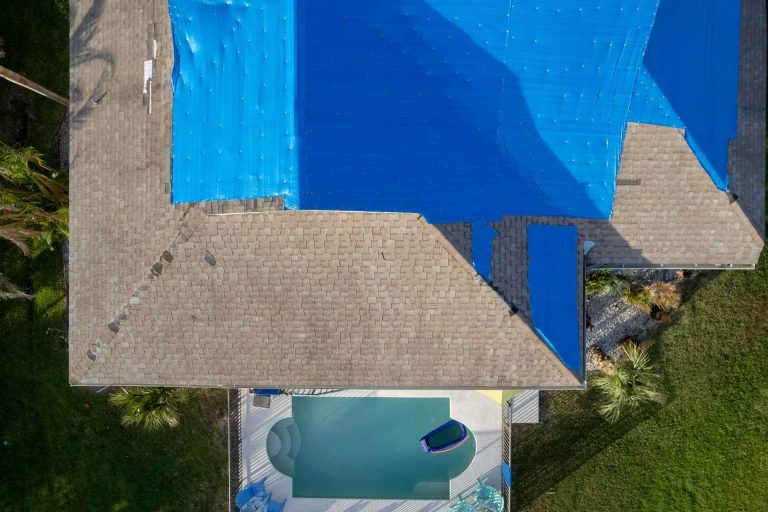
The highest-risk hiring scenario in Palm Beach County is the post-storm period — the weeks immediately following a hurricane or tropical storm event when demand for roofing contractors surges and out-of-state contractors flood the market. Storm-chasing contractors from other states may hold valid roofing licenses in their home states but are not authorized to perform licensed construction work in Florida without a Florida license. A Georgia roofing contractor's license does not authorize work in Florida - Florida requires its own state license for any work performed within its borders.
Post-storm, the DBPR verification step is more important, not less — precisely because the market conditions create urgency that causes homeowners to skip verification steps they would otherwise perform. A contractor who creates urgency ("I can start tomorrow but I need a signed contract today") is applying pressure that should trigger verification, not accelerate signing.
Ask every contractor in a post-storm scenario for their Florida CCC license number before any discussion of scope or price. If they cannot provide a current Florida CCC license number on the spot, they are not authorized to perform licensed roofing work in PBC. The 561 Roofers verification standard exists for exactly these moments: every listed contractor has a confirmed Florida CCC before they appear. For a complete step-by-step guide to using the DBPR license lookup system to verify any Florida contractor — including the advanced search features that reveal disciplinary history — see our dedicated DBPR lookup guide.
- Go to myfloridalicense.com before any roofing contractor discussion about scope or price.** Verification takes 60 seconds. Do it before the estimate, not after the proposal is received.
- Confirm status is "Current, Active" — not Delinquent, Suspended, Null and Void, or Revoked.** Any non-active status means the contractor is not authorized to perform licensed work. Do not proceed.
- Confirm the license type is CCC or CBC — not a different trade license.** An electrical or plumbing contractor's license does not authorize roofing work. Confirm the license type specifically.
- Click through to the full license detail and review disciplinary history.** Open complaints, prior disciplinary actions, and financial responsibility defaults are visible in the full record — not on the status summary page.
- Ask the contractor directly: "Is [name on license] the current qualifying agent for your company?"** The license is held by an individual. Confirm that individual is still actively qualifying the company submitting the bid.
- In post-storm scenarios, verify before any discussion of urgency or availability.** Storm-chasing out-of-state contractors cannot legally perform licensed roofing work in Florida without a Florida CCC license. Verify before the conversation goes further.
- Write the license number on the signed contract.** A contract that identifies the contractor's Florida CCC license number creates a compliance record that protects you if the work is later disputed.