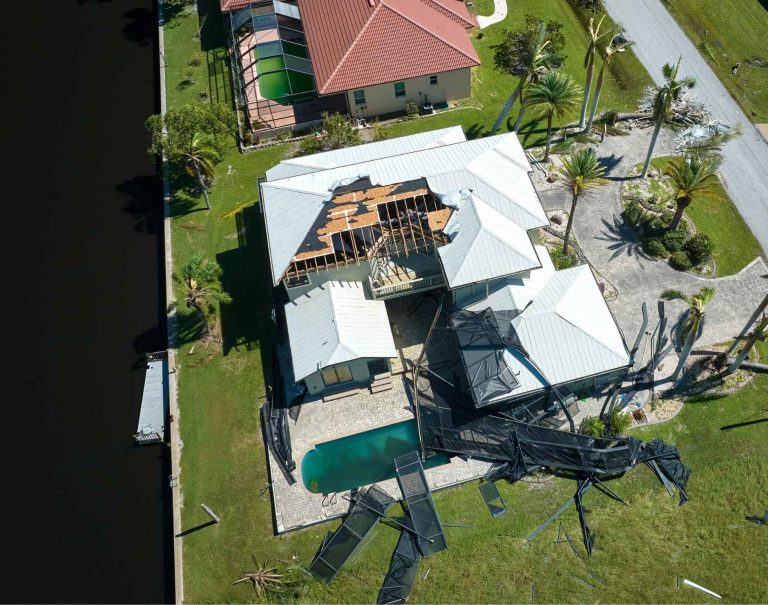
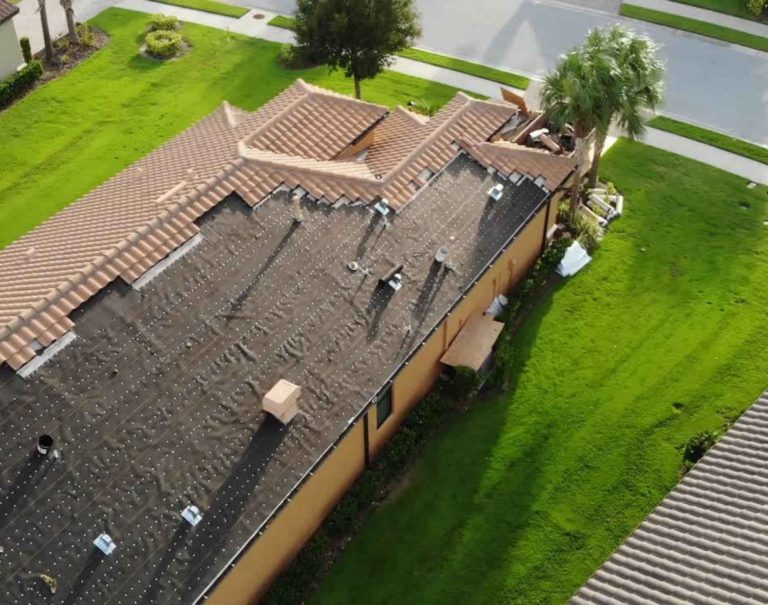
When you file a roof insurance claim in Florida, the single most important variable in determining your payout is not the extent of the damage — it is the basis on which your policy pays claims. Actual Cash Value (ACV) and Replacement Cost Value (RCV) are two fundamentally different payment structures, and the difference between them on a Palm Beach County roof replacement can exceed $15,000. Most homeowners do not know which basis their policy uses until they receive a claim check that does not cover the full cost of repair.
What Actual Cash Value Means in Practice
Actual Cash Value is replacement cost minus depreciation. When you file a claim under an ACV policy, your insurer calculates what it would cost to replace the damaged roof at today's material and labor prices — and then subtracts a depreciation amount based on the roof's age, material type, and expected useful life. On a 15-year-old tile roof in Palm Beach County, the depreciation deduction can be 40–60% of the replacement cost. If a new tile roof costs $22,000, an ACV settlement might pay $9,000 to $13,000 — leaving the homeowner responsible for the $9,000 to $13,000 gap, plus their deductible.
Florida does not have a standard depreciation schedule that all insurers must follow. Each carrier calculates depreciation using its own methodology, and the results vary significantly. Citizens Insurance Corporation uses a depreciation model based on material type and installation date. Private carriers may use different tables. The depreciation calculation is one of the most common dispute points in Florida roof claims.
What Replacement Cost Value Means in Practice
Replacement Cost Value pays the full cost to repair or replace the damaged roof at current prices, without deducting for depreciation. An RCV policy on the same 15-year-old tile roof pays the full $22,000 replacement cost (minus your deductible), regardless of the roof's age. This is a materially different outcome from an ACV settlement on the same claim.
However, most RCV policies operate on a two-step payment structure. The insurer pays ACV first — the depreciated amount — when the claim is approved. The remaining amount, called the recoverable depreciation, is released only after you complete the repair or replacement and submit documentation proving the work is done. This means you must float the cost of the full replacement, complete the work, and then collect the recoverable depreciation as a second payment.
How to Find Out Which Basis Your Policy Uses
Your policy basis is stated in your declarations page — the one-to-two page summary at the front of your policy document. Look for the section labeled "Loss Settlement" or "Property Coverage." The terms "ACV," "actual cash value," "replacement cost," or "RCV" will appear there. If your declarations page is not immediately accessible, call your carrier or agent and ask directly: does my policy pay roof claims on an ACV or RCV basis?
Citizens Insurance Corporation changed its roof claim settlement basis in 2023 as part of legislative reform. Under current Citizens policy language, roofs over a certain age threshold are paid on an ACV basis. Confirm your current Citizens policy terms directly with Citizens or your agent — the rules changed with the passage of HB 837 and related reform legislation, and prior policy summaries may not reflect current terms.
Recoverable Depreciation — How to Collect It
If you have an RCV policy and receive an initial ACV payment, you have a defined window to complete repairs and claim the recoverable depreciation. Most Florida policies give you 180 days to 365 days from the initial payment date to complete repairs and submit a claim for the recoverable depreciation. Missing this window means the depreciation is forfeited — you receive only the ACV payout even though you paid RCV premiums.
To collect recoverable depreciation: complete the repair or replacement with a licensed CCC contractor, obtain the final invoice and any required completion documentation, submit to your carrier with the claim number and a request for the recoverable depreciation payment. Keep copies of everything. Carriers sometimes dispute the completion documentation or claim the work was not completed within the required window — having timestamped photos and a signed contractor invoice protects you.
Depreciation Disputes — Your Rights Under Florida Law
If you believe your carrier's depreciation calculation is incorrect or unreasonable, you have several options under Florida law. Florida Statute 627.7015 establishes a mediation process for residential property insurance disputes. The Florida Department of Financial Services (DFS) offers a free mediation program specifically for homeowners who dispute claim amounts. Before escalating to litigation, mediation is faster and costs nothing.
A licensed public adjuster can review the carrier's depreciation calculation and submit a counter-estimate on your behalf. Public adjusters in Florida are licensed by the DFS and work on a contingency basis — typically 10–20% of the claim settlement. If the dispute is significant, the public adjuster's fee is often less than the additional recovery they produce. For roof claim disputes specifically, the gap between an initial ACV settlement and a correctly calculated RCV settlement can easily justify the cost.