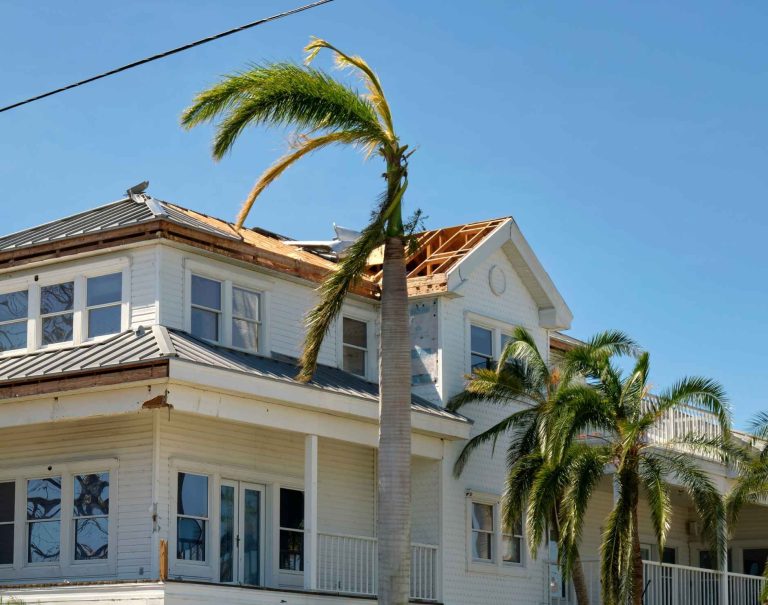
The repair vs. replacement decision is the most consequential roofing judgment a Palm Beach County homeowner makes — and it is the one most frequently made on incomplete information. A contractor who primarily does repairs has an incentive to recommend repair. A contractor who primarily does replacements has an incentive to recommend replacement. Neither incentive produces a reliable recommendation for the homeowner. The correct decision turns on five specific criteria — system age relative to realistic South Florida service life, the failure mode that triggered the current event, the FBC cumulative 25% repair threshold, the Citizens Insurance remaining life estimate, and the cost-per-year comparison between repairing now and replacing now. Working through these five criteria systematically produces a defensible answer independent of any contractor's business preference.
Criterion 1 — System age relative to realistic South Florida service life
The first criterion is the simplest: how far through its realistic South Florida service life is the existing roof system? A roofing system in the first half of its realistic service life is a repair candidate for isolated failure events. A system in the final quarter of its realistic service life is a replacement candidate for almost any failure event — because repairing a system that will require replacement within 5–7 years produces a repair investment that cannot be recovered through extended service life.
Realistic South Florida service lives: concrete tile 40–60 years; clay tile 60–100 years; standing seam or metal tile 40–60 years; premium granule architectural shingles 22–28 years; standard architectural shingles 18–22 years. A shingle roof at 17 years with an isolated flashing failure is in the final quarter of its realistic service life — the repair investment may produce only 3–5 additional years of service before the underlying system degradation triggers replacement anyway. A concrete tile roof at 15 years with a cracked tile is in the first third of its service life — the repair is the correct scope.
The age threshold is not absolute — it is a starting point that interacts with the other four criteria. A 20-year shingle roof in exceptional condition with one isolated repair event may still have 5–8 years of realistic service life remaining — making repair appropriate despite its age. A 10-year shingle roof with widespread seal strip failure, significant granule loss, and multiple failed flashing locations is effectively at end-of-useful-life despite its relatively young age — making replacement appropriate despite its age. Age sets the context; condition determines the outcome.
Criterion 2 — The failure mode and its scope implications
The second criterion is the failure mode that triggered the current repair consideration. Different failure modes have different scope implications — some are definitively repair events, others are replacement indicators regardless of system age.
Isolated component failures are repair events: a single cracked or displaced tile on a structurally sound tile roof; a pipe boot failure on a roof with intact membrane and flashing throughout; a localized flashing separation at one penetration on a system with sound flashing throughout; a single damaged shingle section from impact with no systemic degradation. These failures can be corrected at the component level without disturbing the surrounding system, and the repair produces a durable result that extends the system's remaining service life.
Systemic failures are replacement indicators: widespread seal strip failure affecting 15%+ of the shingle population; granule loss across multiple roof planes indicating advanced UV binder degradation; systematic flashing corrosion at multiple penetrations and transitions; tile mortar deterioration across the full roof surface (rather than at isolated locations); and any single failure that, when investigated, reveals substrate damage (rot, delamination, moisture saturation) extending beyond the immediate repair area. These failures indicate that the system has reached or is approaching end of useful life as a whole — repairing the visible symptom does not address the underlying system condition.
Criterion 3 — The FBC 25% cumulative repair threshold
Florida Building Code Section 706 converts the repair vs. replacement decision from an economic question into a code compliance requirement at the 25% cumulative threshold. When the total area of roof repairs and alterations — accumulated across all repair events on the existing system — equals or exceeds 25% of total roof area, FBC requires full replacement of the entire roof system rather than additional partial repair.
Before any repair is authorized on a PBC roof with a history of prior repairs, the licensed contractor must calculate and disclose the cumulative repair coverage. This calculation requires reviewing prior permit records at the applicable building department and assessing the visible evidence of prior repair areas at the roof surface. A homeowner who does not ask for this calculation and whose contractor does not provide it may authorize a repair that pushes the cumulative total above 25% — triggering a replacement requirement that was not disclosed before the repair was signed off.
If the current repair scope would push cumulative coverage above 25%, the correct response is to plan a full replacement rather than perform the repair. A repair that violates the 25% threshold creates a non-compliant installation record that affects insurance coverage and property resale. For roof repair services in Palm Beach County from licensed CCC contractors who calculate and disclose cumulative repair coverage as standard practice on any permitted repair, the 25% threshold is identified before the repair scope is signed — not after the work is completed.
Criterion 4 — Citizens Insurance remaining life and insurability
The fourth criterion is the Citizens Insurance implications of the repair vs. replacement decision. A repair that extends the system's functional life by 3–5 years but still leaves the system with less than 3 years of remaining life at the next Citizens inspection triggers the same non-renewal consequence as no repair at all. The question is not "does the repair stop the current leak?" — it is "does the repair produce a system that will pass the next Citizens inspection with adequate remaining life?"
A professional CCC contractor's condition assessment — not the repair contractor's verbal estimate but a written condition report that addresses remaining life — provides the answer to this question. If the assessment indicates that a repair will produce a system with 5–7 years of remaining life, repair is likely the correct scope. If the assessment indicates that a repair will produce a system with 2–4 years of remaining life — below or approaching Citizens' 3-year minimum threshold — replacement is the correct scope even if the repair would stop the current failure.
This is the Citizens Insurance criterion that most frequently converts what appears to be a repair decision into a replacement decision for PBC homeowners with aging systems. The repair fixes the immediate problem. The underlying system condition does not support another insurance cycle. The economically correct decision — avoiding the repair cost on a system that must be replaced before the next inspection — points to replacement.
Criterion 5 — Cost-per-year comparison
The fifth criterion ties the decision to economics: what is the cost-per-year of repairing now versus replacing now, considering the remaining service life the repair produces versus the full service life of a new installation?
The repair cost-per-year calculation: repair cost divided by additional years of service life the repair produces. A $2,500 flashing repair on a concrete tile roof that adds 8–10 years to the system's remaining life costs $250–$312 per year. A $2,500 flashing repair on a shingle roof that adds 3–5 years of service life costs $500–$833 per year — more than double the cost-per-year, and approaching the range where replacement cost-per-year becomes competitive.
The replacement cost-per-year calculation: total replacement cost divided by realistic South Florida service life. A $28,000 concrete tile replacement that lasts 50 years costs $560 per year. A $16,000 shingle replacement that lasts 22 years costs $727 per year. A $2,500 repair on a shingle roof with 4 remaining years of service life costs $625 per year — less than shingle replacement but producing only 4 years of service before the replacement is required anyway.
When the repair cost-per-year exceeds 70–80% of the replacement cost-per-year for the same system, and the repair produces less than 5 years of additional service life, the economic case for replacement rather than repair becomes compelling. For a complete explanation of the FBC Section 706 25% cumulative repair rule — how it is calculated, what triggers it, and what compliance means for the repair vs. replacement decision — see our dedicated FBC 25% rule guide.
- Assess system age against realistic South Florida service life first.** Systems in the final quarter of their realistic service life are replacement candidates for most failure events. Systems in the first half are repair candidates for isolated failures.
- Identify the failure mode — isolated or systemic.** Isolated component failures are repair events. Systemic failures (widespread seal strip loss, systemic flashing corrosion, advanced UV degradation across multiple planes) are replacement indicators regardless of system age.
- Ask the contractor to calculate cumulative repair coverage before authorizing any repair.** If cumulative repairs plus the current scope approach or exceed 25% of total roof area, FBC requires replacement — not repair.
- Commission a written condition assessment before the repair vs. replacement decision.** A written remaining life estimate from a licensed CCC contractor provides the Citizens Insurance implications of each option — information not available from an emergency repair visit.
- Calculate cost-per-year for both options.** Repair cost ÷ additional years produced vs replacement cost ÷ realistic service life. When repair cost-per-year approaches replacement cost-per-year and the repair produces less than 5 years of additional life, replacement is economically superior.
- Do not authorize final scope during an emergency leak event.** Authorize emergency tarping or temporary protection. Schedule the condition assessment separately. Make the repair vs. replacement decision from the assessment — not from the emergency visit.
- For any system approaching Citizens' 3-year minimum remaining life threshold, replacement is almost always the correct scope.** A repair that produces a system that still falls below Citizens' insurability threshold has not solved the problem — it has deferred it at additional cost.