A shingle's published wind rating is the result achieved under controlled test conditions with a specific fastener pattern, a specific fastener placement, and a specific underlayment system. Change any one of those variables and the rated wind resistance drops — sometimes dramatically. In Palm Beach County's High Velocity Hurricane Zone, the most consequential variable is fastener count: Florida Building Code Chapter 15 requires six nails per shingle strip in the HVHZ, and the difference between a six-nail and a four-nail installation is not a minor compliance detail. It is the difference between a shingle that meets the 130 mph minimum HVHZ wind resistance specification and one that may fail at 90 mph. This guide explains the mechanism behind the six-nail requirement, how zone-specific fastening works across a PBC roof, and what Product Approval compliance means in practice.
How nail count affects wind resistance — the mechanism
A shingle strip is held against the roof deck by its fasteners and, after the first summer heat cycle, by the seal strip — a band of thermally activated adhesive on the underside of each shingle that bonds to the shingle below it once the surface temperature reaches approximately 120–130°F. In South Florida's climate, seal strip activation occurs within the first weeks of installation.
The fasteners resist wind uplift by holding the shingle head (the nailing zone at the top of the strip) against the deck. The seal strip resists wind uplift at the shingle tab (the exposed lower portion). When wind uplift forces exceed the combined resistance of the fasteners and the seal strip, the tab lifts, the seal breaks, and the shingle is progressively displaced or lost.
A four-nail installation places fasteners at four points across the shingle head. A six-nail installation places fasteners at six points across the same zone. The additional two nails reduce the unsupported span between fasteners, which directly reduces the bending moment at each fastener point under uplift load and distributes the uplift force across a wider fastener array. Testing under ASTM D7158 demonstrates that six-nail installations achieve wind resistance ratings of 130 mph or above that the same shingle cannot achieve under four-nail installation in the HVHZ wind speed zone.
This is why Product Approval for a specific shingle in PBC's HVHZ specifies a minimum fastener count — typically six nails at a defined spacing and placement. A shingle installed with four nails, regardless of the shingle's rated wind performance under proper fastening, is not achieving the Product Approval specification and is not compliant under FBC Chapter 15.
The nailing zone — where the nails must go
The location of each nail within the shingle head is as important as the count. Shingle Product Approval documents specify a nailing zone — a band across the shingle head where fasteners must be placed to achieve the rated wind resistance. Nails placed too high (in the exposure zone above the nailing band) miss the double-mat layer at the head and reduce holding strength. Nails placed too low (into the seal strip or the tab area) penetrate the shingle at a non-structural point and also reduce holding strength.
The correct nailing zone placement ensures that each fastener penetrates both the shingle being installed and the head of the shingle below it — creating a two-layer fastening at each nail point that provides the holding strength the Product Approval rating requires.
An installer who "nails high" — a common shortcut that speeds installation by allowing racking-style installation rather than properly positioned blind nailing — consistently misses the double-layer engagement and produces an installation that tests significantly below its Product Approval wind rating. This is one of the most common installation defects in PBC shingle roofing and one of the least detectable by post-installation visual inspection.
Zone-specific fastening — field, edge, and corner
Florida Building Code Chapter 15 recognizes that different roof zones experience different design wind pressures. The center field area of the roof experiences the lowest design wind pressure. Edge zones (within approximately 3 feet of the eave, rake, and ridge) experience higher pressures. Corner zones (the areas where edge zones intersect at roof corners) experience the highest pressures on the entire roof surface.
For shingle roofing in PBC's HVHZ, FBC Chapter 15 and the applicable Product Approvals specify that edge and corner zones receive enhanced fastening — typically through the addition of fasteners beyond the field-zone six-nail pattern, specific underlayment adhesive at edges, or both. An installation that applies field-zone fastening uniformly across the entire roof without addressing edge and corner zone requirements is non-compliant at those zones.
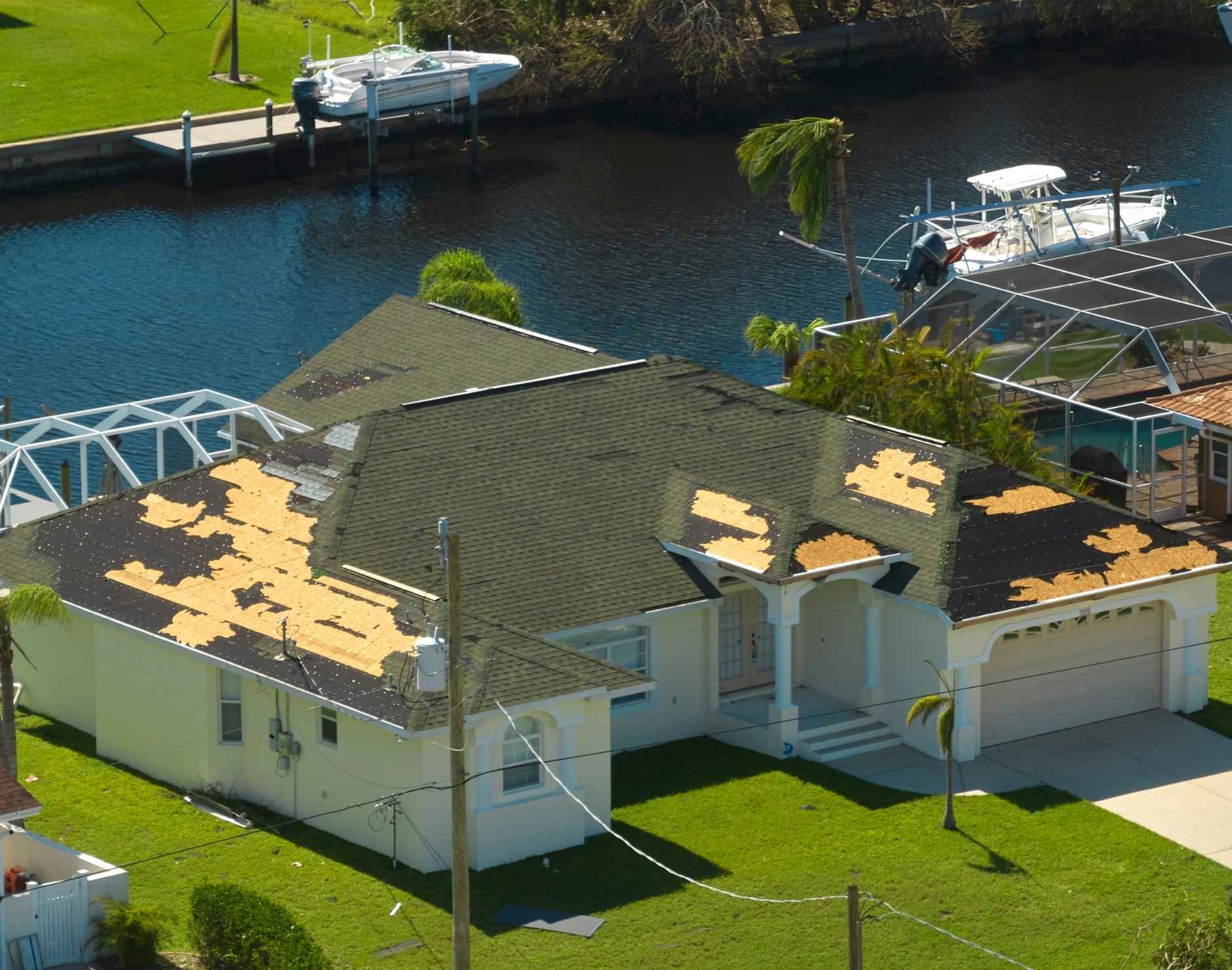
Post-storm shingle loss concentrated at roof edges, corners, and rakes without corresponding field loss is the diagnostic indicator of non-compliant edge and corner zone fastening — the same pattern seen in tile and metal roofing when zone-specific attachment is not applied. It indicates installation deficiency, not extraordinary wind force.
For shingle roofing services in Palm Beach County with zone-specific fastening, Product Approval documentation, and six-nail pattern as standard components of every licensed CCC contractor's scope, the compliant installation is the only scope offered. Verified roofers serving Haverhill and PBC's western shingle communities install six-nail as default.
The seal strip — wind resistance after installation
Once activated by South Florida's heat, the seal strip provides the primary tab-level wind resistance for the installed shingle. A shingle with an intact, properly activated seal strip resists tab lifting at wind speeds significantly above what the fasteners alone would resist. A shingle with a failed or improperly activated seal strip relies on the fasteners alone — and the fasteners, designed to resist head-zone uplift, provide limited resistance to tab lifting.
Seal strip failure is a lifespan and maintenance issue, not an installation defect in most cases. As shingles age and the asphalt binder oxidizes, the seal strip loses flexibility and adhesion at the tab edge. A shingle with a failed seal strip shows tab lifting — tabs that can be manually lifted without resistance. This is the primary indicator a licensed CCC contractor assesses during a condition inspection when evaluating remaining wind resistance for Citizens Insurance purposes.
A shingle installation where tab lifting is present across more than 10–15% of the roof surface has materially reduced wind resistance below its original rated specification. Citizens Insurance remaining life assessments on shingle roofs with widespread tab lifting consistently produce unfavorable estimates.
How to verify a shingle installation's wind compliance
For homeowners assessing whether an existing shingle installation meets FBC Chapter 15 requirements — for Citizens Insurance purposes, for post-storm claim documentation, or following a change in ownership — the wind compliance assessment requires a licensed CCC roofing contractor who can:
Identify the shingle product and pull the current Florida Product Approval document. Access a representative sample of shingles — lifting carefully to examine the fastener count, placement, and nailing zone position without breaking the seal strip on adjacent shingles. Assess seal strip integrity across field, edge, and corner zones. Compare the installed fastener pattern against the Product Approval specification.
An informal visual inspection from the ground or a drone flyover does not constitute a wind compliance assessment. The fastener count and nailing zone placement can only be verified by physical examination at the shingle head — which requires accessing the roof surface and lifting shingles.
Citizens Insurance and shingle wind compliance
The OIR-B1-1802 wind mitigation inspection documents the roof covering type and whether the installation carries a current Florida Product Approval. For shingle roofing, the inspector documents the shingle type, the Product Approval number, and — in some inspection scopes — the fastener pattern. A compliant six-nail installation with Product Approval earns the roof covering credit on OIR-B1-1802.
An installation that cannot be documented as Product Approval-compliant — because the shingle is no longer in production, because the original installation records are unavailable, or because the fastener pattern cannot be verified — may not receive the full roof covering credit in the wind mitigation calculation. Annual Citizens Insurance premium credits of $600–$1,800 in coastal PBC zip codes for shingle installations with favorable construction features depend on this documentation being in order.
For the full context of why the six-nail requirement exists and why 3-tab shingles are prohibited and architectural shingles are the minimum compliant product for PBC installations, see our architectural vs. 3-tab guide.
- Confirm six-nail fastener pattern is specified in the written contract before signing.** The contract should reference the six-nail HVHZ pattern explicitly — not just "per manufacturer specification" which may default to four nails.
- Ask for the Florida Product Approval number for the specified shingle before signing.** The Product Approval is the binding installation specification. Confirm the proposed installation matches the approved fastener count and placement.
- For post-storm shingle installations by out-of-state crews, verify fastener pattern with a licensed CCC contractor.** Storm-chasing crews unfamiliar with PBC's HVHZ requirements frequently install four-nail patterns. A condition inspection within 90 days of installation can identify this before the warranty period on the installation work expires.
- Check for tab lifting as a seal strip condition indicator.** Manually attempt to lift representative tabs across field, edge, and corner zones. Tabs that lift without resistance have failed seal strips and reduced wind resistance at those locations.
- For roofs over 12 years old showing tab lifting across more than 10% of the surface, schedule a CCC contractor assessment before the next hurricane season.** Widespread seal strip failure produces material wind resistance reduction that may affect Citizens Insurance remaining life estimates and storm damage claim outcomes.
- After any compliant replacement, schedule a wind mitigation inspection within 30 days of permit close.** A six-nail, Product Approval-compliant installation with secondary water barrier qualifies for Citizens Insurance wind mitigation credits — file the report promptly.