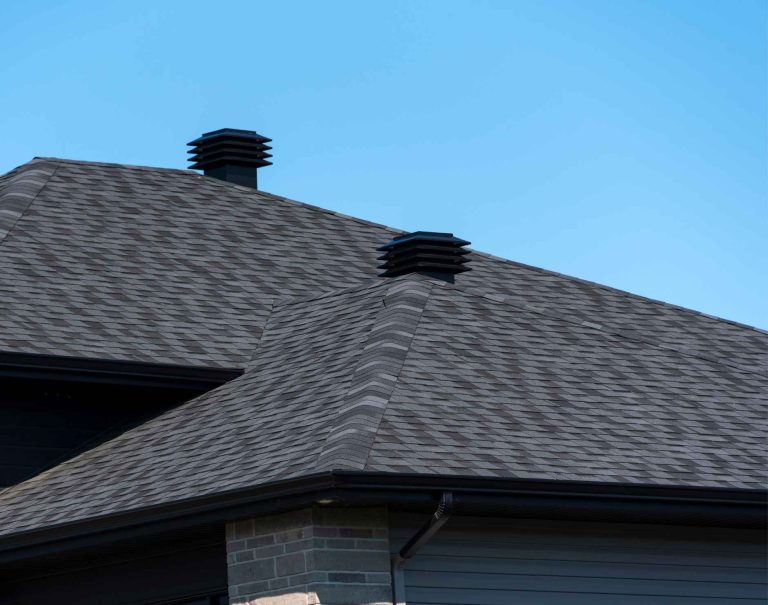
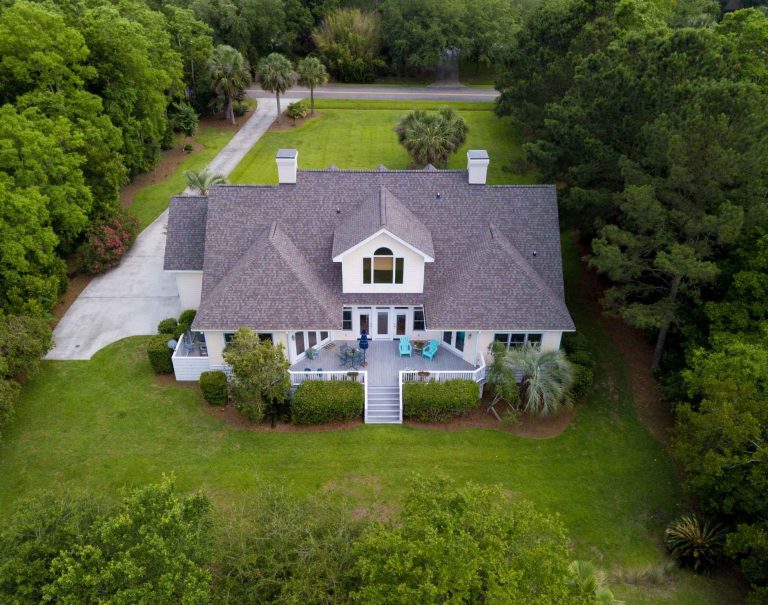
Shingle manufacturers print 30-year, 40-year, and lifetime warranty terms on their products. Those warranties are tested under standard laboratory conditions that bear little relationship to Palm Beach County's roofing environment. South Florida's UV index — among the highest in the continental United States — accelerates the granule loss, asphalt oxidation, and mat degradation that determine shingle lifespan at roughly double the rate of temperate climates. A shingle with a 30-year national warranty realistically delivers 18–22 years of reliable performance in PBC before requiring replacement. This guide provides honest lifespan expectations by shingle tier for South Florida conditions, and explains the specific environmental factors that drive the gap between warranty claims and realistic service life.
Why South Florida shortens shingle life
Four environmental conditions specific to South Florida interact to accelerate shingle degradation at rates that manufacturers' national warranty testing does not capture:
UV intensity. Palm Beach County's UV index regularly reaches 10–11 (extreme) during summer months — among the highest in the continental United States. UV radiation breaks down the asphalt binder in shingles, causing it to oxidize and lose flexibility over time. Oxidized asphalt becomes brittle, cracks at stress points (nail heads, shingle edges), and loses the ability to hold granules. In a temperate climate, this process takes 25–35 years. In PBC's UV environment, meaningful oxidation is typically visible within 15–18 years on standard products.
Heat cycling. South Florida's daily temperature swing between overnight lows of 68–72°F and midday roof surface temperatures of 150–180°F during summer months subjects shingles to repeated thermal expansion and contraction. Each cycle stresses the shingle mat at seam points and around fastener heads. Over hundreds of cycles per year, this mechanical fatigue contributes to shingle cracking, seam separation, and eventually tab lifting that reduces wind resistance.
Humidity and algae. South Florida's average relative humidity of 75–80% and year-round warm temperatures create ideal conditions for blue-green algae growth on shingle surfaces. The dark streaking visible on aging shingle roofs throughout PBC is primarily Gloeocapsa magma algae colonization — not dirt or mold. Algae accelerates granule loosening and traps moisture against the shingle surface, increasing the rate of underlying mat degradation.
Hurricane season mechanical stress. Wind events throughout the June–November hurricane season produce repeated mechanical stress on shingles — lifting at leading edges, flexing at fastener points, and impact from wind-driven debris. Cumulatively across multiple seasons, this mechanical stress contributes to fastener back-out, seal strip failure, and progressive tab lifting that reduces the wind resistance of the installation below its original rated specification.
Standard architectural shingles — 18 to 22 years in PBC
Standard architectural shingles meeting PBC's minimum HVHZ specification — 130 mph wind rating, six-nail pattern, current Florida Product Approval — realistically deliver 18–22 years of reliable service life in South Florida conditions. This is the installed lifespan before replacement is warranted — not before any maintenance is required.
During that lifespan, the homeowner should expect: visible granule loss beginning at 12–15 years that accelerates toward replacement age, algae streaking that appears at 8–12 years depending on sun exposure and moisture conditions, and seal strip performance that begins to decline at 15–18 years as the asphalt becomes increasingly oxidized.
The manufacturer's 30-year warranty on standard architectural shingles is not a promise of 30 years of PBC service life — it is a prorated warranty that provides diminishing coverage over the stated period, with coverage reductions that begin at year 10 or 15 in most cases. The practical warranty coverage in the years when PBC shingles actually fail is typically minimal.
Premium granule architectural shingles — 22 to 28 years in PBC
Premium granule shingles use harder, heavier ceramic granules that resist UV-induced loosening and physical displacement from wind-driven debris better than standard granule products. Products like GAF Timberline HDZ, Owens Corning Duration, and CertainTeed Landmark IR — using enhanced granule formulations — demonstrate meaningfully better granule retention in South Florida conditions. Brand-level differences are compared in GAF vs. Owens Corning for South Florida.
The granule retention benefit extends shingle lifespan in PBC because granule loss is the primary initiator of accelerated asphalt oxidation. Once granules are lost from a section of shingle surface, the underlying asphalt is directly exposed to UV — and oxidation accelerates dramatically at that location. Premium granules that stay in place for 5–8 years longer than standard granules delay this cascade and extend realistic service life by approximately 4–6 years.
Premium architectural shingles also typically carry enhanced seal strip formulations that maintain adhesion in PBC's heat environment better than standard seal strips, reducing tab lifting and the associated Citizens Insurance wind mitigation implications of an aging shingle installation.
For shingle roofing services in Palm Beach County with product selection guidance based on actual South Florida performance history rather than national warranty claims, a licensed CCC contractor can advise on which specific shingle products perform best in PBC's microclimate. Verified roofers in Royal Palm Beach and the western communities install all three tiers.
Impact-rated architectural shingles — 25 to 30 years in PBC
Impact-rated architectural shingles (Class 4 UL 2218) use enhanced mat construction with additional polymer modifiers that increase the shingle's resistance to both impact damage from wind-driven debris and the thermal cycling fatigue that produces cracking and seam separation in standard products.
The polymer-modified mat in impact-rated shingles retains flexibility longer under UV and heat cycling than standard fiberglass mat formulations. This extended flexibility contributes directly to longer South Florida service life — a mat that cracks under thermal cycling at year 15 on a standard product may not show equivalent cracking until year 22–25 on an impact-rated product.
The realistic South Florida lifespan of impact-rated architectural shingles is 25–30 years — the tier closest to manufacturer warranty claims, and the appropriate choice for PBC homeowners who want to maximize the interval between replacement events. Tier-by-tier installed pricing is in the shingle roof cost guide for PBC.
What extends shingle life in South Florida
Several maintenance practices and installation decisions extend shingle service life in PBC beyond the baseline ranges above:
Algae-resistant shingles. Shingles with copper or zinc granule treatments resist blue-green algae colonization significantly better than standard granules. In PBC's humidity, algae-resistant granule treatments extend the period before visible streaking and the associated accelerated granule loss that follows algae colonization. Most premium granule products include algae resistance as a standard feature.
Adequate attic ventilation. Inadequate attic ventilation in South Florida produces heat buildup on the underside of the roof deck that accelerates asphalt oxidation from below — effectively cooking the shingle mat from both sides simultaneously. Ridge-to-soffit ventilation that meets FBC requirements extends shingle life by reducing this underside heat stress.
Light shingle colors. Lighter-colored shingles — tan, beige, light gray — absorb less solar radiation than dark charcoal and black shingles, reducing surface temperatures by 20–40°F during peak summer hours. Lower surface temperatures directly reduce the rate of asphalt oxidation and granule loosening that limits shingle lifespan.
Annual post-hurricane-season inspection. An annual roof inspection after the November 30 hurricane season close identifies any tab lifting, seal strip failure, or mechanical damage from wind events that season. Small areas of damage addressed promptly prevent the water intrusion that accelerates degradation across adjacent shingle areas.
The shingle lifespan and Citizens Insurance implications
For a complete explanation of the specific failure modes that end shingle roof life in South Florida — granule loss, seal strip failure, and tab lifting — and how to identify each before a Citizens Insurance inspection is ordered, see our dedicated shingle failure guide. Understanding when a shingle system is approaching end of life — rather than discovering it at the Four-Point Inspection — gives PBC homeowners the opportunity to proactively replace before Citizens insurance eligibility is affected.
- Know your shingle tier — standard, premium granule, or impact-rated.** Each has a different realistic South Florida service life. If unknown, a licensed CCC contractor can assess granule quality and approximate product tier from a condition inspection.
- Schedule annual post-hurricane-season inspections every December.** Identify any tab lifting, seal strip failure, or mechanical damage from the season. Small repairs made promptly prevent accelerated degradation across adjacent areas.
- At 15 years, schedule a professional CCC contractor condition assessment.** A written remaining life estimate at 15 years gives you time to plan proactively before Citizens Insurance orders its own inspection.
- Watch for algae streaking as an early lifespan indicator.** Dark streaking appearing at 8–12 years signals active algae colonization that accelerates granule loss. A low-pressure soft wash and preventive treatment extends the period before granule loss reaches significant levels.
- Before ordering a Citizens Four-Point on a shingle roof over 15 years old, have a CCC contractor assess condition first.** A proactive condition assessment tells you what the Four-Point will find — while you still have time to act on that information.
- For the next replacement, evaluate premium granule or impact-rated products.** The $3–$5 per square foot premium for enhanced products extends South Florida service life by 4–8 years relative to standard architectural shingles — typically worth the investment on a 2,400 sq ft PBC roof.