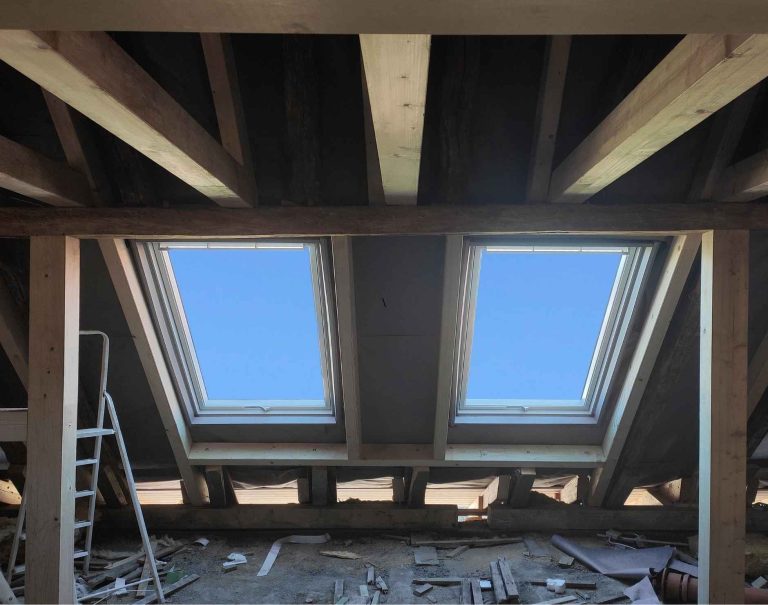
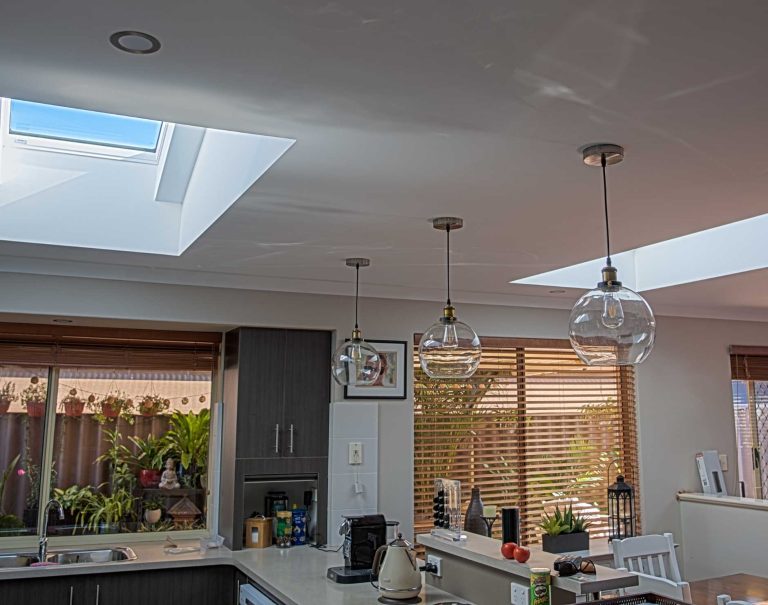
The curb-mounted vs. deck-mounted skylight decision is primarily a roof pitch and drainage question — and in Palm Beach County's rainfall environment, getting it wrong produces predictable consequences. A deck-mounted skylight installed on a flat or low-slope roof will eventually leak at the flashing interface because its flush installation profile cannot shed the standing water that PBC's wet-season rainfall produces at low-slope surfaces. A curb-mounted skylight installed on a steep-pitch roof is structurally appropriate but aesthetically heavier than a deck-mounted unit and adds unnecessary height to the roofline. Understanding which mounting type is correct for your roof's pitch and drainage conditions is the first decision in any PBC skylight installation — before manufacturer, glazing type, or venting configuration is considered.
What curb-mounted skylights are and when they are correct
A curb-mounted skylight sits on top of a raised wooden or metal frame — the curb — that projects 4–6 inches above the roof surface. The skylight unit itself fastens to the top of the curb, and the flashing system — typically a step-flashing and counter-flashing assembly — seals the junction between the curb and the surrounding roof membrane. The raised curb keeps the skylight glazing and frame above the roof surface, ensuring that standing water on a flat or low-slope roof cannot contact the skylight's base flashing directly.
Curb-mounted skylights are the correct specification for flat roofs, low-slope roofs with pitches below 3:12, and any roof surface where periodic ponding or significant water flow across the roof surface occurs during rainfall events. In PBC's context, this includes the majority of commercial buildings with flat TPO or EPDM roofs, residential additions with flat roof sections, and any low-slope residential roof where the 1/4 inch per foot FBC minimum drainage slope produces standing water during PBC's high-intensity rainfall events.
The 4–6 inch curb height provides the critical clearance that prevents water infiltration at the skylight base under ponding conditions. A flat roof that experiences 2–3 inches of standing water during a severe PBC thunderstorm will not produce water infiltration at a properly flashed 6-inch curb — the water level cannot reach the flashing interface at the top of the curb. The same storm event will produce infiltration at a deck-mounted unit installed in the same roof location because the deck-mounted unit's base flashing sits at or near the roof surface level.
Curb-mounted skylights are also the required specification for most skylight installations on low-slope tile roofs in PBC — the standard tile roof with a 2:12 to 3:12 pitch that is common throughout Palm Beach County's residential market. The mortar-set tile surface cannot be flashed to a deck-mounted unit without compromising the surrounding tile system, while a curb-mounted unit can be properly integrated with the tile underlayment and step-flashing system.
What deck-mounted skylights are and when they are correct
A deck-mounted skylight — also called a self-flashing skylight — installs flush into the roof deck with an integrated flashing system that lies flat against the surrounding roof surface. The unit's base flange overlaps the surrounding roofing material and is sealed with a manufacturer-supplied flashing kit that integrates with the shingle, metal panel, or tile course above the unit. The result is a lower-profile installation that sits closer to the roofline and has a less visible exterior appearance than a curb-mounted unit of equivalent size.
Deck-mounted skylights are the correct specification for pitched roofs above 3:12 — ideally above 4:12 — where the roof's natural drainage slope ensures that water moves away from the skylight base flashing quickly rather than pooling. On a correctly pitched PBC shingle or metal roof, rainfall runs down the slope and past the deck-mounted unit's base flashing before it can accumulate to the flashing height. The manufacturer's flashing kit, when correctly installed, maintains a waterproof seal at the flat-to-slope transition around the unit's perimeter.
The pitch threshold for deck-mounted skylight performance is not arbitrary — it reflects the relationship between PBC's rainfall intensity and the drainage slope needed to move water past the base flashing before it accumulates. At roof pitches below 3:12, PBC's wet-season rainfall intensity can produce momentary water depths at the skylight base that exceed the flashing height of a deck-mounted unit. At pitches above 4:12, the drainage velocity is sufficient to prevent accumulation at the base even during peak PBC storm intensity.
For skylight installation services in Palm Beach County with correct mounting type specification for your roof's pitch and drainage conditions, a licensed CCC contractor assesses both the roof pitch and the local drainage conditions before recommending mounting type — not after the unit is on order.
Flashing — the critical performance variable for both types
Regardless of mounting type, skylight flashing is the component that determines whether the installation leaks. A correctly specified curb-mounted skylight with inadequate flashing will leak as reliably as a deck-mounted unit on a low-slope roof. The flashing system must integrate the skylight curb or base flange with the surrounding roofing membrane or shingle system at every point where water could enter — the upslope head, the two sides, and the downslope apron — in a way that directs all water away from the unit without any path for water to enter behind the flashing.
On PBC tile roofs, curb-mounted skylight flashing requires step-flashing that integrates with the tile underlayment and is counter-flashed at the curb face — a multi-component assembly that only a contractor with specific tile roofing and skylight flashing experience can execute correctly. A contractor who installs skylights on shingle roofs but not tile roofs should not be installing curb-mounted skylights on PBC tile roofs — the flashing requirements are sufficiently different that shingle-flashing experience does not transfer reliably.
On PBC flat roofs, curb-mounted skylight flashing requires integration with the TPO, EPDM, or modified bitumen membrane system — typically through a pre-fabricated membrane collar that heat-welds or adheres to the surrounding membrane and laps onto the curb face. This flashing approach requires the contractor to have membrane roofing experience in addition to skylight installation experience — a combined skill set that not all PBC skylight installers possess.
Impact resistance — the PBC HVHZ requirement for skylights
Palm Beach County's High Velocity Hurricane Zone requires that skylights installed on residential and commercial buildings carry a current Florida Product Approval confirming the unit meets the large missile impact test (FBC Section 1609) for PBC's design wind speed zone. This requirement applies to both curb-mounted and deck-mounted units — the mounting type does not affect the impact resistance requirement.
Impact-rated skylights use either laminated glass or impact-rated polycarbonate glazing that resists the penetration of wind-driven debris under the FBC large missile test conditions. Standard tempered glass skylights — which are the most commonly available non-impact product — do not meet PBC's HVHZ requirements and should not be specified for any PBC installation. A roofing contractor who proposes a non-impact skylight for a PBC installation is proposing a non-compliant product regardless of its other performance specifications.
The Florida Product Approval for the specific skylight unit should be confirmed before the unit is ordered — not after it arrives on the job site. Returning a non-compliant unit after delivery adds cost and project delay that the pre-order Product Approval confirmation would have prevented. Unit-by-unit pricing is in the skylight cost guide for PBC.
Venting vs fixed skylights — the PBC condensation consideration
Venting skylights — units with operable sashes that can be opened to allow air circulation — are appropriate for PBC residential applications where attic or interior ventilation is a priority and where the skylight location allows safe manual or remote operation. In South Florida's humid environment, a venting skylight that is left open during a rain event produces rapid interior water intrusion — the high-volume PBC rainfall entering an open skylight can produce significant interior damage within minutes.
Fixed skylights — non-operable units — eliminate the accidental opening risk in PBC's frequent rain environment and are the appropriate specification for most commercial applications and for residential locations where ventilation benefit is secondary to daylighting. Fixed units also carry simpler flashing systems than venting units — the absence of the operable sash perimeter seal eliminates one potential leak path that venting units introduce.
For a complete explanation of the specific failure modes that cause skylights to leak in South Florida — including flashing failure, glazing seal failure, and condensation infiltration — and how each is prevented or corrected, see our dedicated skylight leak guide.
- Determine roof pitch before specifying mounting type.** Below 3:12 — curb-mounted required. Above 4:12 — deck-mounted appropriate. The 3:12–4:12 range warrants contractor assessment of local drainage conditions.
- For flat and low-slope roofs, specify curb-mounted with minimum 6-inch curb height.** The curb height must exceed the maximum anticipated standing water depth during PBC's peak rainfall events.
- Confirm the specified unit carries a current Florida Product Approval for PBC's HVHZ.** Impact-rated glazing (laminated glass or impact-rated polycarbonate) is required. Confirm Product Approval before ordering — not after delivery.
- Confirm the contractor has experience flashing skylights on your specific roof type.** Tile roof flashing, flat roof membrane integration, and shingle flashing are distinct skill sets. The contractor's experience must match your roof type.
- Require a permit for any skylight installation or replacement.** Unpermitted skylight installations create compliance and insurance liability in PBC's HVHZ.
- For venting skylights, confirm a rain sensor or motorized closure is included.** A venting skylight left open during a PBC rain event produces rapid interior water damage. Automatic rain-sensing closure is the practical safeguard in South Florida's sudden-storm environment.
- After installation, inspect flashing at each annual roof inspection.** Skylight flashing is the highest-risk leak point on any roof penetration — annual inspection identifies any separation or sealant failure before it produces interior water damage.