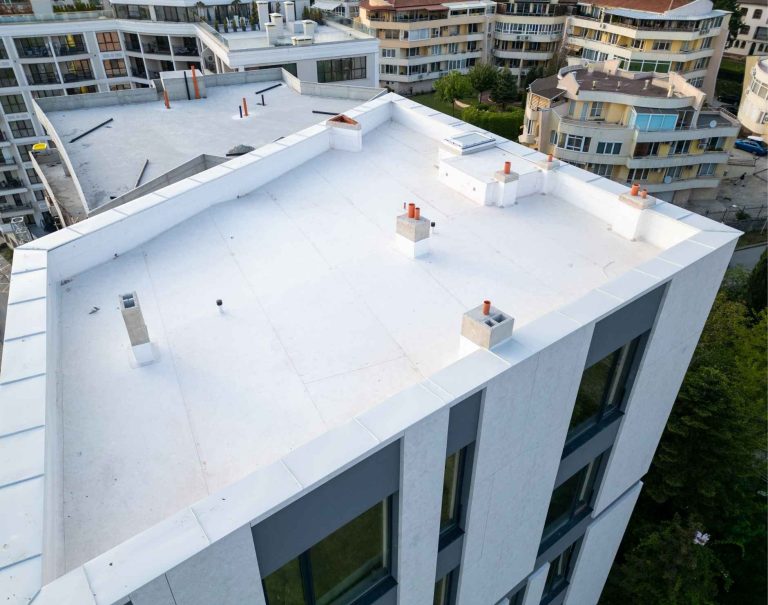
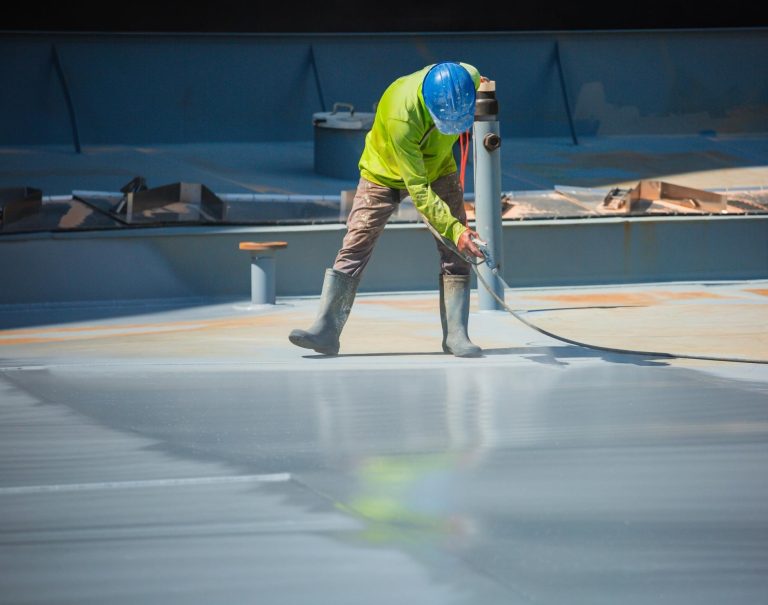
Roof coatings are applied to existing flat and low-slope roofing membranes to extend service life, restore reflectivity, and provide an additional waterproofing layer without the cost of full membrane replacement. In Palm Beach County's market, elastomeric acrylic and silicone coatings are the two most commonly specified options — and the choice between them is not a matter of preference. It is a performance decision driven by one variable that is specific to South Florida's roofing environment: ponding water. Elastomeric coatings degrade when submerged. Silicone coatings do not. On any PBC roof that experiences even periodic ponding — which describes a significant percentage of PBC's existing flat roof inventory — elastomeric coating is the wrong specification. This guide explains the mechanism behind that difference and provides the complete comparison framework for every other performance variable that matters in South Florida.
What elastomeric roof coatings are and how they perform in PBC
Elastomeric roof coatings are water-based acrylic polymer coatings applied as a liquid to existing roofing membranes. They cure to form a flexible, seamless membrane that reflects solar radiation, provides a secondary waterproofing layer over the existing membrane, and restores the thermal emittance of aged or darkened roof surfaces. Elastomeric coatings are the most widely available and most cost-effective roof coating option in PBC's market — applied cost runs $1.50–$3.50 per square foot for a standard two-coat application at the required film thickness.
Elastomeric coatings perform well in PBC's UV and thermal cycling environment. The acrylic polymer matrix resists UV degradation effectively, maintaining reflectivity and waterproofing integrity for 10–15 years under direct South Florida sun exposure when applied at the manufacturer's required dry film thickness. Elastomeric coatings also accommodate the thermal expansion and contraction of the membrane beneath them — at ambient temperatures and normal thermal cycling conditions, the coating flexes with the substrate without cracking or delaminating.
The critical limitation of elastomeric coatings in South Florida is ponding water performance. Acrylic elastomeric coatings are water-based — their polymer matrix is susceptible to softening and re-emulsification when submerged in standing water for extended periods. A ponding zone on a roof coated with elastomeric acrylic will show accelerated coating degradation at the pond boundary and eventual delamination and loss of coating in the center of the ponding zone if the ponding condition persists through multiple wet season cycles. On a PBC roof where ponding is a recurring condition, elastomeric coating is contraindicated — applying it is an investment that will fail prematurely in the exact locations where waterproofing performance is most needed.
What silicone roof coatings are and how they perform in PBC
Silicone roof coatings are solvent-based or water-based silicone polymer coatings applied as a liquid to existing roofing membranes. Like elastomeric coatings, they cure to form a flexible, seamless, reflective membrane — but the silicone polymer matrix has fundamentally different water resistance properties than acrylic elastomeric formulations.
Silicone coatings are hydrophobic — they repel water rather than absorbing it. A cured silicone coating maintains its waterproofing integrity, adhesion, and physical properties when submerged in standing water indefinitely. On a PBC roof with recurring ponding conditions, silicone coating continues to perform at the ponding zone where elastomeric coating would degrade. This is the defining performance advantage of silicone over elastomeric in South Florida's flat roofing environment and the primary specification criterion when ponding water is a known or potential condition.
Silicone's secondary performance advantages in South Florida are also meaningful. Silicone coatings maintain higher solar reflectance through a longer service period than elastomeric coatings — silicone's surface is less susceptible to dirt retention and algae staining that reduces reflectivity on aged acrylic surfaces in PBC's humid environment. Silicone also retains flexibility at temperature extremes — it does not become brittle at low temperatures (not a PBC concern) and maintains its elasticity at the high membrane surface temperatures South Florida produces, reducing the risk of thermal cycling cracking at the coating surface.
Silicone's primary limitation is cost — applied cost runs $3.00–$6.00 per square foot for a standard two-coat application, approximately double the cost of elastomeric coating. Full project-level budgets including preparation scope are in the roof coating cost guide for PBC. The second limitation is that silicone is difficult to overcoat: once silicone is applied to a roof surface, future recoating must also use silicone — most other coatings will not adhere properly over cured silicone. This is not a disadvantage in practice for most PBC applications, but it is a specification commitment that the property owner should understand before choosing silicone.
For waterproofing services in Palm Beach County including roof coating assessment and system specification, a licensed contractor evaluates the existing membrane condition, drainage performance, and ponding history before recommending a coating type — the correct specification depends on the roof's actual condition and drainage profile, not on a standard coating preference.
The ponding water test — the specification decision in PBC
The specification decision between elastomeric and silicone for a PBC flat roof coating application reduces to a single question: does this roof experience ponding water? If the answer is yes — even periodically, even in isolated low points — silicone is the correct specification. If the answer is definitively no — the roof has positive drainage to all drain and scupper locations, water does not remain standing 48 hours after any rainfall event, and this has been verified by inspection rather than assumed — then elastomeric is appropriate and the cost saving is justified.
In practice, the majority of PBC's existing flat roof inventory has some degree of drainage imperfection — compressed insulation at midspan, partially blocked drains, minor structural deflection — that produces periodic ponding in specific zones even on roofs that otherwise drain adequately. A coating specification based on the assumption of perfect drainage on an aging PBC flat roof is an optimistic specification. Diagnosing the cause is covered in the ponding water guide. When in doubt, silicone is the appropriate conservative choice.
Application requirements — film thickness is the critical variable
Both elastomeric and silicone coatings must be applied at the manufacturer's specified dry film thickness to achieve the rated waterproofing performance and warranty coverage. Most elastomeric coating systems require a minimum of 20 dry mils total film thickness — typically achieved with two coats at 10 dry mils each. Most silicone coating systems require 20–30 dry mils total thickness. Applying coating at insufficient film thickness — a common shortcut that reduces material cost — produces a system that will not achieve the manufacturer's rated performance or warranty term.
Film thickness verification is the primary quality control issue in roof coating applications in Palm Beach County. A contractor who applies coating at half the required film thickness reduces material cost by approximately 50% — a significant financial incentive that is invisible to a property owner who cannot measure dry film thickness. Specifying a wet film thickness per coat in the contract, requiring the contractor to document the number of gallons applied per square foot, and comparing that to the manufacturer's coverage rate at the required film thickness is the verification method available to property owners without specialized equipment.
Surface preparation is the second critical application variable. Both elastomeric and silicone coatings require a clean, dry, and fully adhered substrate for proper adhesion. Any existing coating that is delaminating, any membrane surface that is not fully adhered to the substrate below, and any organic contamination (algae, moss, debris) must be removed before coating application. A coating applied over delaminating material will delaminate with it — the coating's adhesion to the substrate depends entirely on the substrate's own adhesion. The full candidacy checklist is in can you coat an existing roof in Florida.
Service life and recoating — planning the coating maintenance cycle
Elastomeric acrylic coatings on PBC flat roofs realistically deliver 10–12 years of effective service life before reflectivity, waterproofing performance, and adhesion have degraded to the point where recoating is warranted. At that point, the existing elastomeric coating — if still well-adhered — can be overcoated with a fresh application of elastomeric or silicone coating to restore performance. Silicone coatings deliver 15–20 years of effective service life on PBC flat roofs before recoating is warranted, and recoating must use silicone over the existing silicone surface.
For a complete understanding of how roof coating lifespan is affected by South Florida's UV, thermal cycling, and ponding conditions — and the maintenance practices that extend coating service life toward the upper end of the realistic range — see our dedicated coating lifespan guide.
- Determine whether your roof experiences ponding water before specifying a coating type.** If any area of the roof holds water for more than 48 hours after a rainfall event — even occasionally — silicone is the required specification. Elastomeric coating over a ponding-prone roof is a premature failure waiting to happen.
- Commission a moisture scan before any coating application.** Subsurface moisture saturation beneath the existing membrane must be identified and remediated before coating. Coating over wet insulation traps the moisture and accelerates membrane degradation from below.
- Confirm the coating application scope specifies minimum dry film thickness per coat.** Request the manufacturer's coverage rate at the required dry film thickness and verify it against the number of gallons the contractor proposes to apply per square foot.
- Require surface preparation scope as a written line item.** Pressure washing, delamination repair, and seam re-bonding prior to coating application should be named scope items — not assumptions buried in the coating line item.
- Understand the recoating commitment before choosing silicone.** Once silicone is applied, future recoating must use silicone. Confirm you are prepared for this specification commitment before approving a silicone coating application.
- Do not apply coating over active leak sources or separated seams.** A roof inspection by a licensed contractor should precede any coating application to confirm the existing membrane is suitable for coating — not at end of life or actively leaking.
- For silicone coatings, confirm the contractor has silicone-specific application experience.** Silicone coating application requires different equipment, solvents, and cleanup procedures than elastomeric. A contractor experienced only with elastomeric coatings may not apply silicone correctly.